Exterior Car Detail
in Lubbock TX — Every Step Explained
Wheels get done before the paint, never after — wheel cleaner overspray and rinse water go everywhere, and doing them last contaminates paint you just washed. From there it is foam pre-soak, two-bucket hand wash, iron decontamination, clay, then protection. Sequence is most of what separates a real exterior detail from a wash with a wax on top.
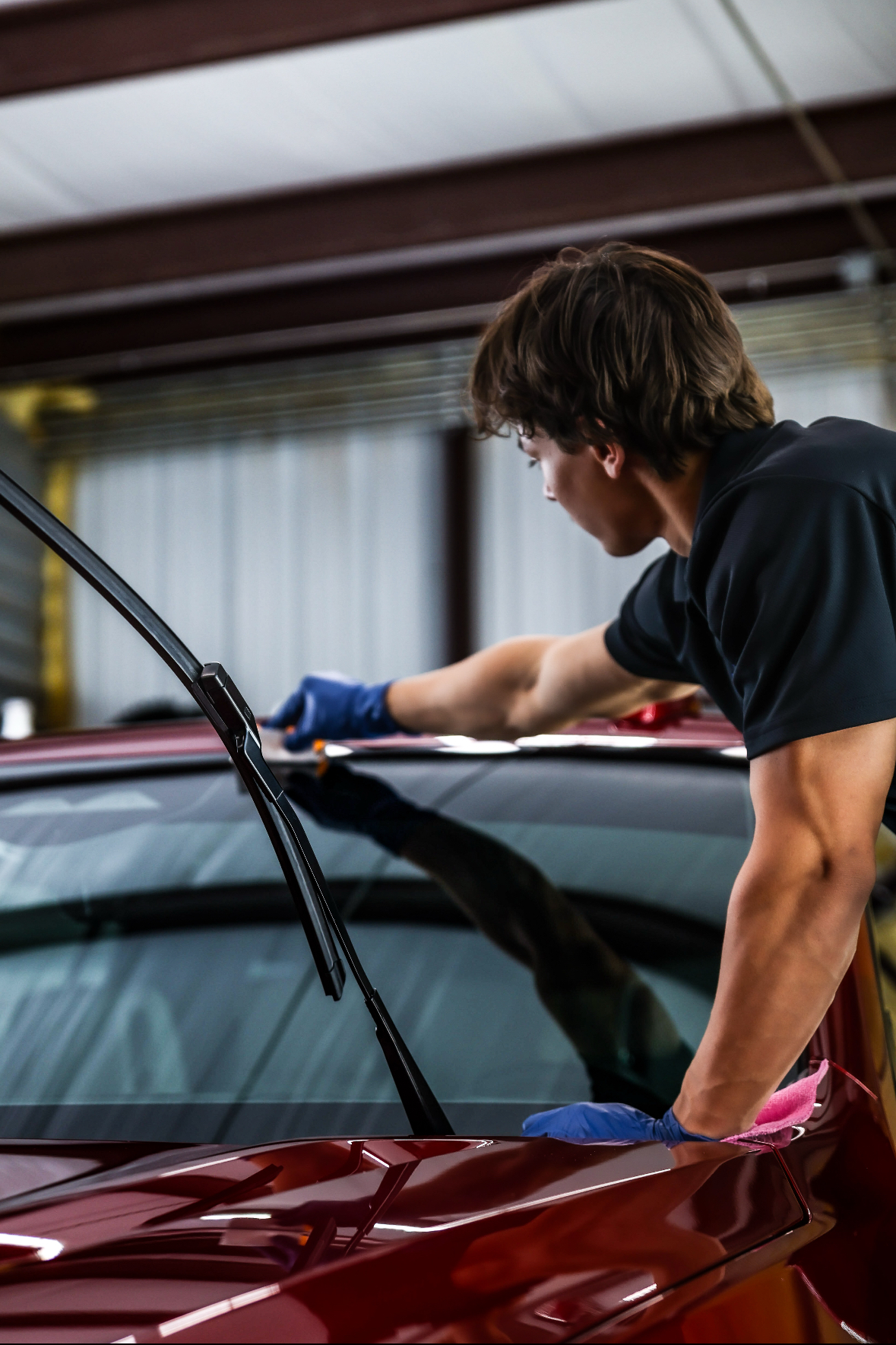
An exterior detail isn't just a car wash with extra steps. Each part of the process addresses a specific problem — contamination bonded to the paint, oxidized trim, mineral deposits on glass, iron particles embedded in the clear coat. Understanding what each step actually does helps you understand why it matters and what you're paying for.
Here's our full exterior detail process from start to finish.
The Full Exterior Detail Process
Wheels and Tires First
We start with wheels before touching the paint. Wheel cleaner, tire cleaner, and brushes — the overspray and rinse water goes everywhere. Doing wheels last means contaminating freshly washed paint. We use pH-neutral wheel cleaner on painted and coated wheels, iron remover on heavily contaminated brake dust buildup.
Pre-Rinse and Snow Foam
A thorough rinse removes loose caliche, dust, and debris before any contact with the paint. Snow foam (pre-wash foam) is applied and dwells for several minutes to loosen surface contamination chemically before the contact wash. This reduces how much physical friction is needed during washing — which means fewer swirl marks.
Two-Bucket Hand Wash
pH-neutral soap, two buckets with grit guards, a fresh microfiber wash mitt. Washed panel by panel, top to bottom. The grit guard keeps abrasive particles at the bottom of the rinse bucket instead of getting picked back up on the mitt. This is the step most quick-service shops skip in favor of a pressure washer rinse — it's also where most of the damage from improper washing originates.
Door Jamb Cleaning
One of the tells between a real detail and a car wash. Door jambs collect grime that's protected from rain — it accumulates specifically there. We clean every door jamb and the trunk jamb with a dedicated brush and product, then dry before moving on.
Clay Bar Decontamination
After washing, the paint still has contamination bonded into it — iron particles from brake dust and rail dust, industrial fallout, tree sap residue. Run your clean hand across a freshly washed hood and it should feel smooth. If it feels like fine sandpaper, that's surface contamination. Clay bar mechanically lifts these bonded particles out of the clear coat and leaves the surface genuinely smooth. Essential before any protection is applied.
Paint Inspection and Correction (If Needed)
Under proper lighting, we inspect the paint for swirl marks, scratches, and oxidation. If these are present and the client has chosen a package that includes correction, this is where machine polishing happens. Correction before protection — never after.
Paint Sealant or Ceramic Coating
On clean, decontaminated paint, we apply protection. A spray sealant lasts 4–6 months and provides meaningful UV and chemical resistance. A ceramic coating lasts 2–10 years, adds a measurable hardness to the surface, and dramatically improves hydrophobic performance. The choice depends on what the client wants to invest and how long they want the protection to last.
Trim and Rubber Restoration
Faded black plastic trim, door moldings, and rubber seals get cleaned and treated with a UV protectant. In Lubbock, this is one of the most visible improvements — gray faded trim restored to deep black makes a significant difference in how the vehicle looks overall.
Glass Treatment
Exterior glass cleaned with an ammonia-free glass cleaner. Some packages include a glass sealant that improves water beading and reduces rain smearing — particularly useful on the windshield for highway driving.
Final Inspection
We walk the vehicle under LED lighting before the client picks up. Panel by panel. If we missed something, we catch it — not you. That's the point of the shop environment versus a parking lot job.
Lubbock-specific note: Caliche dust in this area is more abrasive than typical road dust. We use more product in the pre-wash and clay stages on Lubbock vehicles than we would in most markets. The contamination level here is genuinely higher.
Related Reading
Book an Exterior Detail in Lubbock
Shop-based, appointment-only. Every step above, done right. Text or call for pricing on your vehicle.