Which Car Color Is Hardest
to Keep Clean Out Here?
Black usually makes pale dust, water spots, and wash marks easiest to notice; silver and light grey often disguise them best. White can conceal light dust while making orange fallout or mineral residue more obvious. Paint condition, lighting, wash method, storage, and local exposure matter as much as the color itself.
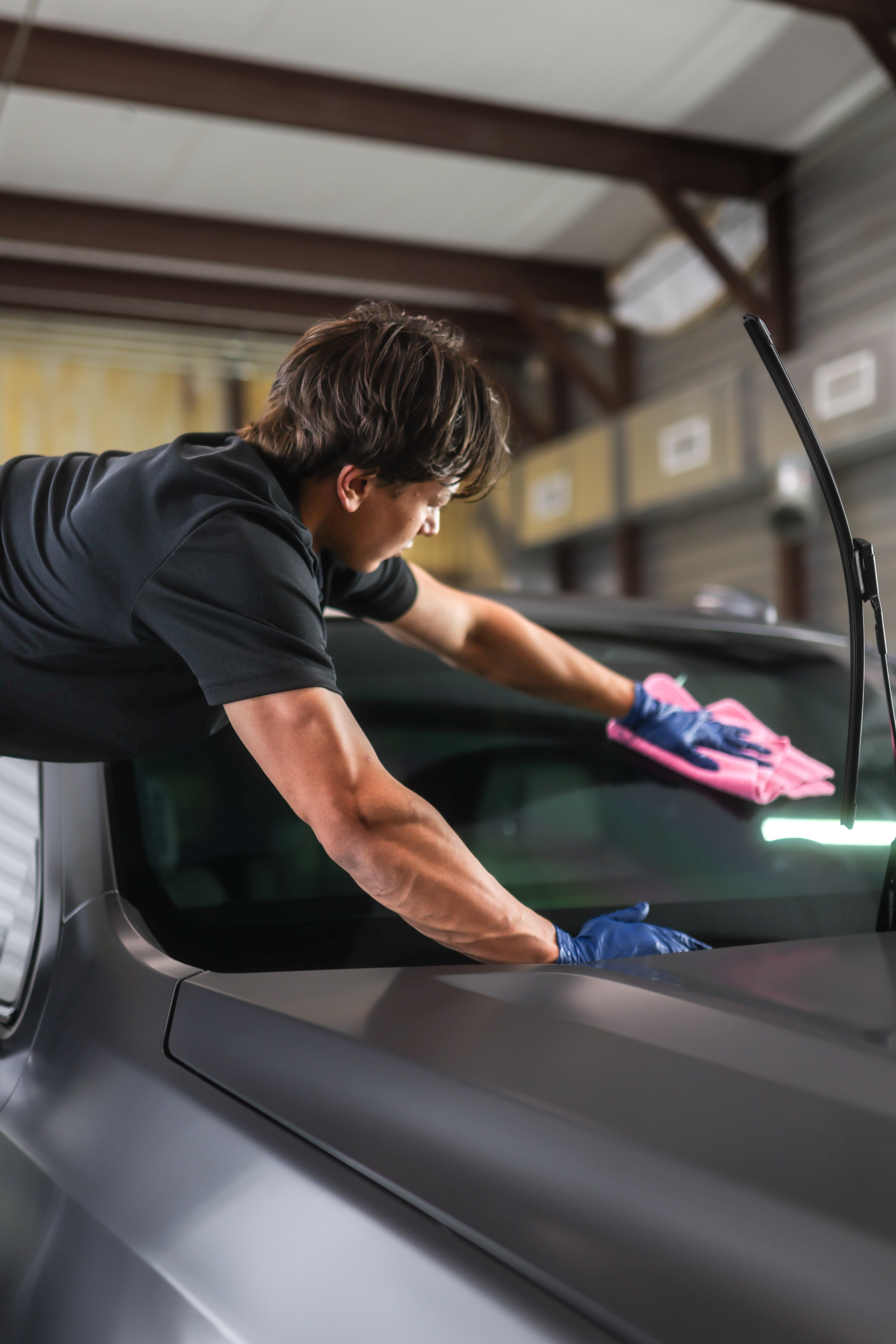
Drivers often ask whether one paint color is easier to own in West Texas. There is no universal winner, but pale dust, mineral residue, lighting, and wash marks can be more noticeable on some colors than others.
Black: Shows Everything, Including the Dust
Pale road dust contrasts strongly with black paint, and direct light can make fine wash marks easy to see. How demanding a black vehicle feels still depends on where it is parked, how it is washed, and the existing paint condition.
White: Hides Dust, Shows Water Spots
White can make a light layer of dust less obvious, but mineral rings and orange iron particles may contrast with the paint. That does not make every white vehicle easier or harder to maintain; it changes which contamination is easiest to notice.
Silver and Light Grey: Often More Forgiving
Silver and light grey often make pale dust and fine wash marks less noticeable in everyday lighting. Inspection lighting can still reveal defects that are difficult to see outdoors, so appearance alone is not a substitute for checking the paint condition.
Red and Dark Blue: Condition Matters
Rich colors can make oxidation, haze, and uneven finish more noticeable once those defects develop. The rate of change depends on the paint system, age, prior repairs, storage, washing, and exposure, so color alone does not establish how quickly a finish will fade.
What Actually Changes the Math
Color mainly changes how readily certain defects and contaminants are seen. A suitable sealant or coating can change surface behavior and maintenance, but it does not eliminate washing, prevent every spot or scratch, or guarantee that one color will be easier than another.
If low-maintenance appearance is the priority, silver or light grey may disguise everyday dust and light marks better than a dark solid color. Before choosing protection, consider where the vehicle is stored, how often it is driven, and what finish you expect between washes.
The right service is condition-dependent. Some vehicles only need careful washing and protection; bonded contamination, water-spot etching, oxidation, or wash marks may require inspection before decontamination or correction is recommended.
Related Reading
Ready to Protect Your Vehicle?
We'll inspect your paint and tell you exactly what it needs — we will share current appointment availability.
Keep Your Coating Performing.
Founding memberships are $99 for Exterior Detail, $149 for Full Detail, or $249 for Premium Detail. Each option has one set rate for qualifying cars, trucks, and SUVs.