Why Lubbock's Hard Water Causes
Permanent Water Spots
A fresh mineral deposit sits on top of the clear coat and washes off; left in direct sun it etches into the clear coat and needs correction. Calcium and magnesium do not evaporate with the water: they stay behind as the ring you see. The single habit that prevents most of it: dry the vehicle fully after washing instead of letting it air dry.
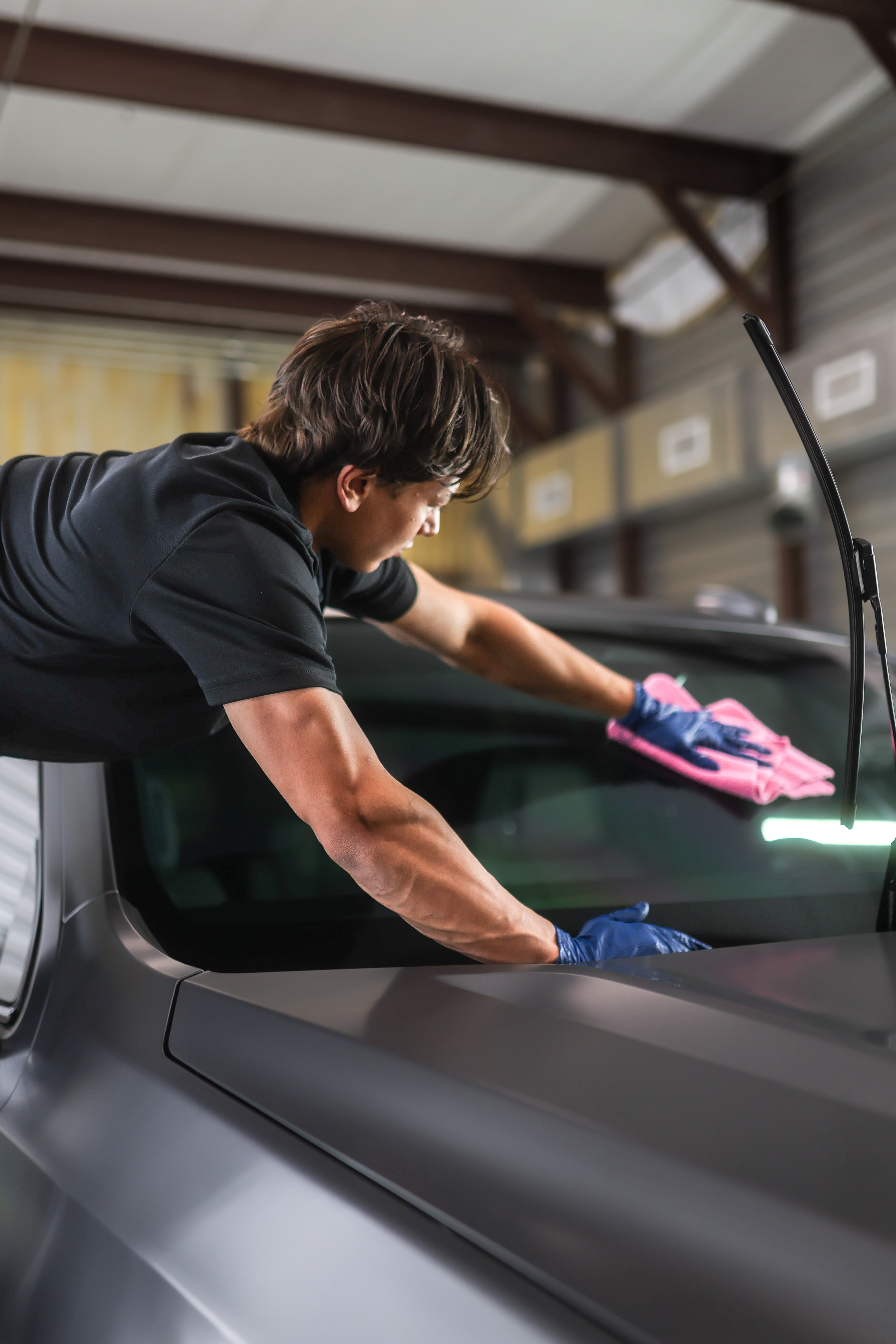
If you've ever washed your car in Lubbock and watched spots reappear the next morning even after a careful dry, hard water is why. This region's water supply carries a heavier mineral load than most of the country, and that changes how water spotting behaves on paint.
What's Actually in the Water
Hard water carries dissolved calcium and magnesium minerals. When a water droplet evaporates off paint, those minerals don't evaporate with it — they're left behind as a solid deposit, visible as the ring-shaped spot you see on an unprotected surface.
Why Some Spots Won't Wash Off
A fresh mineral deposit sits on top of the clear coat and usually washes away easily. Left in direct sun long enough, though, the concentrated minerals can etch microscopically into the clear coat itself — at that point it's not a deposit anymore, it's permanent surface damage that a normal wash won't fix.
How Ceramic Coating Prevents It
A hydrophobic ceramic coating causes water to bead up and roll off the surface almost immediately rather than sitting flat and evaporating in place. Less time on the surface means less opportunity for minerals to concentrate and etch. It's not that coated cars never get water spots — they just get far fewer, and the ones that do form are sitting on the coating's sacrificial layer rather than your actual clear coat.
If your car is already showing etched water spots, that's paint correction territory, not a wash-and-wax fix. We can assess whether it's surface-level or needs machine polishing to fully remove.
In the Meantime
Always dry your vehicle fully after washing rather than letting it air dry — that single habit prevents a large share of hard water spotting regardless of whether your paint is coated.
Related Reading
Ready to Protect Your Vehicle?
We'll inspect your paint and tell you exactly what it needs — we will share current appointment availability.
Keep Your Coating Performing.
Founding memberships are $99 for Exterior Detail, $149 for Full Detail, or $249 for Premium Detail. Each option has one set rate for qualifying cars, trucks, and SUVs.