New Car Detail Lubbock TX:
What Dealers Don't Tell You
A new vehicle leaves the factory with clear coat and no protection — no coating, no sealant, nothing between the paint and a West Texas summer. The ideal sequence is to bring it in within the first few weeks for a light decontamination and inspection, address any swirls dealer prep introduced, then coat it before the damage starts accumulating.
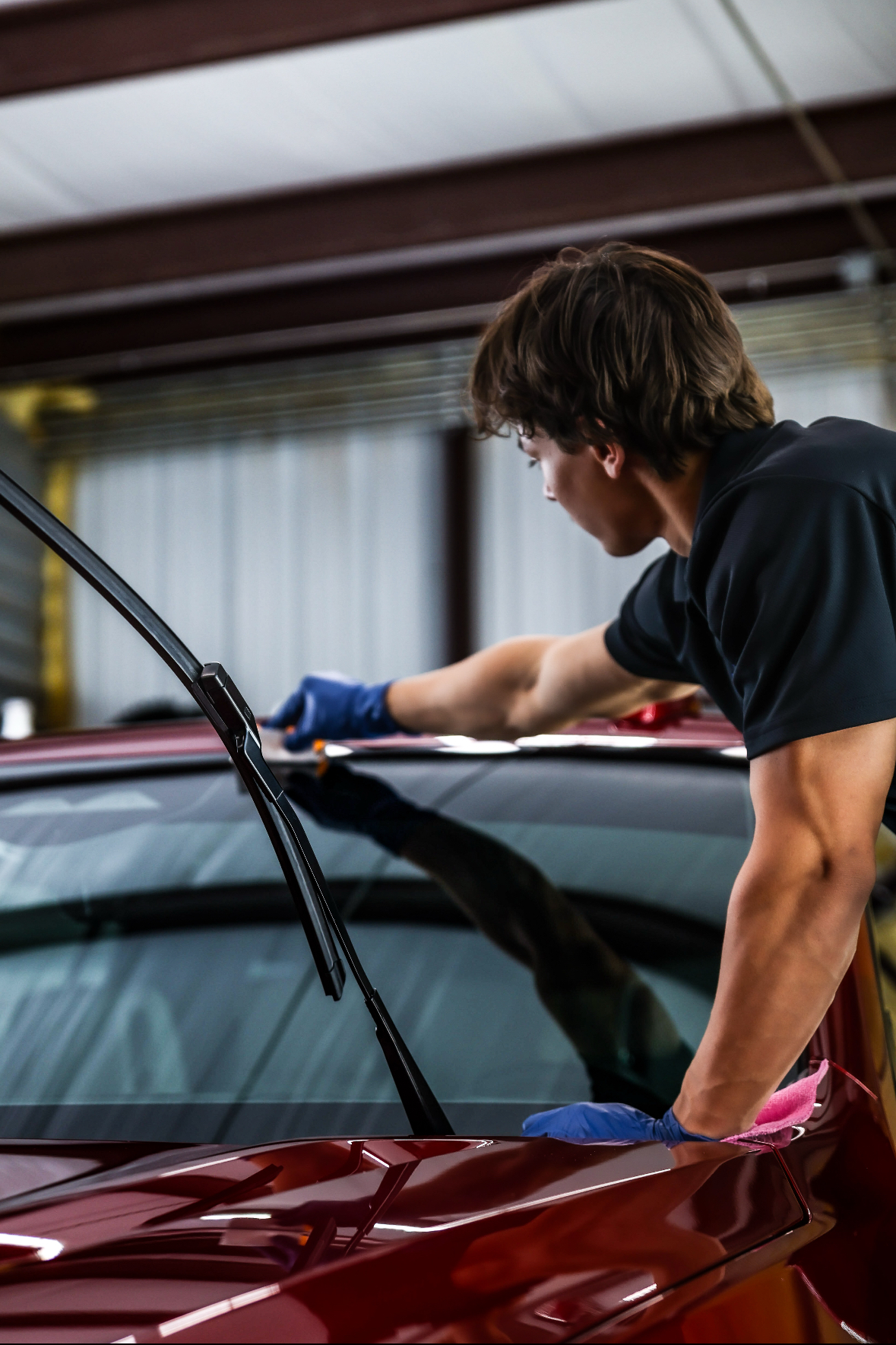
You just bought a new vehicle. It smells like new car, the paint looks flawless, and the last thing on your mind is taking it to a detail shop. But new cars have a significant problem that most buyers don't find out about until it's too late — the paint isn't protected the way it looks, and the dealer prep process often introduces swirl marks before you even drive home.
Here's what's actually happening with your new car's paint, and what to do about it.
What "New Car Paint" Actually Means
A new vehicle leaves the factory with clear coat over the color — the same system as any other car. What it doesn't have is protection. No ceramic coating, no paint sealant, no meaningful layer between the environment and your paint. The "protective coating" dealers charge $500–$2,000 for at the finance table is either a thin spray wax or a marketing upsell with no real durability.
New car paint in Lubbock faces the same conditions as every other car here — UV radiation, caliche dust, hard water from sprinklers, and temperature swings. It starts degrading the moment it's exposed. The "new car look" isn't permanent — it's just that the paint hasn't accumulated damage yet.
The dealer prep problem: Most dealerships clean new cars with rotary automatic washes or have detailers who work quickly. Both introduce fine swirl marks into the paint before you take delivery. Your "perfect" new car already has swirls — they're just not visible yet under showroom lighting.
What to Do Right After Buying a New Car in Lubbock
Option 1: New Car Detail + Ceramic Coating (Best)
The ideal sequence for a new car: bring it in within the first few weeks, we do a light paint decontamination and inspection, and then apply a ceramic coating. If the dealer prep introduced any swirls, we address those first. The coating goes on pristine paint and locks in that condition for years.
This is by far the most cost-effective approach — you're protecting paint that hasn't been damaged yet, which means no correction step and the coating performs at its best from day one.
Option 2: New Car Detail + Paint Sealant
If ceramic coating isn't in the budget right now, a professional detail with a quality paint sealant gives you 4–6 months of real protection. It's not as durable as coating but significantly better than nothing. Plan to reapply every few months or upgrade to coating when you're ready.
Option 3: Do Nothing (Not Recommended)
Without protection, Lubbock UV and caliche start working on your paint from day one. Most people don't notice until 2–3 years in when the paint starts looking noticeably duller than it did when they bought it. By that point, you need paint correction before you can apply protection, which costs more than doing it right the first time.
Should You Decline the Dealer's "Protection Package"?
Yes — almost always. Dealer protection packages are almost universally overpriced for what's actually applied. A $1,200 dealer "ceramic coating" is typically a spray-applied product that lasts 6–12 months, applied by someone working at high volume with minimal prep. Compare that to a professional 2-year or 5-year coating applied with proper decontamination and curing — there's no comparison in durability or quality.
Decline it at the dealership and bring the car to us instead. You'll get better protection at equal or lower cost.
What About the Interior?
New car interiors benefit from detail treatment too. Fabric seats aren't stain-resistant out of the box. Leather isn't conditioned. Plastics aren't UV-protected. A new car detail addresses all of this before life happens — kids, pets, coffee, Texas sun — and makes the results last significantly longer.
Timing: How Soon After Buying?
Ideally within the first 30 days. The paint is clean, hasn't accumulated damage, and any correction needed from dealer prep is minimal. The longer you wait, the more opportunity for new contamination, water spots, and UV exposure to accumulate — meaning more prep work before protection can go on.
Text us when you take delivery and we'll get you on the schedule.
Related Reading
Just Got a New Vehicle?
Bring it in before the paint takes any damage. We'll assess the condition and recommend the right protection — no overselling, straight advice.