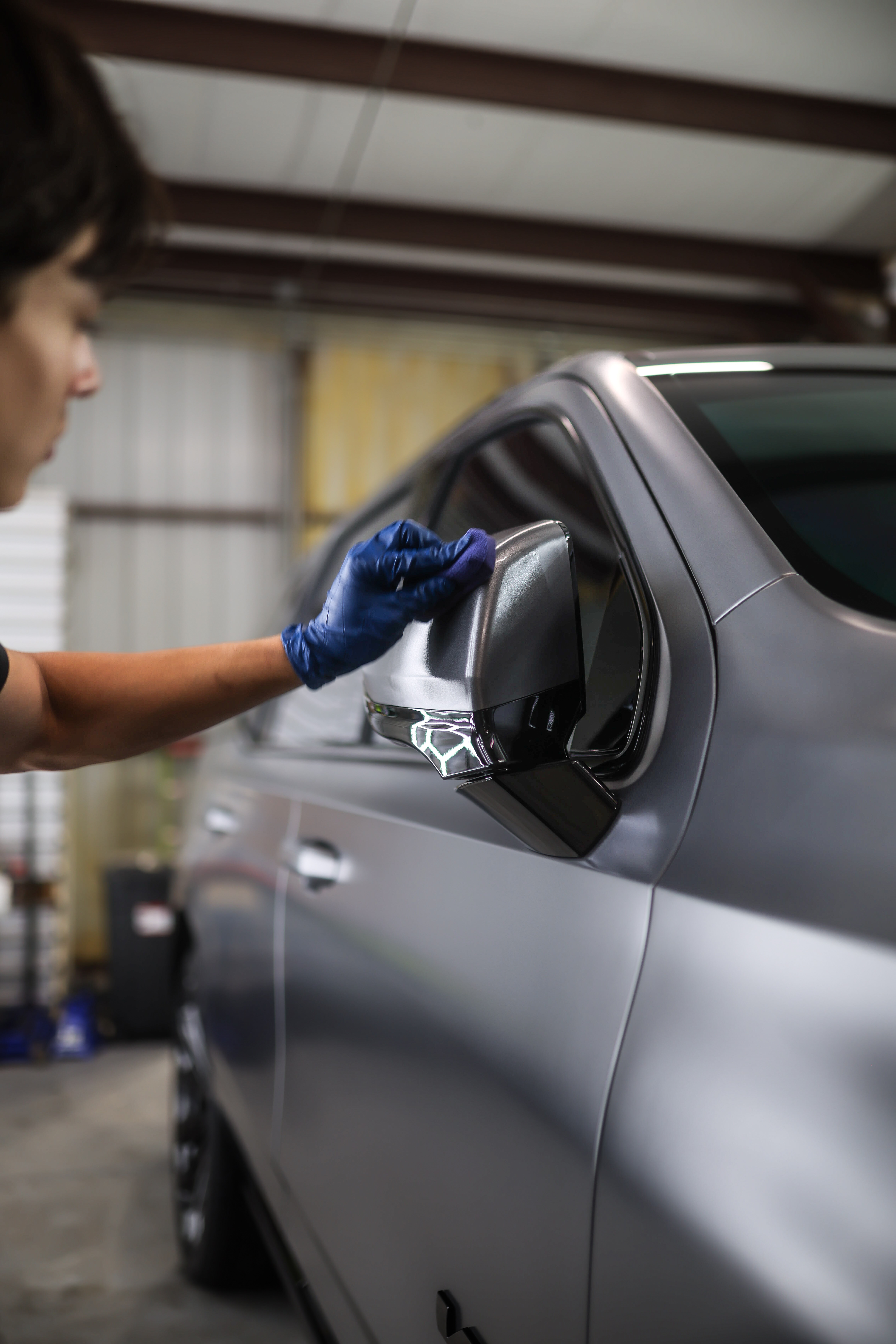
Overspray sits on top of the clear coat rather than bonding into it, which is why it feels like sandpaper but usually comes off. Check by running a hand over the paint inside a plastic bag: overspray feels gritty and uniform across horizontal panels. If a contractor caused it, document it before removal. Most jobs land in the correction range, from $350.
Overspray is atomized paint that dried in the air and landed on your vehicle as thousands of microscopic dots. It sits on top of the clear coat rather than bonding into it, which is why it feels like sandpaper but usually comes off without repainting.
In Lubbock the common sources are commercial painting near the Loop, road striping crews, and construction sites during a windy stretch — wind carries overspray considerably further here than most people expect.
If overspray has been on the vehicle for months and has begun bonding, aggressive clay work alone can marr the paint badly. Get it assessed before you attack it — and if a contractor caused it, document it before removal.
Overspray removal is quoted after inspection since coverage varies enormously. Most jobs land in the paint correction range, from $350.
Usually yes. Overspray sits on top of the clear coat rather than bonding into it, so clay bar decontamination followed by machine polishing removes it in most cases. Aged overspray that has begun bonding is harder and occasionally requires more aggressive correction.
Put your hand in a thin plastic bag and run it lightly over a horizontal panel. Overspray feels gritty and uniform, like fine sandpaper, and is usually worst on the hood, roof, and trunk where it settled from above.
Yes. If a painting contractor or road crew caused it, photograph the affected panels and get a written assessment before anything is removed. Once it is cleaned off you have no evidence for a claim.
No. Washing does not lift bonded particulate. Removal requires clay bar decontamination, sometimes a dedicated solvent, and usually machine polishing afterward.
Clay bar work with heavy lubrication is the primary method, sometimes followed by light polishing where the overspray sat long enough to bond. It is patient, panel-by-panel work rather than a chemical that dissolves it.
Yes, and glass is usually the easiest surface since it tolerates a blade at the correct angle with proper lubrication. Textured plastic trim is the hardest, because the overspray settles into the grain.
If a contractor caused it, document before you remove anything. Photograph the affected panels, the surrounding site, and the date. Removal destroys the evidence, and overspray claims usually turn on proof of source.
Delicate Details is a shop-based studio at 13209 Frankford Ave, Suite 4, Lubbock TX 79424. Serving Lubbock, Wolfforth, Shallowater, Slaton, Idalou, Levelland, and the South Plains.
Book Now →