PPF vs Ceramic Coating:
Which One Is Right for Your Vehicle?
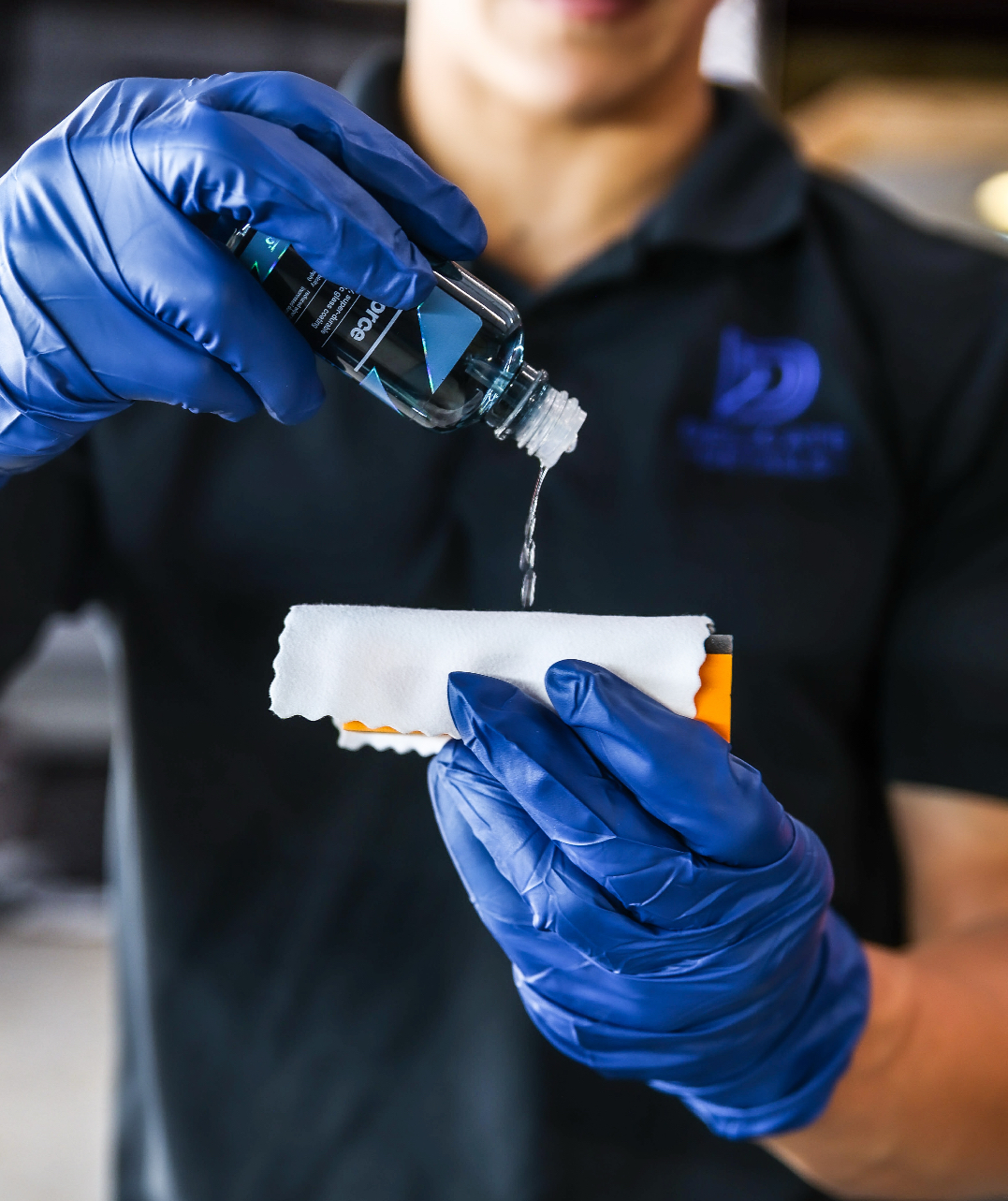
Two products, two completely different protection strategies. Paint protection film and ceramic coating both go on your vehicle to protect the paint — but they work differently, cost differently, and protect against different things. Knowing which one fits your situation (or whether you need both) means understanding what each actually does.
What PPF Actually Is
Paint protection film (PPF) — sometimes called clear bra — is a thick, optically clear thermoplastic urethane film that gets physically wrapped or cut and applied to painted surfaces. It's typically 8–10 mil thick. You can see it on the leading edge of hoods, front bumpers, mirrors, and rocker panels on high-end vehicles. Some installations cover full panels or the entire vehicle.
PPF's primary job is physical impact protection. Rock chips, road debris, bug strikes, and minor abrasions hit the film instead of the paint. Premium PPF also has self-healing properties — minor swirl marks and light scratches in the film disappear with heat exposure. The film is removable, so the paint underneath stays protected during installation and comes off cleanly at removal.
What Ceramic Coating Actually Is
Ceramic coating is a liquid polymer — primarily silicon dioxide — that bonds chemically to your clear coat at the molecular level. It's not a physical layer you can peel off. It becomes part of the surface. It adds hardness (9H rating), hydrophobic properties (water sheets off), UV resistance, and chemical resistance. It doesn't add significant physical thickness — it's microns, not mils.
Ceramic's primary job is chemical and UV protection with dramatically easier maintenance. It won't stop a rock chip. It will stop bird dropping acid from etching your clear coat, prevent UV from degrading your paint, keep mineral deposits from bonding, and make every car wash faster and easier.
Head to Head
Paint Protection Film
- Stops rock chips and road debris impact
- Self-healing properties for surface marks
- Removable without damaging paint
- 8–10 mil thickness provides physical barrier
- Full-vehicle coverage = $4,000–$8,000+
- Partial coverage (front end) = $1,000–$2,500
- Does not add hydrophobic properties on its own
- Requires more maintenance to prevent yellowing
- Install typically 1–3 days
Ceramic Coating
- Does not stop rock chips — resists scratches, not impacts
- Permanent chemical bond to clear coat
- Not removable once cured
- Micron-level thickness — invisible layer
- Full vehicle: $799–$1,899 depending on tier
- Covers entire vehicle in one application
- Strong hydrophobic effect — water and dirt repel
- UV blocking built in — no degradation in sun
- Install 1–2 days including paint correction
The Key Difference: What Each Protects Against
This is where most people get confused. PPF protects against physical damage. If you drive a lot of highway miles, gravel roads, or anywhere that sends rocks and debris at your paint — PPF on the front end stops the chips that ceramic can't. A rock going 70 mph at your hood will chip right through ceramic coating. That's not a criticism of ceramic — it's just not designed for that.
Ceramic protects against chemical and environmental damage. UV radiation, bird dropping acid, tree sap, mineral deposits from hard water, brake dust etching on wheels — these are the things ceramic handles that PPF doesn't address as well on its own. PPF without a coating on top still needs maintenance, can develop water spots, and doesn't have the hydrophobic performance of ceramic.
The best installations combine both: PPF on high-impact areas (front bumper, hood leading edge, mirrors, rocker panels), ceramic coating over the entire vehicle including the PPF. You get physical impact protection where it matters most and chemical/UV protection everywhere.
Which One to Choose
Choose ceramic coating if:
- You want full-vehicle protection for a budget under $2,000
- Your primary concerns are UV, water spots, bird droppings, and easy maintenance
- You don't drive high-speed highway or gravel-heavy routes regularly
- You want a solution that covers every panel including wheels and glass
Add PPF if:
- You drive significant highway miles (rock chip risk is real)
- You use oilfield service roads or gravel access routes
- You own a high-value vehicle and want maximum protection on the front end
- Budget allows for the full combination approach
What We Offer
Delicate Details specializes in professional ceramic coating in Lubbock TX — our 2-year Essential, 5-year Advanced, and 10-year Elite packages cover your full vehicle with paint correction included. We don't cut corners on prep, and we use CarPro professional-grade coatings.
If you're also interested in PPF, we can discuss what partial coverage on high-impact areas looks like in combination with a ceramic coating. The combination is the strongest protection available — PPF where physical impact risk is highest, ceramic everywhere else.
Related Reading
Not Sure Which Way to Go?
Call us or come in. We'll look at your specific vehicle and driving situation and tell you exactly what makes sense.
Keep Your Coating Performing.
Monthly pH-safe washes, iron decon, and SiO₂ topper. Priority scheduling, locked-in rate. No contracts.