Window Tint + Ceramic Coating
in Lubbock TX: Why Owners Combine Both
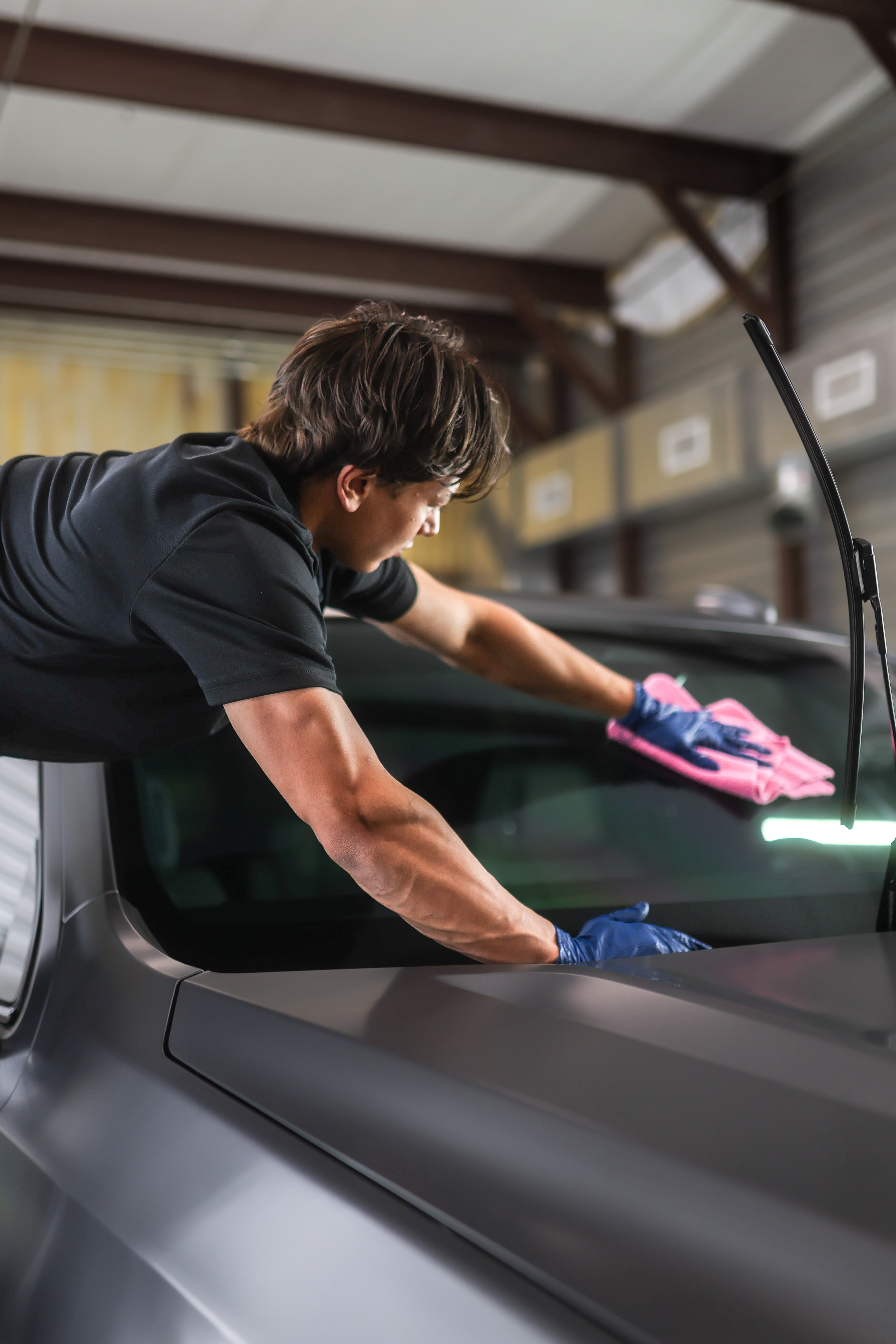
Ceramic coating protects the outside of your vehicle. Window tint protects the inside. In Lubbock's climate — where UV radiation runs year-round and summer cabin temperatures regularly hit 140°F+ — doing one without the other leaves half your protection problem unsolved. That's why the two services pair together so often at our shop, and why the combination makes particular sense for West Texas owners.
What Window Tint Actually Does (Beyond Looking Good)
Window tint is primarily a functional product, not a cosmetic one. The visual darkening is a side effect of the film's ability to block light and infrared radiation. What it actually does:
- Blocks UV radiation: Quality window film blocks 99% of UV — the primary cause of interior fading, cracking, and degradation in leather seats, dashboards, and door panels
- Blocks infrared heat (IR): IR radiation is what makes your cabin feel like an oven. Ceramic window film specifically blocks IR while maintaining visibility — you can run a lighter shade and still get significant heat rejection
- Reduces cabin temperature: A vehicle parked in Lubbock sun without tint can reach interior temperatures of 140–160°F. Tint can reduce that by 30–50°F depending on the film
- Reduces A/C load: Less heat entering means your A/C works less hard and uses less fuel — meaningful in a West Texas summer with 100°+ exterior temps
- Privacy and glare reduction
Ceramic Tint vs Standard Dyed Film
Window tint comes in multiple film types. The two main categories relevant to this discussion:
Dyed Film
Standard dyed window film uses dye layers to reduce visible light transmission. It provides good privacy and blocks some UV, but limited infrared rejection. In Lubbock heat, dyed film blocks the light but doesn't stop the heat effectively. It also tends to fade and turn purple over years of UV exposure.
Ceramic Window Film
Ceramic tint uses nano-ceramic particles instead of dye. These particles are extremely effective at blocking infrared radiation without affecting visible light clarity or electronic signal transmission. Ceramic tint can be applied at lighter shades and still deliver better heat rejection than dark dyed film. It doesn't interfere with GPS, cell signal, or radar detectors the way metallic films do. And it doesn't fade — the ceramic particles are stable under UV exposure.
Ceramic window film is to dyed window film what ceramic paint coating is to wax. One sits on the surface and degrades. The other uses ceramic technology for permanent, non-fading performance. For Lubbock heat specifically, the IR rejection difference is dramatic.
Why the Combination Makes Sense
Ceramic paint coating handles everything on the outside — UV protection, hydrophobic repulsion, chemical resistance, scratch resistance. But UV still enters through the glass and attacks your interior. Your leather seats, your dash, your door panels — all exposed to the same West Texas sun that destroys exterior paint, just from the inside.
Ceramic window tint closes that loop. It blocks UV before it reaches the interior, drops cabin temperature significantly, and reduces the fading and cracking that every Lubbock vehicle's interior eventually shows without protection.
We do both in a combined appointment. The GMC Yukon Denali we recently completed got the Elite 10-Year ceramic coating on the full exterior, windshield coating, full wheel ceramic, and ceramic tint on the front two windows. That vehicle is protected from the sun in every direction — exterior, glass, and interior — for the next decade.
Texas Tint Laws
Texas law specifies minimum visible light transmission (VLT) percentages for different windows:
- Front side windows: Must allow more than 25% VLT
- Rear side windows: Any darkness on vehicles other than sedans
- Rear window: Any darkness
- Windshield: Tint strip only above AS-1 line
We tint to Texas-legal standards on front windows and can go darker on rear windows depending on vehicle type. We'll confirm legality for your specific vehicle before the install.
The Combined Appointment
Window tint is typically done same-day or added to a ceramic coating appointment. If you're bringing your vehicle in for a full ceramic job, adding window tint to the front windows (or all windows) is straightforward to schedule at the same time. One drop-off, full protection.
Protect Inside and Outside
Get a quote for ceramic coating plus window tint. One appointment, full protection from West Texas sun in every direction.
Keep Your Coating Performing.
Monthly pH-safe washes, iron decon, and SiO₂ topper. Priority scheduling, locked-in rate. No contracts.