Specialized tools that actually get it out — rubber extractors, compressed air, and a powerful vacuum. Not just moving it around. $50 add-on to any interior detail.
Pet hair — especially from short-haired dogs — weaves itself into fabric fibers directionally. The barbed structure of the hair catches on the fabric loops and locks in. A regular vacuum just bends the hair down instead of pulling it out. You're not cleaning it, you're hiding it temporarily.
The right approach is rubber extraction tools that create friction and roll the hair up out of the fibers, followed by compressed air to break suction and lift it, then a high-powered extractor to remove it completely. Done in the right order, this actually works.
We do this every week in Lubbock. German shepherds, labs, cattle dogs riding in trucks. Vehicles where the previous owner had a dog and you want it actually gone. We've seen the full range — and the $50 add-on saves you hours of frustration with a lint roller that was never going to finish the job.
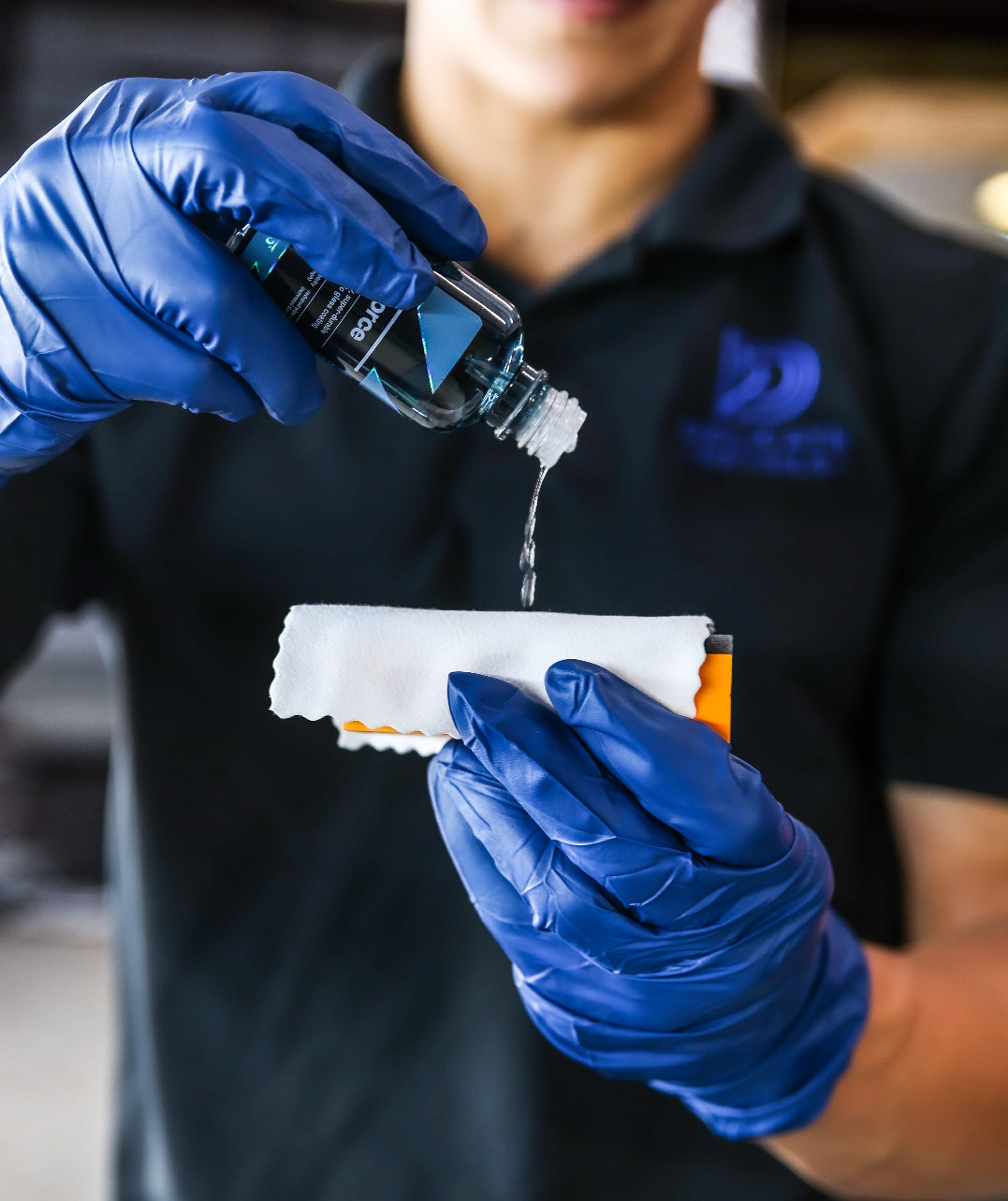
A rubber blade or squeegee tool creates friction that grabs the hair against the grain of the fabric and rolls it into clumps that can be lifted out. This breaks the mechanical lock the hair has in the weave.
Compressed air is blown into the fabric at close range to break static cling and suction holding remaining hair in place. This suspends the loosened hair so the vacuum can capture it in the air rather than fighting to pull it from fibers.
A high-powered extractor vacuum with the right attachment finishes the job — pulling both the loosened hair and any dander or fine debris the rubber tool disrupted. The result is fabric that's genuinely clean, not just swept over.
$50 added to any interior detail or full detail appointment. Vehicles with extreme buildup across all surfaces — multiple large dogs over years — may run longer and we'll discuss pricing accordingly. Most vehicles are the flat $50.