Can You Coat a Car
in 100-Degree Heat?
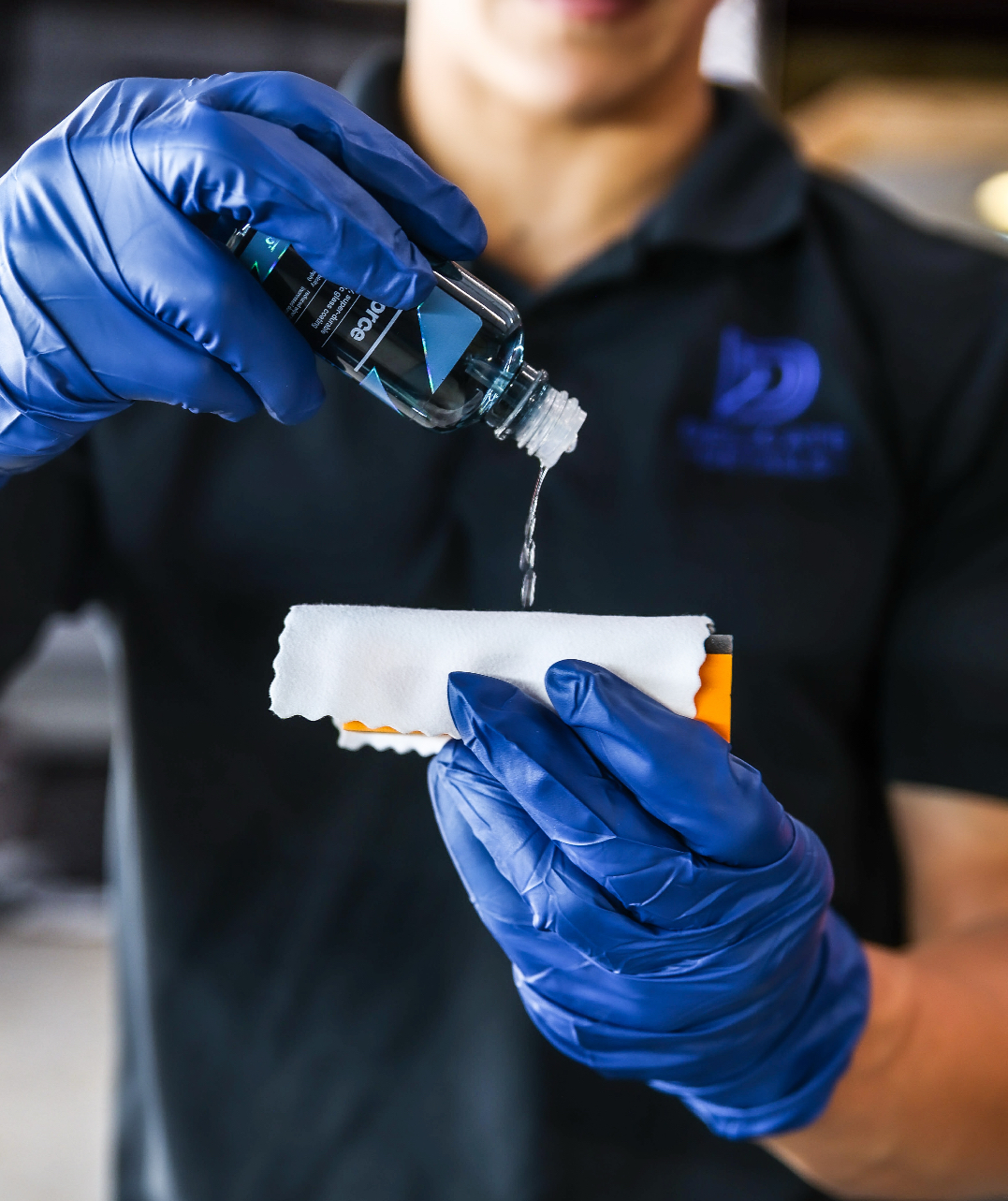
This is one of the more reasonable questions we get, and the answer explains why we do this work indoors rather than in a driveway. A coating is a chemical reaction on a timer, and temperature is what sets the clock.
What “Flashing” Means and Why It Matters
After a coating is wiped onto a panel it begins to flash — the carrier evaporates and the product starts to set. You have a window to level it before it hardens. Get the timing right and the panel is uniform. Miss it and you get high spots: streaks and rainbow-looking patches of excess product cured onto the surface.
Too Hot Is the Bigger Problem Here
On a 100-degree Lubbock afternoon, a dark panel sitting in the sun can be far hotter than the air. The coating flashes almost on contact, which collapses the leveling window to nearly nothing. That is how high spots happen, and removing a cured high spot means machine polishing the coating back off that panel and re-coating it.
Too Cold Slows the Cure Instead
Lubbock winters swing the other way. Below roughly 50°F most coatings cure slowly and unevenly, and the product can stay soft far longer than the label suggests. A coating that has not properly hardened is vulnerable — it will not deliver the durability you paid for if it gets wet or dirty during that window.
Humidity Is the Other Variable
Most coatings have a humidity range as well. West Texas is usually dry, which is generally favourable, but very low humidity can accelerate flashing in the same direction heat does. It is another reason the conditions need to be controlled rather than accepted.
Why We Do This Indoors
Working in a controlled shop space means the panel temperature is consistent across the whole vehicle, the leveling window is predictable, and there is no dust settling onto wet coating — which in Lubbock is not a small consideration. It also means the vehicle can sit protected through the initial cure instead of being handed back into the weather.
What This Means for Booking
Practically: you do not need to wait for a particular season to get a vehicle coated here, because the environment is controlled either way. What matters more is leaving the vehicle long enough for the initial cure rather than trying to squeeze it into a few hours.
A cured high spot is not a wipe-off fix. Once excess coating hardens on a panel it has to be machine polished back off and that section re-coated — which is exactly what an uncontrolled 100-degree application risks.
If you have been told to wait for cooler weather to coat your vehicle, that is a driveway constraint, not a coating one. Give us a call and we will walk you through the timeline.
Related Reading
Ready to Protect Your Vehicle?
We'll inspect your paint and tell you exactly what it needs — most clients are booked within 48 hours.
Keep Your Coating Performing.
The Coat Plan is our monthly ceramic maintenance membership. pH-safe washes, iron decontamination, and SiO₂ topper every month. Priority scheduling, locked-in rate. No contracts.