Graphene vs Ceramic Coating:
What’s Marketing, What Isn’t
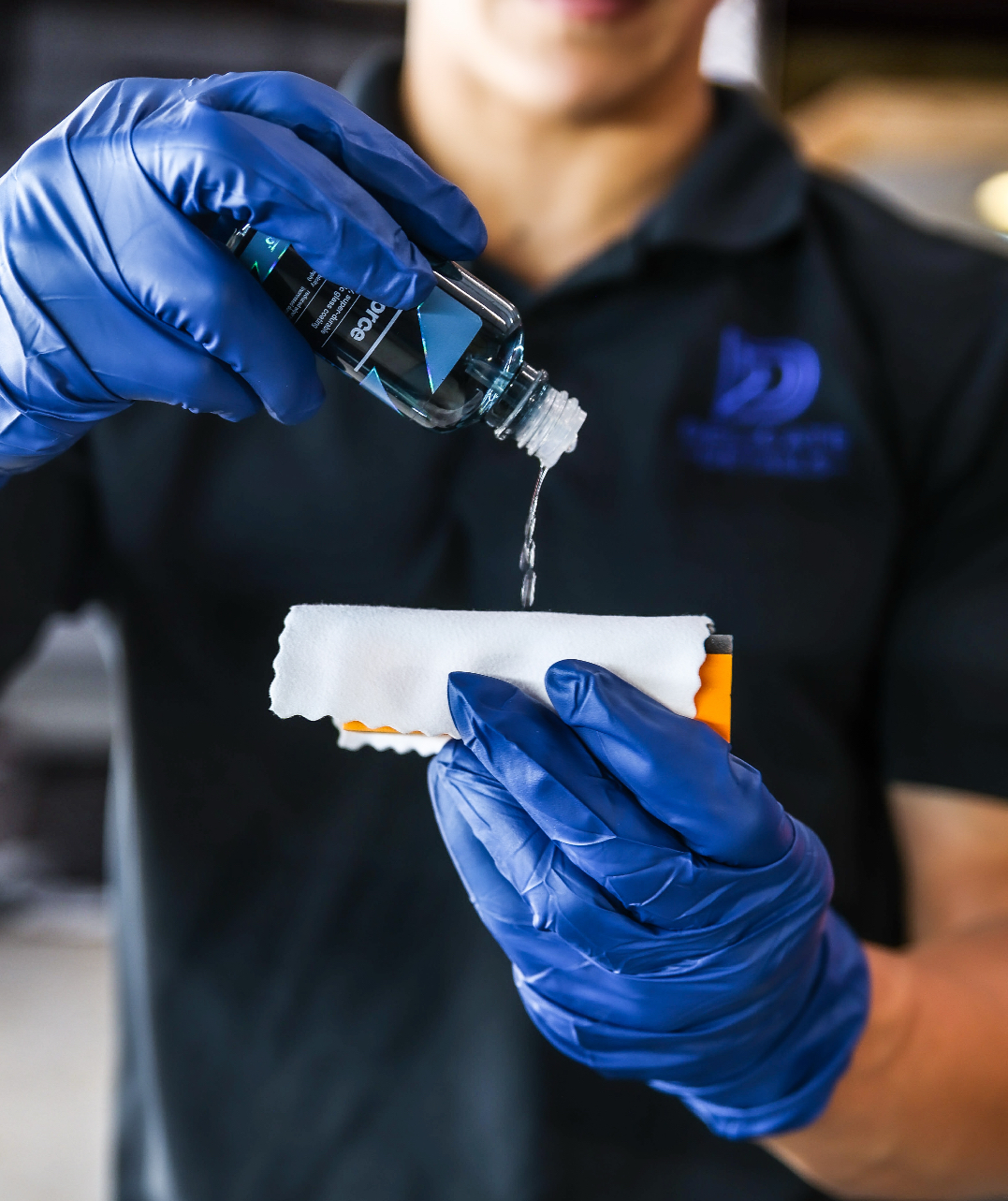
Graphene coatings show up in a lot of advertising as the obvious upgrade over ceramic. The reality is more boring than the marketing, and worth understanding before you pay a premium for the word.
Both Are Still Silica-Based
This is the part the marketing skips. Nearly every consumer graphene coating on the market is a silica-based coating — the same fundamental SiO2 chemistry as a ceramic coating — with a small amount of graphene oxide added. It is not a different category of product. It is a ceramic coating with an additive, and the base chemistry is doing most of the work.
What the Additive Plausibly Does
The credible claims are around water behaviour and heat. Graphene oxide can reduce water spotting tendency by changing how water sheets off rather than beading into concentrated droplets, and it may help with surface heat dissipation. In a place with water as mineral-heavy as Lubbock's, reduced spotting is a genuinely relevant property — that one is not nothing.
What the Claims Don’t Survive
Hardness numbers and lifespan claims are where it gets loose. There is no industry body verifying coating longevity, so a bottle claiming seven or ten years is making a marketing statement, not a tested one. That is equally true of ceramic products making the same claims. Treat any specific year number on any coating — graphene or ceramic — as a claim rather than a specification.
Preparation Still Decides the Outcome
This is the thing that actually determines how your coating performs and how long it lasts. A coating applied over contaminated, uncorrected paint fails early regardless of what is in the bottle. The gap between a good installation and a bad one is far larger than the gap between graphene and ceramic.
What We Use and Why
We use CarPro DQuartz, a nano-diamond silica coating, with CarPro Gliss as a sacrificial topcoat. That choice is about a product we have applied enough times to know how it behaves in West Texas heat and how it holds up between maintenance visits — not about which buzzword is currently ahead. If a graphene product ever clearly outperformed it here, we would use that instead.
The honest summary: graphene coatings are silica coatings with an additive. The additive may genuinely help with water spotting. The year-count on the bottle is marketing regardless of which chemistry is printed on it.
If someone is charging you a large premium purely for the word graphene, ask what preparation is included instead. That is where your money actually changes the result.
Related Reading
Ready to Protect Your Vehicle?
We'll inspect your paint and tell you exactly what it needs — most clients are booked within 48 hours.
Keep Your Coating Performing.
The Coat Plan is our monthly ceramic maintenance membership. pH-safe washes, iron decontamination, and SiO₂ topper every month. Priority scheduling, locked-in rate. No contracts.