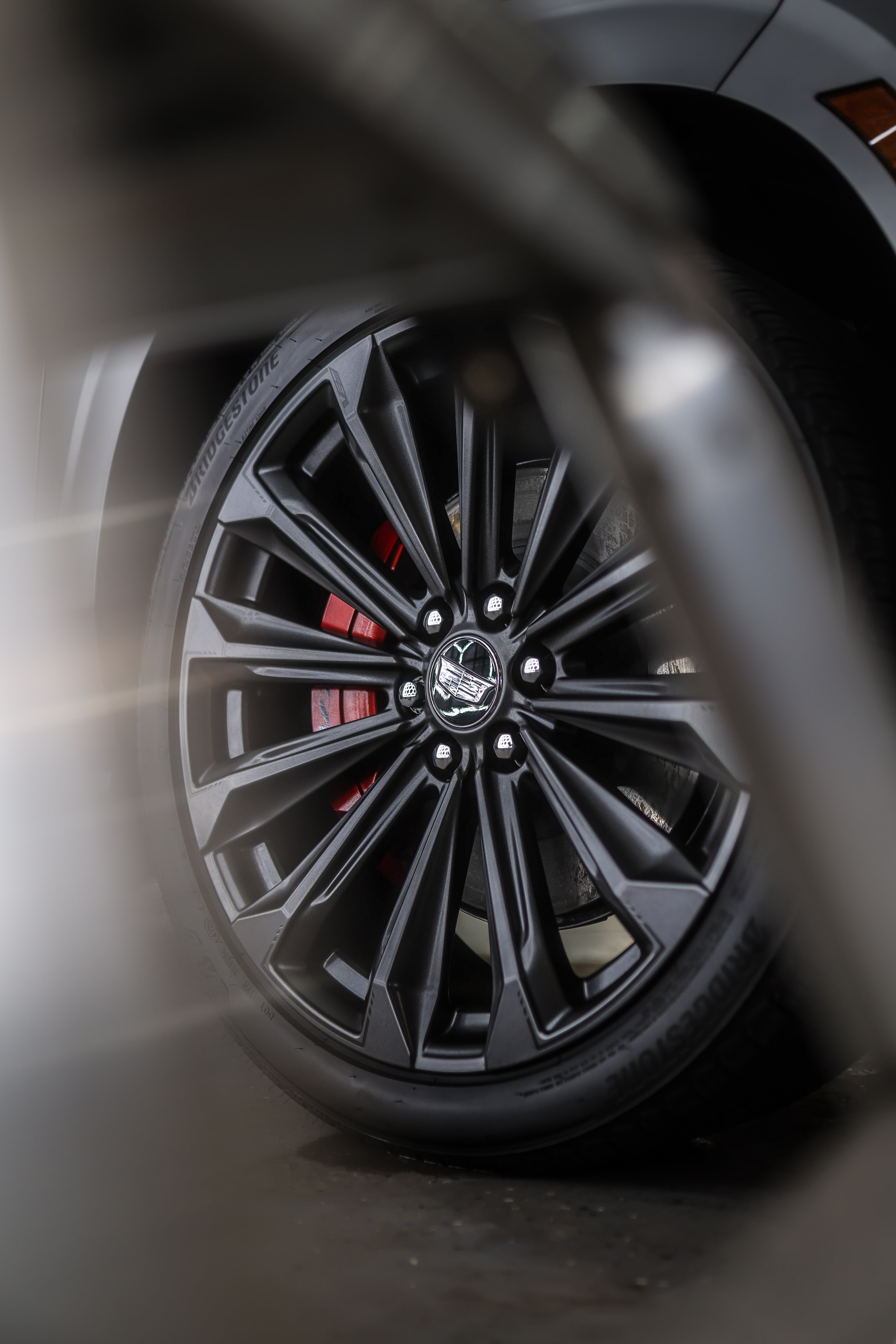
Brake dust is not dirt: it is iron shed hot enough to embed into the wheel finish, where it oxidizes and pits the clear coat. Stop-and-go on Loop 289 and 82nd Street generates it constantly, and West Texas heat keeps wheels hot enough that particles bond instead of bouncing off. Use a pH-balanced iron remover on cool wheels; acid wheel cleaners strip clear coat outright.
Brake dust is not dirt. It is iron particles shed from the rotor and pad at high temperature, and they arrive hot enough to embed into the wheel finish. Once embedded they oxidize, expand, and pit the clear coat on the wheel.
Stop-and-go driving on Loop 289 and the 82nd Street corridor generates constant brake dust, and West Texas heat keeps wheels hot enough that the particles bond rather than bounce off.
Acid-based wheel cleaners sold cheaply will strip the clear coat off a painted or machined wheel and permanently dull polished aluminum. If a product does not name the wheel finishes it is safe for, do not put it on your wheels.
Wheel decontamination is included in every package. Wheel face ceramic coating runs $100-$150 as an add-on and is the fix that stops the cycle.
Brake dust is iron shed hot from the rotor, and it embeds into the wheel finish rather than sitting on it. Soap and water cannot lift embedded metal — it requires a chemical iron remover that dissolves the particles.
Yes, if left long enough. Embedded iron oxidizes and expands, pitting the wheel clear coat. Early decontamination reverses it. Advanced pitting requires polishing, and severe cases require refinishing.
That is the chemical reacting with embedded iron particles and dissolving them. The color change is the indicator that iron contamination was present and is being removed.
Ceramic coat the wheel faces. Coated wheels release brake dust before it can embed and bond, which means normal washing keeps them clean instead of requiring chemical decontamination.
Not on painted, machined, or polished wheels, which covers almost everything on the road. They strip clear coat and permanently dull polished aluminum. If a product does not name the finishes it is safe for, do not put it on your wheels.
Light etching can often be polished back on painted and clear-coated wheels. Once corrosion has pitted through the finish into the metal, that is refinishing or powder coating rather than detailing.
Meaningfully, yes. Ceramic-compound pads shed far less iron than semi-metallic, which reduces both the cleaning burden and the embedding that causes etching. It is the one upstream fix available.
Delicate Details is a shop-based studio at 13209 Frankford Ave, Suite 4, Lubbock TX 79424. Serving Lubbock, Wolfforth, Shallowater, Slaton, Idalou, Levelland, and the South Plains.
Book Now →