Ceramic Coating for Trucks
in Lubbock TX: A Practical Guide
Ceramic coating may fit a truck owner who wants easier routine cleaning and a longer-lived sacrificial surface treatment. It does not stop rock chips, scratches, cargo damage, or the need to wash. Current truck and large-SUV pricing is $1,099, $1,499, or $2,599 for the 2-, 5-, or 10-year CarPro service tier.
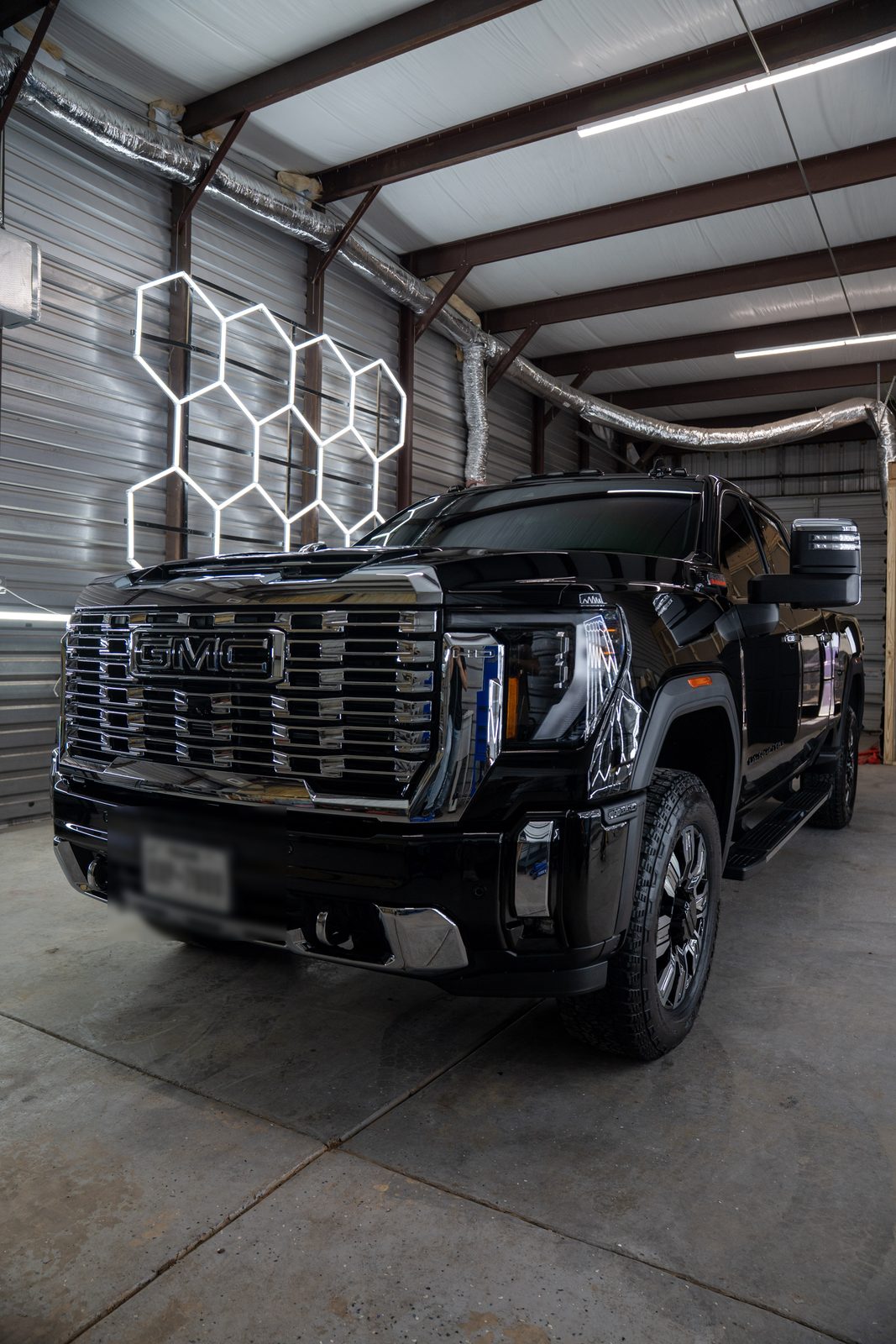
Lubbock is truck country. The F-150, Ram, Silverado, and Tundra are daily drivers and work rigs, not just weekend vehicles. Outdoor parking, job-site dust, highway mileage, and frequent washing can all add wear, so protection choices should match how the truck is actually used.
Ceramic coating is one protection option, not the only one. The useful choice depends on the truck's paint condition, storage, mileage, wash routine, job-site exposure, and whether the owner is trying to improve cleanability, appearance, chemical resistance, or impact protection.
What Trucks Face That Sedans Don't
A pickup used for commuting may see the same conditions as a sedan, while a work or ranch truck can face added exposure. Common truck-specific concerns include:
- Highway mileage — the hood, bumper, mirrors, and lower doors can collect insects, road film, and impact damage. Coating can help with cleaning, but paint protection film is the impact-protection option.
- Caliche roads and unpaved surfaces — dust and loose debris collect around lower panels, wheel openings, trim, and the tailgate. Dry wiping can add marring.
- Bed use and tie-down abrasion — even bed-lined trucks get paint damage on the tailgate, the top of the bed walls, and around the tie-down bolts from regular use.
- Outdoor and job-site exposure — sun, wind, insects, hard-water residue, and airborne contamination increase the need for timely cleaning.
- Automatic brush washing — contaminated wash media can drag soil across large panels and add visible marring.
What Ceramic Coating Does for a Truck Specifically
Hydrophobic Surface
A coating's water behavior and lower surface energy can make routine soil easier to remove with a compatible wash process. It does not make a truck self-cleaning, and a rinse alone may not remove bonded road film, mineral deposits, or oily contamination. Prompt washing still matters.
UV Protection
Large horizontal panels collect sun, dust, water, and contamination. A compatible coating adds a sacrificial layer over the paint, but it does not make oxidation or finish failure impossible. Product instructions, preparation, storage, washing, and maintenance all affect performance.
Scratch Resistance
Ceramic coating is not scratchproof and should not be described as armor. Abrasive washing, branches, cargo, tools, and road debris can still mark the coating or paint. Dark colors can make wash marks easier to see, so careful contact washing and drying remain important.
Chemical Resistance
Work trucks may encounter fuel residue, fertilizer, hydraulic fluid, insect residue, hard water, or other contamination. Coating compatibility and resistance vary by product and contaminant. Remove spills promptly using the product maker's care guidance; do not assume a coating makes concentrated chemicals safe to leave on the surface.
Inspect before promising correction. Swirls, etching, oxidation, chips, repaint, and thin clear coat need different decisions. Coating is transparent and does not hide existing defects; polishing should be limited to what the paint can safely support and the owner approves.
Which Package Is Right for a Truck?
Delicate Details currently publishes three truck and large-SUV ceramic-coating tiers:
- 2-Year CarPro CQuartz SiC — $1,099: condition-matched decontamination, inspection-based paint preparation, and the selected coating service.
- 5-Year CarPro DQuartz — $1,499: condition-matched decontamination, inspection-based paint preparation, and the selected coating service.
- 10-Year CarPro DQuartz + Gliss — $2,599: condition-matched decontamination, inspection-based paint preparation, and the selected coating service.
Package years identify the service tier, not a maintenance-free promise. Written maintenance terms apply. Correction, wheel coating, glass coating, trim work, or other surfaces should be confirmed in the written quote rather than assumed from the tier name.
What About Spray Ceramic and Ceramic Waxes?
Products using the word “ceramic” can have different chemistry, preparation, application, cure, maintenance, and written performance terms. Read the exact label and technical information instead of sorting products only by bottle type or marketing category. A maintenance spray, wipe-on sealant, and multi-step coating kit are not automatically interchangeable.
For a fair comparison, list the exact product, covered surfaces, preparation, workspace requirements, cure guidance, expected maintenance, and written terms. That comparison is more useful than assuming every consumer product is temporary or every professional product performs identically.
Condition Records Are Useful, but Resale Is Not Guaranteed
Keep the invoice, product name, covered surfaces, maintenance terms, and service records. Documentation can help a future buyer understand the work performed, but a coating does not guarantee a higher trade-in or private-sale price. Vehicle condition, mileage, history, market demand, and buyer inspection all matter.
Related Reading
Get Your Truck Coated
Bring your pickup to our shop on Frankford Ave. We'll inspect the paint, quote you accurately for the truck's size, and get it protected.
Keep Your Truck's Coating Performing.
Monthly pH-safe washes, iron decon, and SiO₂ topper. Priority scheduling, locked-in rate. No contracts.