Dodge Challenger R/T:
The Full Treatment
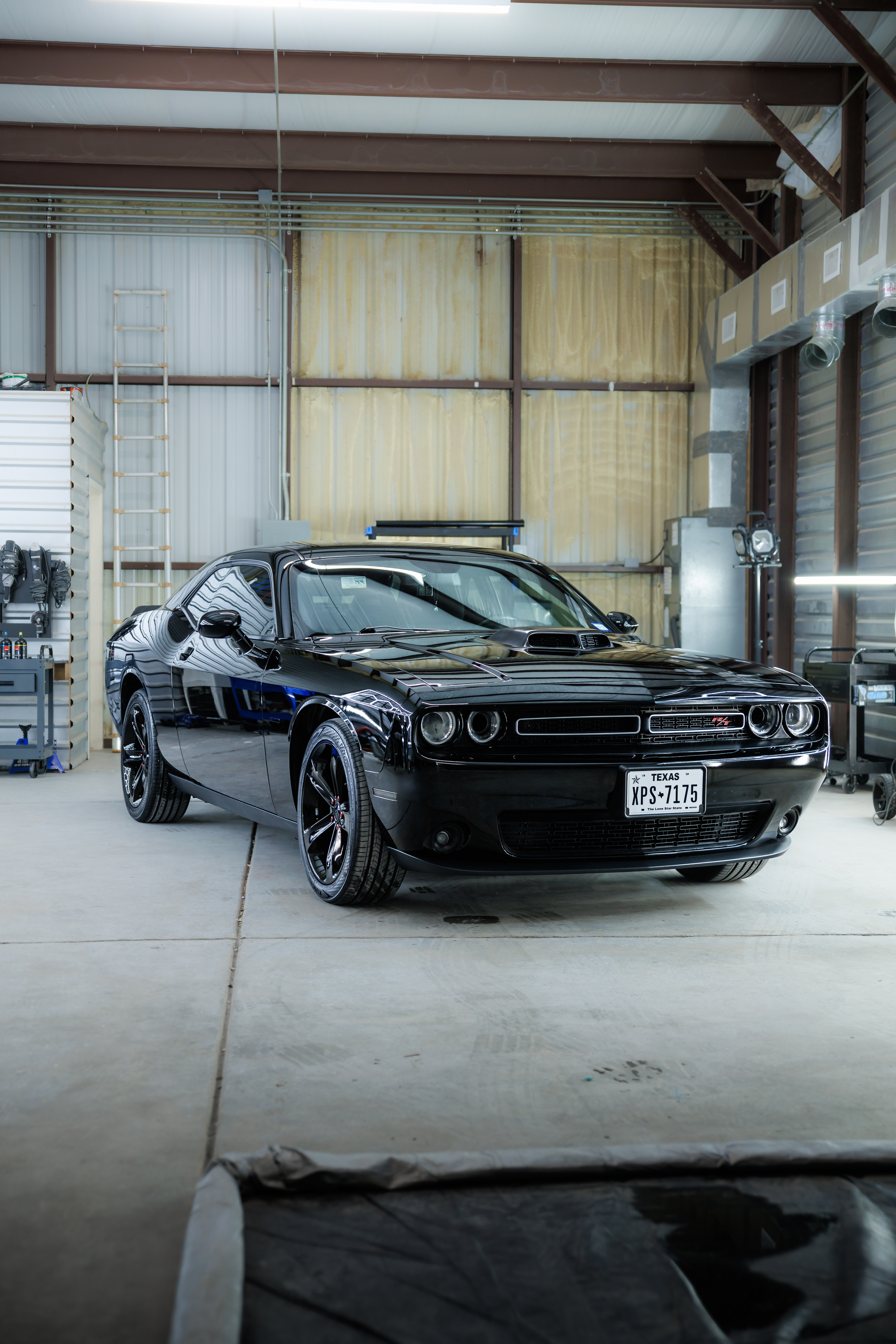
On a dark car with existing swirl damage you do not skip prep — the coating locks in whatever is under it. This Challenger R/T got the 5-Year Ceramic Package: full decontamination to pull embedded iron, a two-step correction worked panel by panel, an IPA panel wipe to strip polishing oils, then coating on paint, wheels, and windshield.
Black cars are unforgiving. Every swirl mark, every water spot, every imperfection in the clear coat is visible under any light — direct sun, parking lot fluorescents, your phone camera. When the owner of this black Dodge Challenger R/T brought it to our shop in Lubbock, the paint told the full story of years of automatic car washes, West Texas dust, and UV exposure. He wanted it to look the way it should. We made that happen.
This is a complete breakdown of what we did and why — every step, in order.
The Package: 5-Year Ceramic Full Treatment
The owner booked our 5-Year Ceramic Package, which includes everything the paint needs before a coating can go on correctly — not just the coating itself. On a dark car with existing swirl damage, you don't skip prep. You do it right or you don't do it.
What Was Included
- 2-Step Paint Correction — compound stage to remove heavy defects, polish stage to refine the finish
- Full Decontamination — iron fallout treatment, clay bar, panel wipe with IPA
- 5-Year CarPro Ceramic Coating — bonded to the corrected clear coat, not applied over damage
- Windshield Coating — hydrophobic glass coating, rain beads off at highway speed
- Wheel Face Ceramic — every spoke coated, brake dust wipes clean instead of baking on
Step 1: Assessment and Decontamination
Before a polishing pad touches the paint, the surface has to be clean — not just visually clean, but chemically clean. Black paint that's been through automatic car washes has embedded iron fallout from brake dust and road debris that you can't see until it turns purple under an iron remover. This car had it everywhere.
Decontamination ran in stages: chemical iron fallout remover, full wash and dry, then a thorough clay bar pass to pull any remaining bonded surface contamination. After clay, the paint feels completely different — glass-smooth instead of slightly rough. That's when it's actually ready to be polished.
Step 2: 2-Step Paint Correction
Paint correction on black is slow, methodical work. The compound stage cuts through the clear coat microscopically to remove the swirl marks, scratches, and water etching left from years of washing. We work panel by panel under dedicated lighting — not sunlight, which hides defects, but focused correction lights that show every imperfection in real time.
Compound Stage
Removes the majority of defects — heavy swirls, scratches, oxidation. The cut is aggressive enough to clear the damage without removing more clear coat than necessary.
Polish Stage
Refines what the compound left behind. Removes any light haze from cutting, brings the clear coat to a mirror-like clarity. This is what makes black paint look like glass.
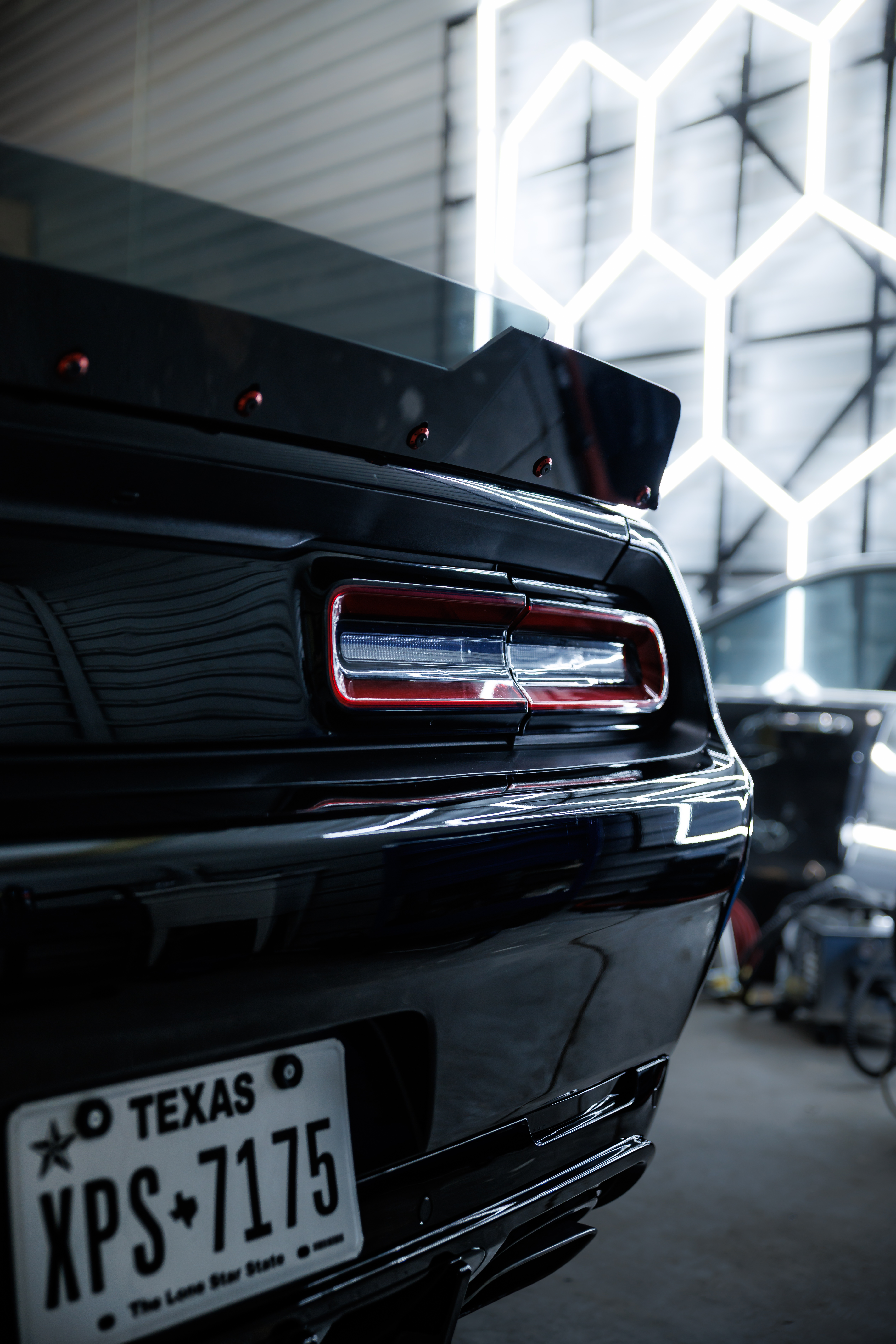
After two stages of machine correction, the paint was better than showroom. That's the baseline we want before any protection goes on. Apply a coating over swirled paint and you've sealed the damage in permanently — it won't come out without polishing the coating off first.
Step 3: Panel Wipe and Coating Application
Once the correction is done, the paint gets a final IPA (isopropyl alcohol) panel wipe. This removes any polishing oils that would prevent the ceramic coating from bonding correctly. It's the last thing that touches the paint before the coating goes on.
The 5-year CarPro ceramic coating was applied panel by panel in our controlled shop environment — doors closed, stable temperature, no airflow. Ceramic coatings are unforgiving during application: any dust that lands while it's flashing into the clear coat gets bonded in permanently. A shop environment isn't a luxury, it's a requirement for the result to come out right.
Step 4: Windshield and Wheel Coating
The coating package on this Challenger extended beyond the paint. The windshield got a hydrophobic glass coating — rain beads up and rolls off at highway speed, eliminating the need to run wipers in light rain and significantly reducing glare at night. In a West Texas thunderstorm, that's a real safety improvement, not just a feature.
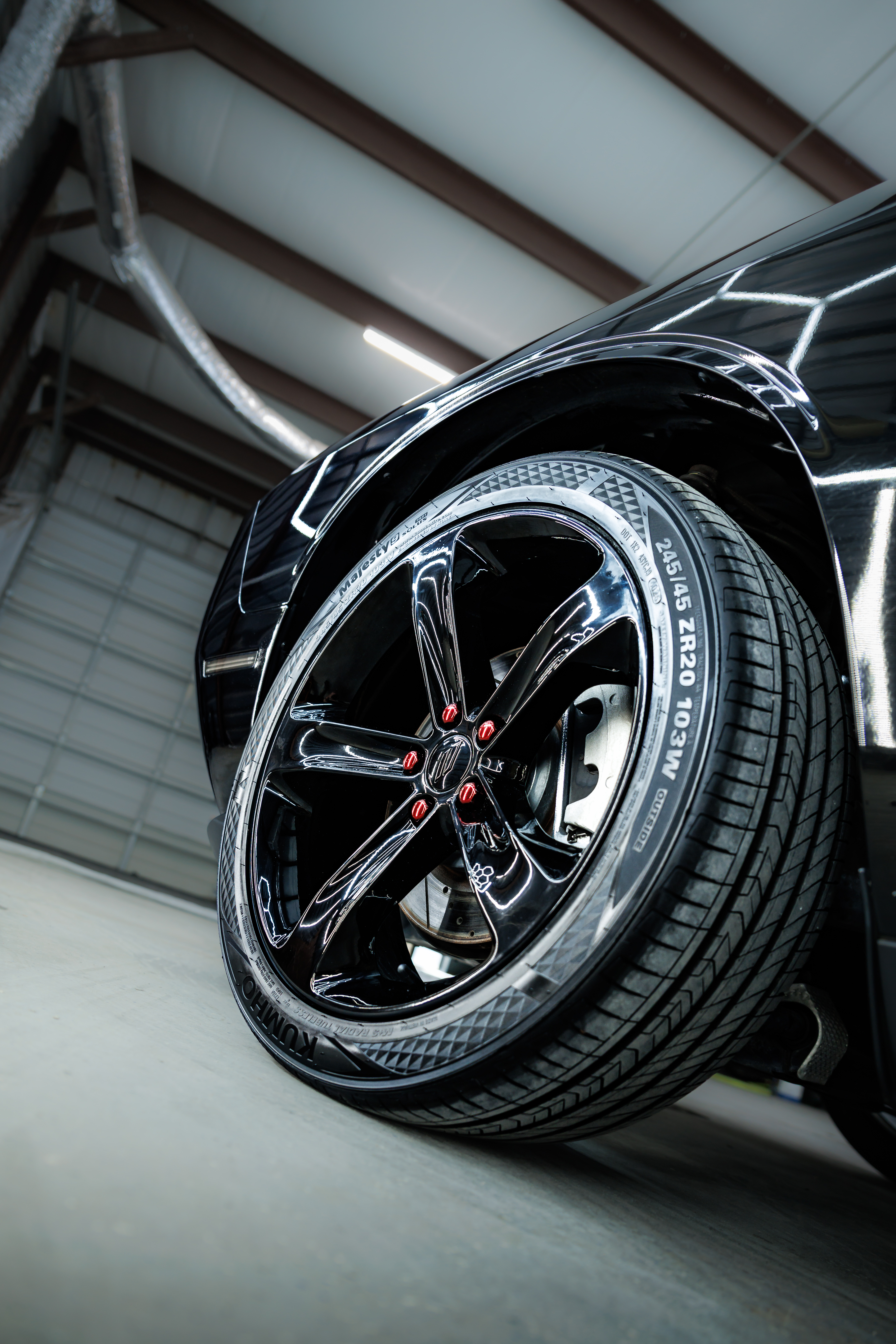
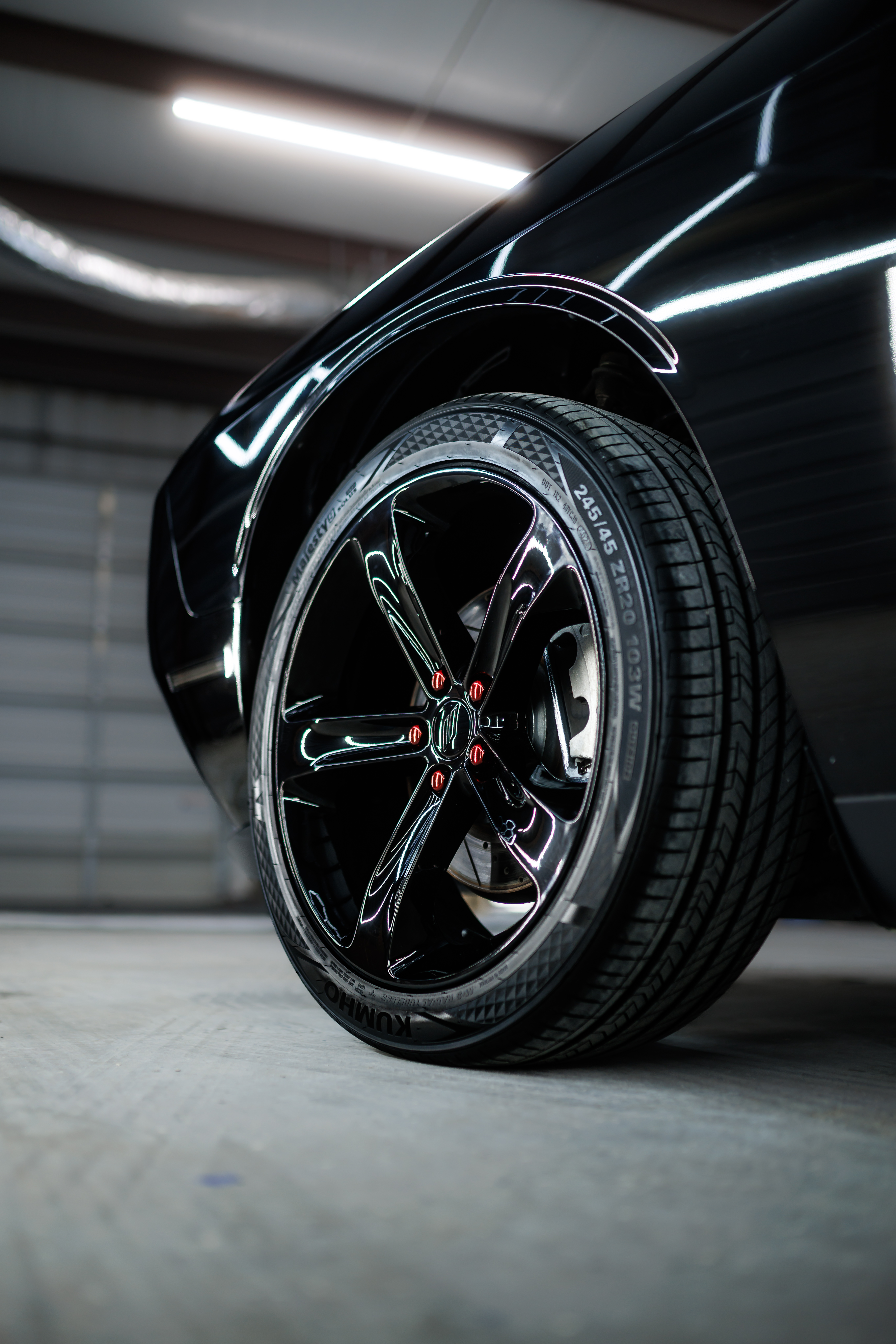
The wheels got ceramic coating on every spoke and face. Brake dust is one of the most corrosive contaminants on a vehicle — it's hot iron particles from your rotors embedding in the finish. On bare wheels, that contamination bakes on and becomes nearly impossible to remove. On coated wheels, it wipes off with a damp cloth.
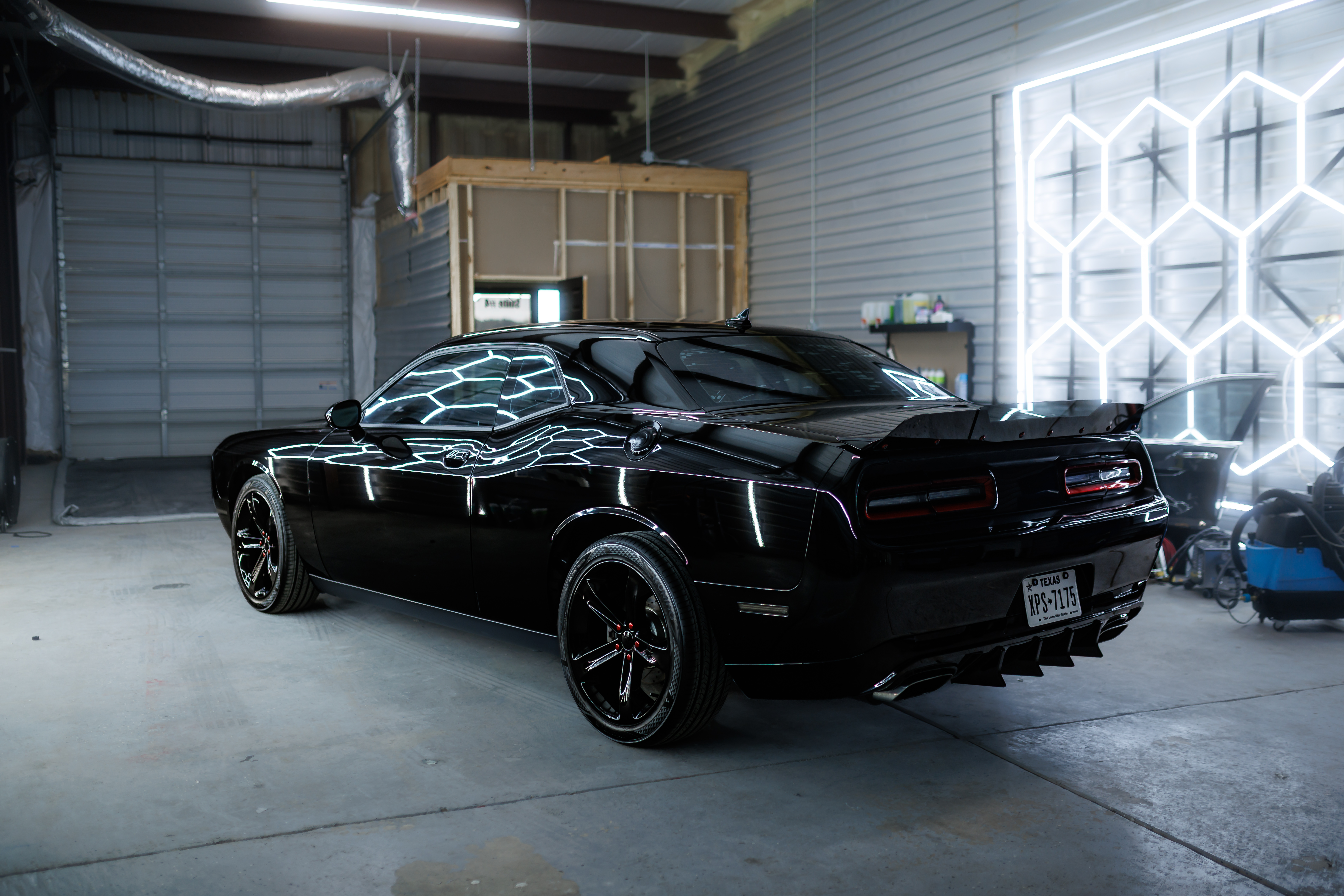
The Result
A black Dodge Challenger R/T that looks the way it should have left the factory. Deep, mirror-clear paint with zero swirl marks visible in any light. Hydrophobic beading that sheets water and dust off every surface. Wheels that stay clean between washes. Protection that will hold up for five years against Lubbock's UV, alkaline dust, and temperature swings — without the owner having to do anything except wash it properly.
This is what a real premium detail looks like. Not a quick wipe-down, not a coating slapped over untreated paint. The whole job, done right, start to finish.
If you want the same treatment for your vehicle — daily driver, weekend car, truck you're keeping for the long haul — get a quote. We'll tell you what it needs and what it'll cost.
Related Reading
Get the Full Treatment
Your vehicle deserves what this Challenger got. Send photos or bring it by — we'll assess it for free.
Book a Free AssessmentKeep Your Coating Performing.
The Coat Plan is our monthly ceramic maintenance membership. pH-safe washes, iron decontamination, and SiO₂ topper every month. Priority scheduling, locked-in rate. No contracts.