Paint Transfer & Scuff Marks:
What Actually Comes Off
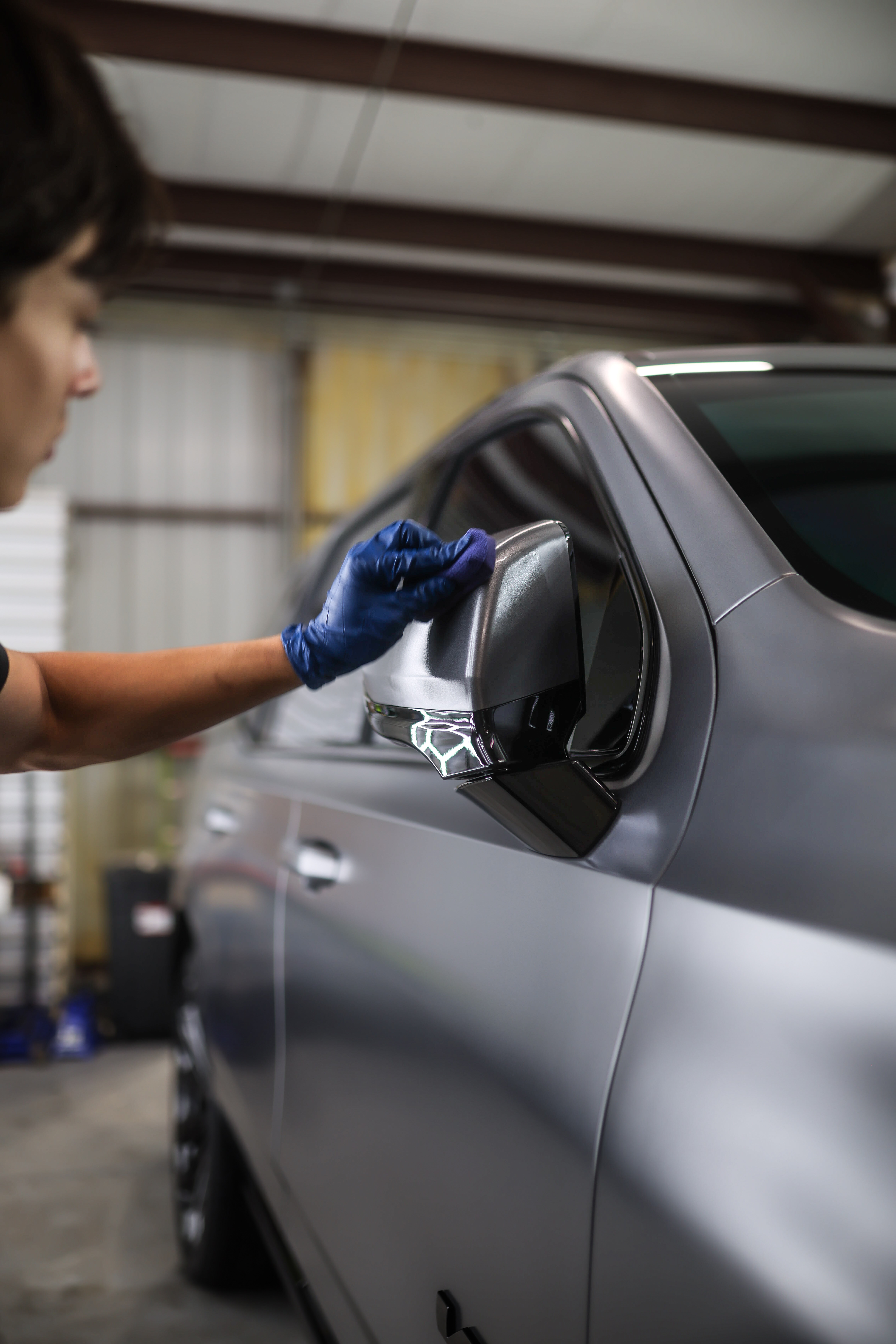
Parking lot scrape, a pole in a drive-thru, someone's bumper in a tight space — the good news is that most of what looks like damage isn't your paint at all. It's the other surface's paint sitting on top of yours, and that usually comes off completely.
Transfer vs. Actual Damage
Run a fingernail across it. If the mark sits on the surface and your nail glides over it, that's transferred material — paint, rubber, or plastic from whatever you contacted. If your nail catches in a groove, the clear coat itself is cut and you're looking at correction rather than removal. Most parking lot marks are the first kind, which is why they look far worse than they are.
Why the Color Fools People
A white streak across a dark car reads as catastrophic and is usually the easiest possible fix. The transferred paint is a thin film bonded to your clear coat, not a wound in it. Once it's off, there's frequently nothing underneath. That's the outcome we see most often on the first pass.
What Removal Actually Involves
Transfer comes off with a combination of dedicated solvents and, where needed, light machine polishing. The sequence matters: chemical first, mechanical only if the chemical stage leaves something behind. Reaching for an abrasive immediately is how people turn a surface mark into real clear coat damage.
When It's Beyond Detailing
If the impact creased the panel, cracked the paint, or went down to primer or bare metal, that's body shop work and no amount of polishing fixes it. We'll tell you that up front rather than charging you to find out. Removing transfer around damaged paint is still worth doing before a body shop quote, because it shows the actual extent of the damage.
Don't attack it in the driveway. The most common way a minor scuff becomes an expensive one is someone going at it with an abrasive compound and a rag. If you want to try anything yourself, a quick detailer and a clean microfiber is the safe ceiling.
Bring it by and we'll look at it under proper lighting. In a lot of cases the answer is that it's transfer and it comes off — which is a much better conversation than the one you were expecting to have.
Related Reading
Ready to Protect Your Vehicle?
We'll inspect your paint and tell you exactly what it needs — most clients are booked within 48 hours.
Keep Your Coating Performing.
The Coat Plan is our monthly ceramic maintenance membership. pH-safe washes, iron decontamination, and SiO₂ topper every month. Priority scheduling, locked-in rate. No contracts.