Do not scrape, pick, or use a razor: that is how sap becomes a scratch. Solvent and patience remove sap; force removes clear coat. Lubbock heat is what turns it from minor to damaging: surface temperatures over 140°F cure sap in hours instead of days, and the resin contracts as it hardens, pulling against the clear coat underneath.
Tree sap is a sugar-and-resin mix that bonds chemically to clear coat as it dries. Fresh sap sits on top. Cured sap has bonded into the surface, and pulling it off with a fingernail or a scraper takes clear coat with it.
Lubbock heat is what turns a minor problem into paint damage. Surface temperatures over 140°F cure sap in hours instead of days, and the resin contracts as it hardens, pulling against the clear coat underneath. Mesquite, elm, and pecan are the common offenders here.
The most common way we see sap turn into a repair bill is someone attacking it with a fingernail, a plastic scraper, or an abrasive pad in a parking lot. Solvent and patience remove sap. Force removes clear coat.
Sap removal is included in any detail package. If it has etched, that becomes paint correction — enhancement from $250, single-step from $350.
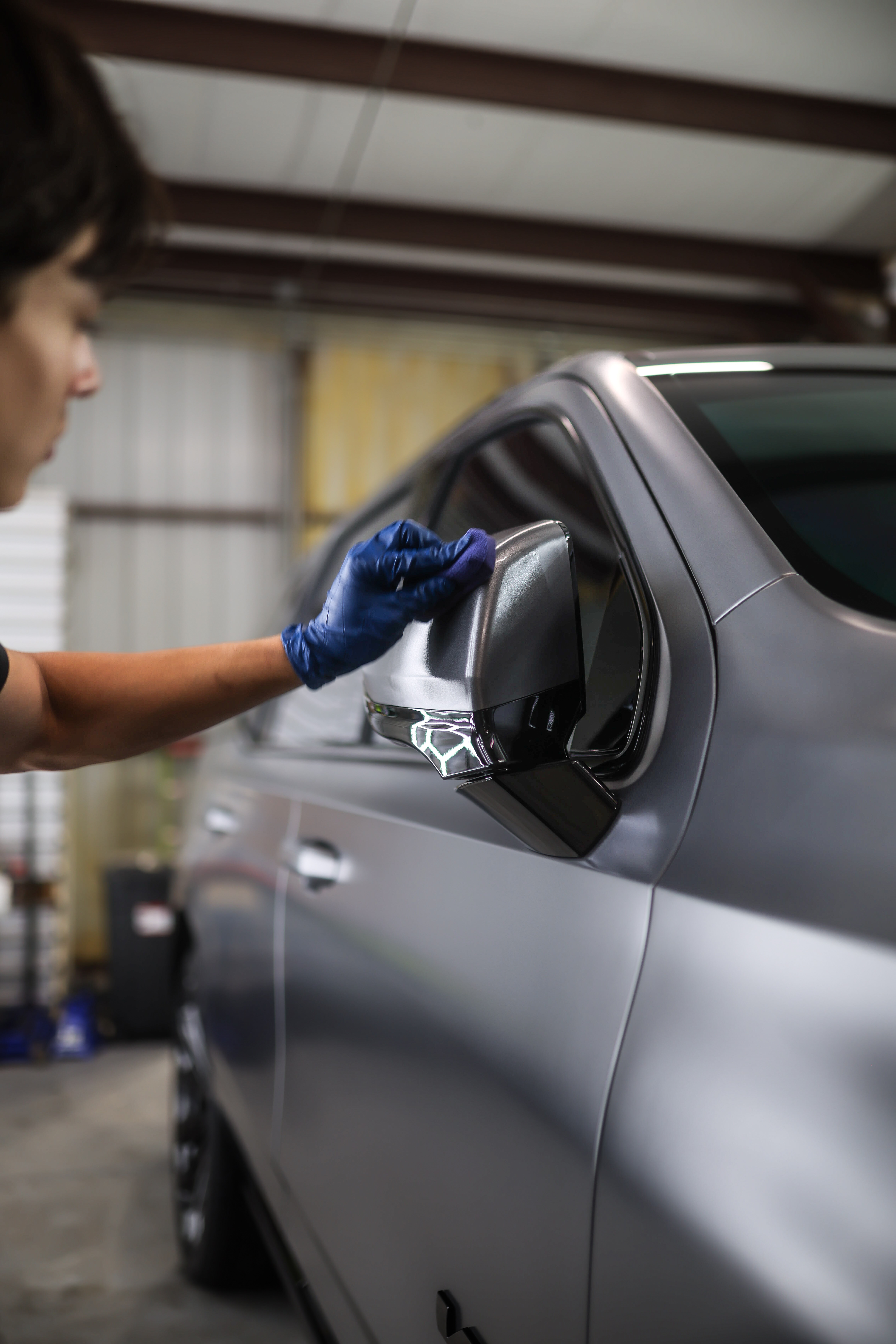
Soften it first. Hold an isopropyl alcohol or dedicated sap remover soaked microfiber against the sap for 30-60 seconds, then lift rather than rub. Never scrape with a fingernail, razor, or plastic tool — that removes clear coat along with the sap.
Not if removed early. Sap sitting on paint through Lubbock summer heat can etch the clear coat within days, leaving a dull ring even after the sap is gone. That etching requires machine polishing to remove.
Surface temperatures above 140°F cure sap in hours rather than days. As the resin hardens it contracts against the clear coat, which is what creates etching.
No. Automatic washes lack the dwell time and solvent needed to break the resin bond, and the brushes can drag hardened sap across the paint, creating scratches.
Delicate Details is a shop-based studio at 13209 Frankford Ave, Suite 4, Lubbock TX 79424. Serving Lubbock, Wolfforth, Shallowater, Slaton, Idalou, Levelland, and the South Plains.
Book Now →