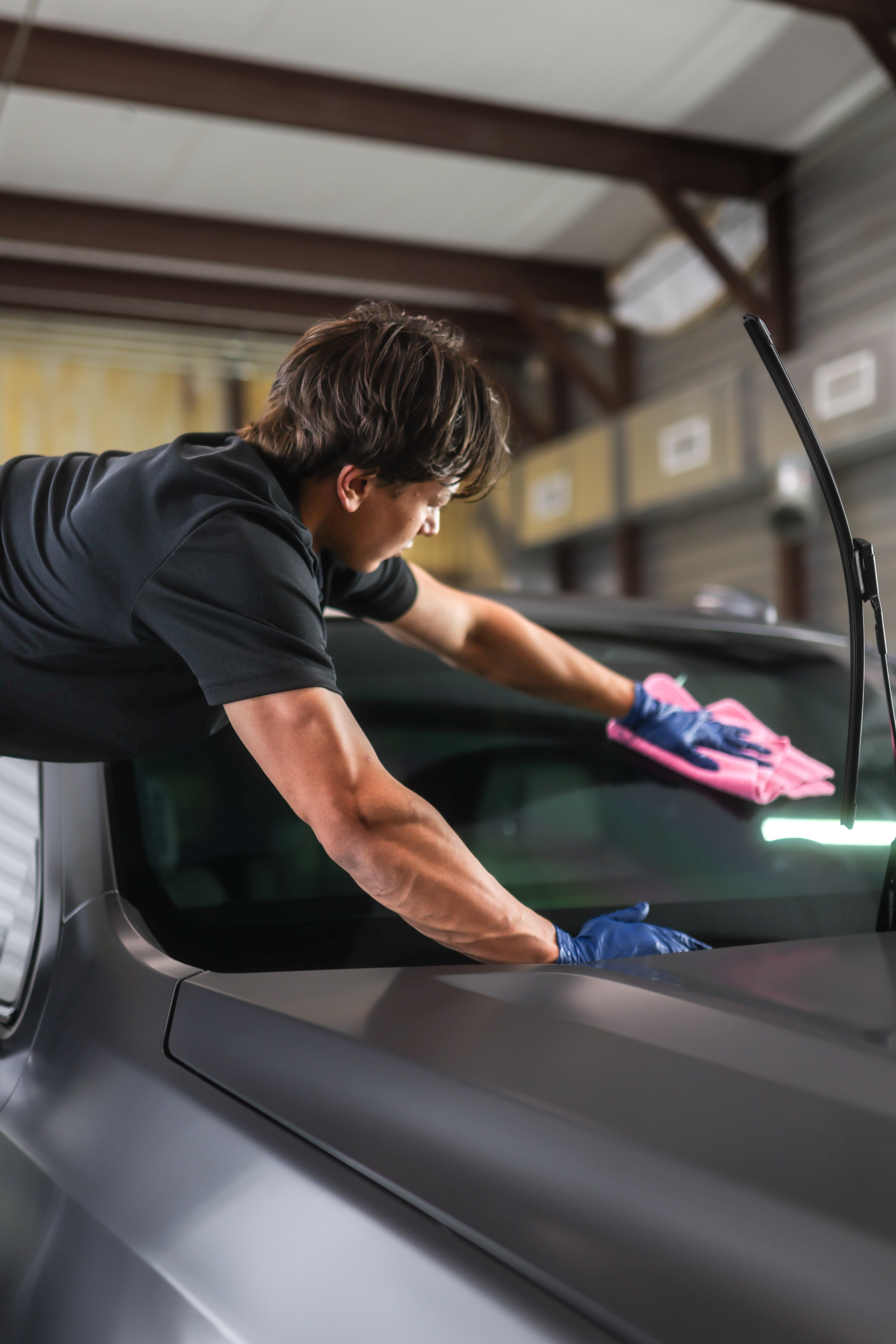
Ceramic Window Tint in Lubbock TX: Is It Worth It?
Quick answer: Ceramic tint may be worth the upgrade when the exact film's documented heat performance supports your comfort goal. It costs $20 more than carbon for one window and $50–$80 more for multi-window setups, depending on window count at our introductory prices. Ceramic is not automatically darker than carbon, so choose the film construction and visible shade as separate decisions.
Ceramic tint is not automatically the correct choice for every car. It earns its extra cost when you benefit from its strongest advantage: better control of the solar energy entering the cabin.
Why Lubbock Changes the Calculation
West Texas gives vehicles long sun exposure, open parking lots, and plenty of highway driving. A dark dashboard and leather seats can feel brutal after an afternoon outside. Ceramic film is aimed at that comfort problem while still providing the privacy and appearance people expect from tint.
The Price Difference Is Easy to Measure
At current introductory pricing, the ceramic upgrade ranges from $20 to $80 depending on the selected glass. A ceramic windshield brow is $20 more than carbon.
| Setup | Carbon | Ceramic | Upgrade |
|---|---|---|---|
| 1 window | $69 | $89 | +$20 |
| Front pair | $119 | $169 | +$50 |
| 4 door windows | $209 | $279 | +$70 |
| 4 doors + rear glass | $239 | $319 | +$80 |
| Large SUV, 7 windows | $319 | $369 | +$50 |
The useful question is whether the exact ceramic film's documented performance, shade, and written warranty justify the upgrade for how you use the vehicle. See the complete window-tint cost guide for windshield and removal pricing.
Who Should Choose Ceramic?
- Drivers who park outside at work or home
- Families carrying children or pets
- Vehicles with dark interiors
- Commuters who drive into low afternoon sun
- Owners who plan to keep the vehicle
Who Should Choose Carbon?
Carbon is still the smarter buy when the budget is tight, the vehicle is temporary, or privacy and appearance matter more than maximum comfort. A work vehicle that spends much of the day with doors opening and closing may not need the premium option.
What If the Car Is Older or the A/C Struggles?
Ceramic film may reduce the solar load that the air conditioner has to fight while you are driving in direct sun. That can make it a sensible comfort upgrade for an older daily driver, but it cannot repair a weak compressor, low refrigerant, restricted airflow, or another cooling-system problem.
Treat those as two separate decisions: diagnose the air-conditioning system if it is not cooling correctly, then decide whether documented film performance is worth the $20–$80 upgrade for the glass you want covered. Side-and-rear film also does not stop solar energy entering through an untreated windshield. A windshield brow mainly reduces high-angle glare; a compatible high-VLT windshield film is the separate heat-focused option. Read the clear ceramic windshield guide before adding windshield work.
Ceramic Tint Is Not a Darkness Level
Ceramic describes how the film is constructed; visible-light transmission describes how light or dark it looks. A ceramic film can be offered in a light shade or a dark shade. That means stronger documented solar performance does not require choosing the darkest glass available.
This distinction matters for nighttime driving. If outward visibility after dark is a concern, compare lighter ceramic shades and the finished glass-and-film reading instead of assuming the ceramic upgrade must look darker. Our window tint percentage guide explains 70%, 50%, 35%, 20%, and 5% VLT in plain language.
How to Compare Ceramic Tint Without the Hype
“Ceramic” describes a film category, not one guaranteed performance level. Compare the exact products at a similar visible-light transmission, or VLT, because a darker sample and a lighter sample are not an even comparison. Then look for total solar energy rejected (TSER), which addresses the overall solar load reaching the glass rather than one narrow slice of the infrared range.
Infrared-rejection figures can still be useful when the manufacturer states the wavelength range and test method. They should not be compared as if every brand measures them identically. Published technical data from companies such as 3M and LLumar shows why VLT, TSER, infrared measurements, test glass, and warranty should be read together. Those documents are examples of transparent reporting, not claims about the specific film installed on your vehicle.
Do Not Buy on a Heat-Lamp Trick Alone
A demonstration can be useful only when you know the exact films and shades being compared, the lamp and sensor, their distance from the samples, and the timing. A dramatic tabletop result does not identify the roll that will be installed or replace its technical data. Confirm that the quote names the same manufacturer, line, and shade used in the demonstration.
Use the product sheet to compare VLT, TSER, the definition behind any infrared percentage, tested glass, and warranty. Our window tint heat-rejection guide explains why a narrow infrared claim is not the same as total solar performance. Also remember that tint will not turn a closed vehicle into an air-conditioned space. It can reduce the heat load and improve comfort; it cannot eliminate hot-soak in a parked car.
Window film is never a child- or pet-safety substitute. NHTSA's summer safety guidance warns that parked vehicles can reach deadly temperatures within minutes, even with a window rolled down. Never leave a child or pet unattended because the vehicle has ceramic tint.
Bottom Line
Carbon is the lower-price choice for appearance, privacy, and glare reduction. Ceramic is the heat-focused choice only when the installed product's documented performance and warranty justify the upgrade for you. Compare the exact films and completed-glass reading before deciding.
Frequently Asked Questions
How much more is ceramic tint at Delicate Details?
At current introductory pricing, ceramic is $20 more for one window, $50 more for a front pair or seven-window setup, $70 more for four door windows, and $80 more for a common five-window setup. A ceramic windshield brow is $20 more than carbon.
Will ceramic tint keep a parked car cold?
No film keeps a closed vehicle cold indefinitely. Ceramic film can reduce the solar load and improve comfort, but it does not replace air conditioning.
Can ceramic tint help an older car with weak air conditioning?
It may reduce the solar load the air conditioner has to fight, especially while driving in direct sun, but tint cannot repair a weak air-conditioning system. Diagnose the cooling system separately and compare documented film performance before buying.
Is a heat-lamp test enough to compare ceramic tint?
No. A demonstration can be useful only when the exact films, shades, lamp, sensor, distance, and timing are comparable. Verify the film to be installed with its technical sheet, VLT, TSER, infrared test definition, and written warranty.
Is ceramic tint always dark?
No. Ceramic describes the film construction, while visible-light transmission describes darkness. Ceramic films are available in lighter and darker shades, so nighttime visibility and heat-control goals can be considered separately.
What performance number should I compare on ceramic tint?
Compare products at a similar visible-light transmission and look for documented total solar energy rejection, test conditions, and warranty terms. Infrared-rejection percentages alone may use different wavelength ranges or methods.
Is ceramic tint worth it for a work truck?
It can be if the truck spends hours in direct sun. If the main goal is appearance at the lowest price, carbon may be the better fit.
Related Window Tint Guides
Compare a Common 5-Window Setup
Choose the starting film below, then add the vehicle and old-film details. We confirm the exact glass and final price before the appointment.