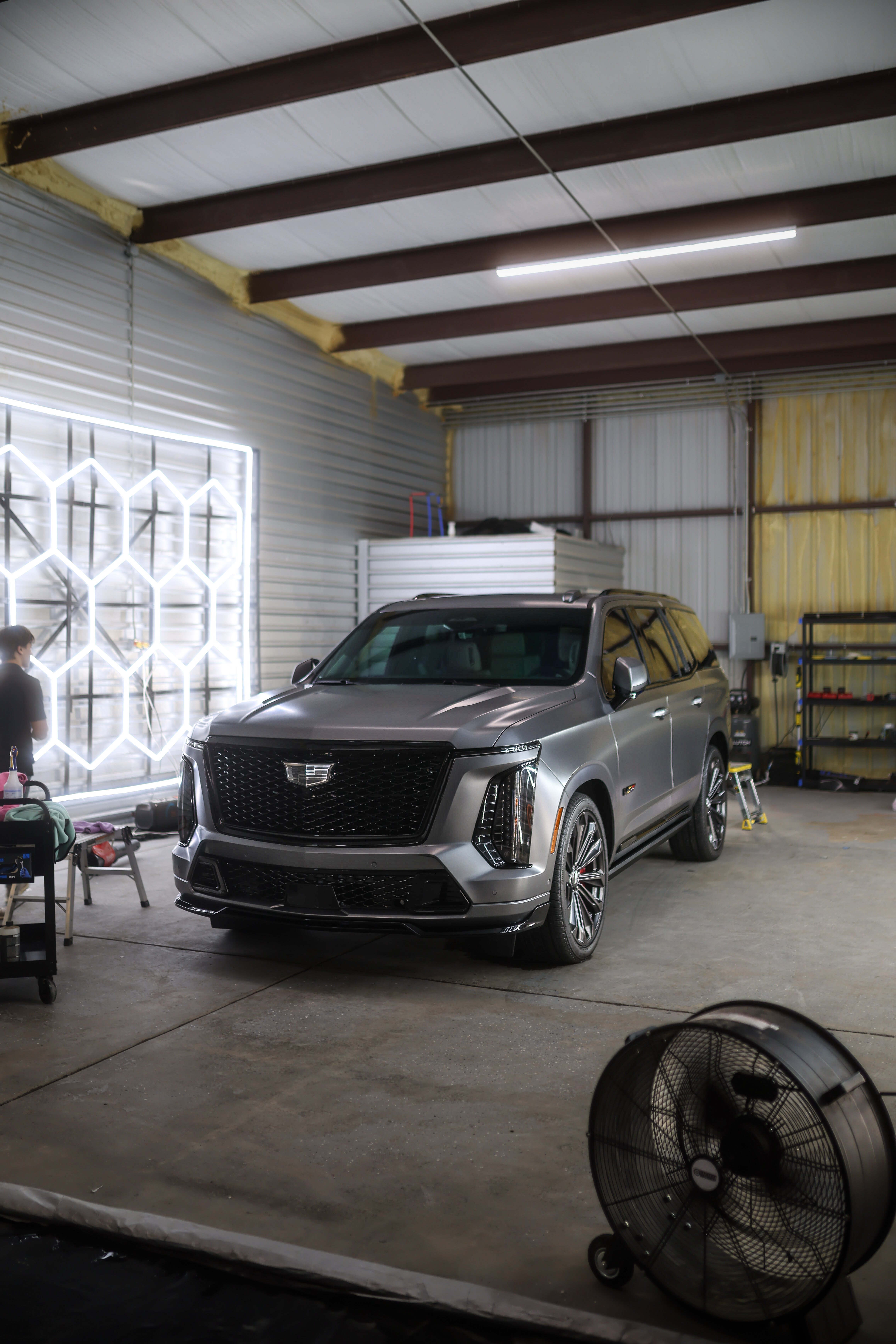
Windshield Tint in Lubbock: Clear Ceramic Film
Quick answer: Clear or very light ceramic windshield film is for drivers who want product-specific solar and UV performance without giving the windshield a dark-tint appearance. It can make sense in Lubbock because the windshield is one of the vehicle's largest sun-facing glass surfaces. Compare the exact film's VLT and total solar energy rejection on glass, confirm that the completed windshield meets current Texas requirements, and do not treat the word “ceramic” as a performance specification by itself.
Most window-tint conversations start with the side windows. That makes sense when privacy and appearance are the goal. But the windshield is a large source of direct sun exposure, especially when a vehicle sits outside or spends the afternoon pointed west.
A light windshield film is a different purchase from a dark brow or a conventional side-window shade. The goal is usually cabin comfort and UV control while preserving outward visibility and a nearly factory appearance.
What “Clear Ceramic” Actually Means
“Clear” does not mean the film transmits 100% of visible light, and “ceramic” does not tell you exactly how it performs. Automotive glass already has its own VLT. Adding any film changes the completed reading, even if the film looks nearly invisible.
The useful comparison is the exact film installed on representative glass. Ask for:
- VLT: how much visible light passes through the filmed glass.
- TSER: how much total solar energy the filmed-glass system rejects.
- UV rejection: the manufacturer's tested ultraviolet performance.
- Reflectance and haze: factors that can affect appearance and clarity.
- Warranty terms: what is covered, for how long, and by whom.
Do not compare films using a large infrared-rejection number alone. Infrared claims can use different wavelength ranges and test methods. TSER provides a broader measure of solar performance, while VLT tells you about visible light. The official 3M Ceramic IR technical data sheet, for example, reports VLT, visible reflectance, UV transmission, solar-energy measurements, and IR rejection separately by film shade and glazing type. That is why the exact product table matters more than one headline percentage.
Is 70% Windshield Tint a Real Option?
Yes. Some automotive film lines include a light shade labeled around 70% VLT. The label describes visible-light transmission under the product's stated test conditions; it does not mean the finished windshield will meter exactly 70% after installation.
The original windshield and film work together, so confirm the exact product, measured or documented glass, finished appearance, technical data, current availability, and Texas requirements. Delicate Details confirms the available ceramic shades for the vehicle before the appointment instead of promising that a particular percentage is always in stock.
Will It Keep the Car Cool?
No film stops a parked vehicle from heating up indefinitely. A closed vehicle in the Lubbock sun will still become hot. The realistic benefit is reducing part of the solar load coming through the glass, which can improve comfort while driving and slow the rate of heat gain compared with untreated glass.
The size and angle of the windshield make it worth considering as part of a whole-vehicle setup. Treating only the side windows can leave a large untreated surface facing the sun. The exact difference depends on the windshield, film, vehicle interior, outside temperature, sun angle, and how long the vehicle sits.
Clear Windshield Film vs a Windshield Brow
| Clear or very light full-windshield film | Windshield brow | |
|---|---|---|
| Main goal | Solar and UV performance with minimal visual change | Reduce overhead glare near the top of the windshield |
| Coverage | Across the windshield when the specific setup complies | Upper strip only |
| Appearance | Nearly clear to lightly tinted | Noticeably darker band |
| Current introductory price | $169 ceramic | $49 carbon or $69 ceramic |
| Best fit | Drivers prioritizing cabin comfort and visibility | Drivers bothered by high-angle sun and glare |
Some drivers choose both only when the combined setup is appropriate and compliant. Others choose the brow because it costs less and addresses glare, or choose clear film because they want broader windshield coverage without a dark band.
What Is the AS-1 Line?
The AS-1 line is a small marking placed by the glass manufacturer near the upper edge of many windshields. It identifies the lower boundary for a conventional upper sunscreening strip; it is not a target for full-windshield dark tint.
Texas DPS says a sunscreening device must stay above the AS-1 line. If the windshield has no AS-1 line, the strip must end no more than five inches below the top of the windshield. The finished strip must also satisfy the state's current color, visible-light-transmission, and reflectance requirements. Because mirror housings, camera modules, dot-matrix areas, and rooflines differ, the useful measurement is the actual windshield—not a copied strip width from another vehicle.
Windshield Tint Is Not Windshield Protection Film
Clear ceramic windshield tint and windshield protection film are different products. Ceramic tint is normally installed on the interior side of the glass for solar, UV, glare, and appearance goals. Windshield protection film is an exterior product intended to help protect the glass surface from road debris and impact damage.
Ask which side of the glass receives the product and request the exact manufacturer, product line, technical data, and warranty. A nearly clear appearance does not make the two products interchangeable, and heat-focused tint should not be described as rock-chip protection.
What Texas DPS Says
The current Texas DPS window-tint standards state that clear, untinted UV film is allowed anywhere on the front windshield without a medical exemption. DPS lists separate requirements for windshield sunscreening devices, including placement, color, transmission, and reflectance.
That language does not mean every film marketed as “clear ceramic” automatically qualifies. The product, the windshield, and the completed combination matter. Check the current official source before installation; our Texas tint guide for Lubbock drivers is a plain-language starting point, not a substitute for the state rule.
Does Clear Windshield Film Affect Night Visibility?
Any film changes the completed glass, even when the product is marketed as clear. For night driving, the useful checks are the exact film's VLT, visible reflectance, haze or clarity data, and how it looks on the actual windshield. Those details matter more than the product name.
A driver who already notices halos, glare, windshield pitting, scratches, or a hazy interior surface should address those issues before choosing film. The installation should also account for cameras, sensors, inspection stickers, and other hardware near the mirror area. We will not promise that every high-VLT product looks identical on every windshield.
Can Windshield Tint Interfere With Driver-Assistance Cameras?
It can be incompatible with some vehicles or camera areas. A state rule and a vehicle-maker instruction answer different questions: a film may satisfy a tint rule while the owner's manual still prohibits film on that windshield or in front of a camera.
For example, Toyota's official 2024 Grand Highlander driving-support excerpt says not to attach window tint to the windshield and warns against attaching even transparent items in front of the forward camera. That instruction is vehicle-specific; it does not establish a universal rule for every make and model.
Before quoting full-windshield coverage, check the exact year, make, model, camera location, owner's manual, and current manufacturer guidance. Do not cut around, cover, move, clean, or recalibrate a camera module based on a generic assumption. When the vehicle maker prohibits windshield film, that instruction controls the compatibility decision.
Can Windshield Film Affect a Head-Up Display?
It can change how a projected image looks on some windshield systems, so “clear” is not enough to establish compatibility. Head-up displays depend on the windshield's optical construction, viewing angle, polarization, and the vehicle's projector. Added film can introduce reflections, ghosting, brightness changes, or a different view through polarized sunglasses.
3M, for example, publishes a specialized Ultra-Clear Solar Film described for protecting head-up-display systems and picture-generating units. That is product-specific engineering—not proof that every high-VLT ceramic film is HUD-compatible. Check the exact owner's manual, windshield part, film technical guidance, and installer approval before putting aftermarket film across a HUD windshield.
Will Windshield Film Block GPS, Toll Tags, or Cell Service?
Signal compatibility depends on the construction of both the film and the factory glass. A product name such as ceramic or clear does not, by itself, answer whether the finished windshield will work with every antenna, transponder, or remote.
The same 3M Ultra-Clear Solar Film page identifies non-metallic construction and lists compatibility with 5G, cell phones, satellite radio, GPS, toll and HOV transponders, and garage-door remotes. Treat that as documentation for that specific product, not a blanket promise for all window films. Before installation, identify any toll tag or antenna location, then verify the exact film data and the vehicle manufacturer's placement instructions.
How Soon After Windshield Replacement Can Tint Be Installed?
There is no universal number of hours or days. Windshield replacement uses a structural adhesive with a product- and condition-specific minimum drive-away time. The Auto Glass Safety Council's consumer guidance says the glass professional should provide that time and the vehicle should remain stationary until it has elapsed.
Minimum drive-away time is not automatically the same as full cure or approval for a second service. Sika's automotive-glass adhesive guidance shows that times differ by adhesive and temperature range. Calibration, trim, sensors, tape, seals, and glass-shop restrictions can add other requirements.
Ask the glass shop which adhesive was used, whether the windshield and any driver-assistance system have been released, and when interior film installation is permitted. Do not schedule tint from the replacement timestamp alone. If the glass professional has not cleared the windshield, postpone the film.
Who Gets the Most Value From It?
Clear windshield film makes the most sense for drivers who:
- park outside for much of the day;
- spend long periods driving in direct afternoon sun;
- want a heat-focused setup without a dark windshield look;
- carry children or passengers regularly;
- have already treated the side and rear glass and want more complete coverage.
It may not be the first upgrade for someone shopping only for privacy or the lowest possible price. In that case, carbon side-window film or a windshield brow may address the main goal more directly.
Current Starting Price at Delicate Details
Our currently published introductory price for clear ceramic windshield film is $169 on standard automotive glass. The vehicle, windshield size and shape, existing film, sensors, and condition still need to be confirmed before the appointment. Old-film removal is separate. Before drop-off, use the tint appointment checklist to identify dash cams, toll tags, stickers, cameras, and other windshield hardware.
Before booking, we will ask for the year, make, and model. We also want to know whether the windshield has aftermarket film, chips, cracks, decals, or unusual camera and sensor hardware near the mirror area.
Frequently Asked Questions
What is clear ceramic windshield film?
It is a high-VLT automotive film designed to add product-specific solar and UV performance with less visual darkening than conventional tint shades.
Is 70% windshield tint a real option?
Yes. Some automotive film lines include a shade labeled around 70% VLT. That number describes the film under stated test conditions, not a guaranteed finished windshield reading; the original glass and film combine, and availability depends on the exact product in stock.
Does clear ceramic windshield film reduce heat?
A qualifying film can reject part of the solar energy entering through the windshield. Compare the exact film's TSER on glass instead of relying only on an infrared percentage.
Is clear windshield film legal in Texas?
Texas DPS currently states that clear, untinted UV film is allowed across the windshield without a medical exemption. The specific film and completed glass should still be checked against the current official standard.
Does clear windshield film affect night visibility?
Any film changes the completed glass. For night driving, compare the exact film's VLT, visible reflectance, haze or clarity data, and the actual windshield instead of assuming every product labeled clear will look identical.
Can windshield tint interfere with a driver-assistance camera?
It depends on the vehicle and camera location. Some vehicle manuals prohibit windshield tint or anything attached in front of a camera. Check the exact owner's manual and manufacturer guidance before selecting full-windshield coverage; a legal film is not automatically compatible with every vehicle.
How soon after windshield replacement can tint be installed?
There is no universal wait. The glass professional must release the vehicle after the adhesive's minimum drive-away time, and that does not necessarily mean full cure or tint readiness. Confirm the adhesive, cure restrictions, calibration status, and tint timing with the glass shop before scheduling film.
How much is clear ceramic windshield film?
Our current introductory price is $169 for standard automotive glass, subject to vehicle confirmation and any old-film removal.
How much is a windshield brow?
Our current introductory windshield-brow price is $49 in carbon or $69 in ceramic for standard automotive glass. Placement and the completed setup must meet current Texas requirements.
What is the AS-1 line on a windshield?
The AS-1 line is the windshield manufacturer's marked upper boundary for a sunscreening strip. Texas DPS says a strip must stay above that line, or end no more than five inches below the top when there is no AS-1 line.
Is ceramic windshield tint the same as windshield protection film?
No. Ceramic windshield tint is installed for solar, UV, glare, and appearance goals. Windshield protection film is a different exterior product intended for impact and surface protection; one should not be sold as the other.
Related Window Tint Guides
- Best Window Tint for Lubbock Heat
- Window Tint Percentages Explained
- Tint, TollTags, GPS, and Electronic Signals
- Prepare for a Tint Appointment
- Carbon vs Ceramic Window Tint
- Can You Mix Carbon and Ceramic Tint?
- Texas Window Tint Standards
- Window Tinting Lubbock TX — Options and Pricing
- Windshield Brow Tint Guide
Ask About Your Windshield
Send the year, make, and model so we can confirm the glass, current pricing, and available film before the appointment.
Request a Tint Quote →