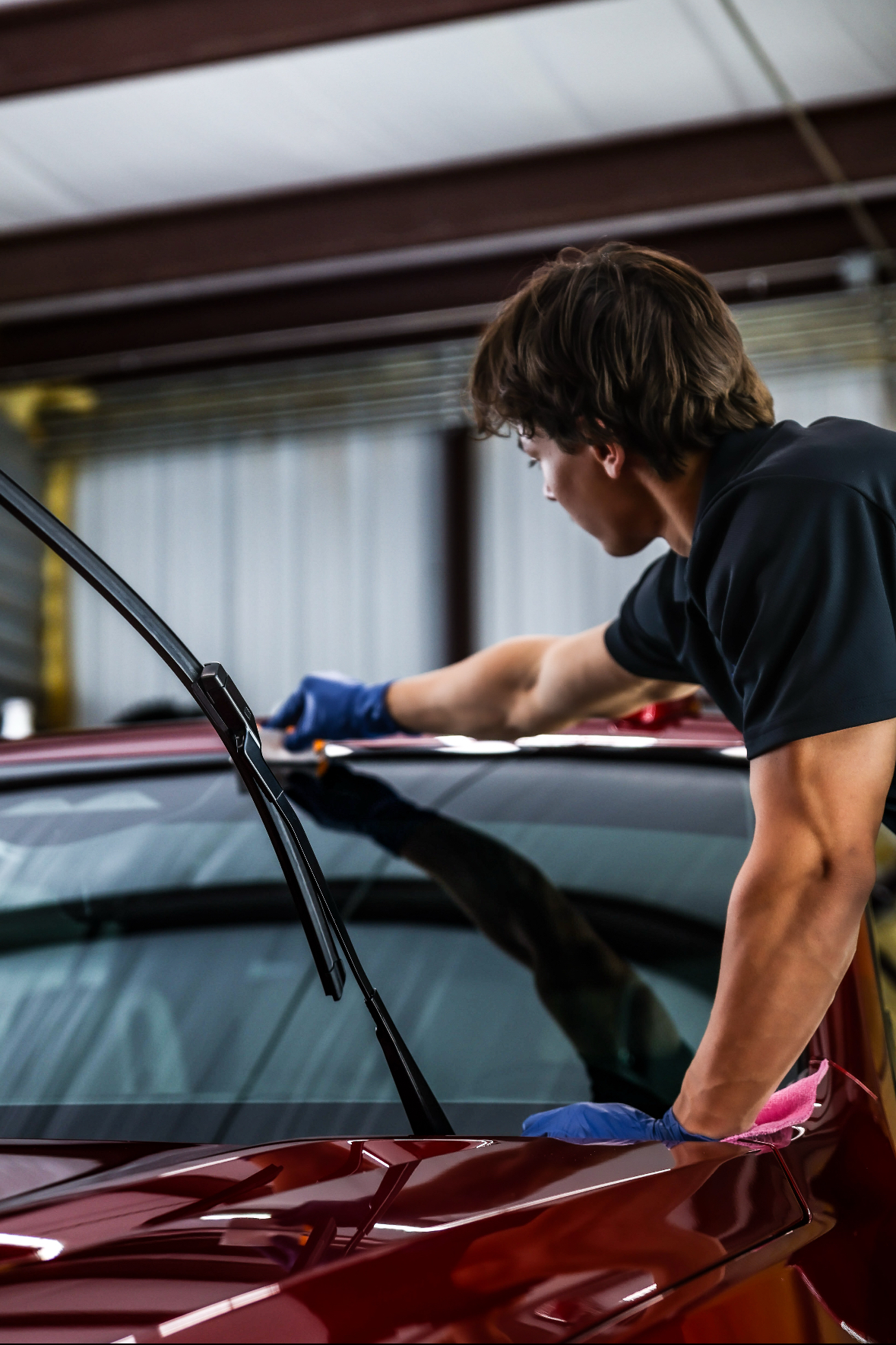
How to Prepare for a Window Tint Appointment in Lubbock
Quick answer: Before a tint appointment, confirm the exact glass and final vehicle-specific price, disclose old film or glass damage, mention every dash cam or sticker on the selected glass, remove loose valuables, and ask what must move for access. Do not peel old film or detach wired electronics without checking first.
A good appointment starts before the film is cut. The installer needs the right vehicle, the right pieces of glass, and clear access to inspect and prepare them. This checklist keeps the handoff simple without asking you to do the installer's preparation work.
1. Confirm the Vehicle and Glass
Send the year, make, model, and the windows you want tinted. “Full car” can mean different things. For many sedans, a five-window setup means four roll-down door windows plus the rear glass, while windshields, fixed quarter panes, and roof glass may be separate.
Photos are helpful for split truck rear glass, coupes, large SUVs, panoramic roofs, and unusual fixed panes. Delicate Details confirms the final scope and price before the appointment; use our window-count guide if you are unsure which choice fits.
2. Disclose Old Film, Damage, and Glass Features
Tell the shop which windows already have applied film, even when it looks nearly clear. Bubbling, purple color, peeling edges, leftover adhesive, scratches, chips, and damaged seals can change the preparation or removal plan.
A crack, chip, deep scratch, damaged seal, or broken defroster line needs to be documented before tinting. Film does not repair those conditions, and covering the glass can make later diagnosis or replacement more complicated. If the damage raises a safety or replacement concern, have a qualified automotive-glass professional address it before the tint decision.
Do not peel the old film before inspection. Rear glass commonly includes printed defroster lines, and some vehicles use antennas, laminated glass, coatings, sensors, or other features that need to be identified before work begins. The International Window Film Association's 2026 automotive guide specifically recommends checking glass construction, coatings, electronics, stickers, and current legal requirements. Its automotive inspection guidance also separates conditions in the installed film from defects already present in the glass. Those resources are general education; compatibility is still vehicle- and film-specific.
3. Ask About Dash Cams, Toll Tags, and Stickers
List every item attached to the interior side of the glass being tinted: dash cameras, toll tags, parking permits, inspection or registration items, radar-detector mounts, suction cups, and adhesive clips. Tell the installer about wires routed into the headliner or trim.
Ask who should remove each item and when it can be reattached. Do not pull a wired mount just to save time, and do not assume the film should be cut around it. After installation, use the film-specific cure and mounting guidance before putting adhesive or suction pressure on the new film.
Accessory instructions are often written for bare glass. Garmin's official Dash Cam Tandem mounting instructions, for example, describe cleaning and pressing an adhesive mount directly onto a windshield. VIOFO separately publishes instructions for its reusable static sticker. Neither example proves that an accessory is safe to attach directly to a particular tint film. Confirm the film surface, cure guidance, mounting location, accessory method, and future removal plan before attaching anything.
For electronic compatibility and official TollTag placement, use the tint, GPS, radio, and TollTag guide. Factory glass and the tag's required mounting zone can matter independently of the added film.
4. Clear Practical Access Without Over-Preparing
- Remove loose valuables, papers, and fragile items near the selected windows.
- Ask whether child seats, cargo, or rear-seat accessories block the glass.
- Make the trunk or cargo area accessible when rear-glass work may require it.
- Bring every key or access card needed to operate doors, windows, or the vehicle.
A reasonably clean vehicle helps, but the installer still performs the final glass preparation. Ask before using water-repellent glass products, silicone dressings, oily interior sprays, or aggressive cleaners immediately before the appointment.
5. Mention Window or Electrical Problems
Tell the installer if a window moves slowly, makes noise, reverses unexpectedly, loses its automatic setting, or has an unreliable regulator or switch. Mention aftermarket alarm systems, door speakers, cameras, sensors, and recent glass replacement. The point is not to diagnose the vehicle at the tint appointment; it is to document how the glass and controls behaved before work starts.
What About Frameless or Auto-Indexing Windows?
Many coupes and EVs use frameless door glass that drops slightly when a door opens and rises again when it closes. That movement does not automatically rule out tint, but the installer needs to know how the glass operates, inspect the exposed edge, and account for the vehicle's normal indexing behavior.
Report any existing calibration error, window bounce-back, slow movement, or failure to seal before the appointment. Tesla's current Model 3 service procedure, for example, treats window calibration as a defined vehicle operation in which the glass cycles up and down. That is a vehicle-specific example, not a reason to recalibrate every frameless window. Do not force, disable, or recalibrate the glass unless the manufacturer or a qualified service provider directs it; follow the installer’s edge and aftercare instructions instead.
6. Decide on Film and Shade Before Installation Starts
Arrive ready to compare the exact manufacturer, product line, shade or visible-light transmission, documented solar-performance data, and written warranty. Carbon and ceramic are categories, not complete specifications. Existing glass affects the finished reading, so a film percentage alone does not describe the completed window.
For Texas requirements, use current official guidance and the completed glass-and-film measurement. Our Texas tint-law guide links directly to the current Texas Department of Public Safety source.
7. Plan Drop-Off, Pickup, and the First Few Days
Ask how long the selected glass normally takes, whether old-film removal adds time, and how the shop will contact you if the inspected scope changes. Installation time is not cure time: the vehicle may be ready to drive while moisture is still settling and the film still needs careful treatment.
At pickup, get clear instructions for rolling the windows down, cleaning the interior film surface, recognizing normal curing moisture, and requesting an inspection. The timing depends on the actual product and conditions, so follow the instructions provided with your install instead of a universal internet rule. Our aftercare guide explains the questions to ask.
Bring This Short Checklist
- Year, make, and model
- Exact windows to tint
- Carbon or ceramic goal and shade questions
- Old-film and damage notes
- Dash cam, tag, sticker, sensor, and antenna details
- Window-control or electrical concerns
- Pickup contact and timing plan
Frequently Asked Questions
Should I wash my car before a window tint appointment?
A reasonably clean vehicle helps, but professional installation still requires final glass preparation. Ask the installer before applying glass treatments, dressings, or cleaners immediately before the appointment.
Should I remove my dash cam before windshield tint?
Tell the installer about every dash cam, toll tag, parking pass, sensor, and adhesive mount on the glass being tinted. Ask who should remove it and when it can be reattached; pulling or remounting accessories without film-specific guidance can damage the film.
Can I attach a dash cam or toll tag directly to fresh tint?
Do not assume that adhesive, a suction cup, or a reusable sticker belongs directly on new film. Ask the tint installer when the film is ready and where the accessory should mount, then follow the exact accessory manufacturer's instructions. Mounting products designed for bare glass are not automatically film-safe.
Do child seats need to come out before window tinting?
Ask before the appointment. A seat may need to move when it blocks access to door glass or rear glass, but the exact need depends on the vehicle and selected windows.
What vehicle information does Delicate Details need for a tint quote?
Send the year, make, model, windows you want tinted, and whether old film is installed. Photos help with fixed quarter panes, split truck rear glass, roof glass, and unusual layouts.
Should I remove old tint before my appointment?
No. Tell the installer where old film is present and let the glass and film be inspected first. Removal technique matters, especially on rear glass with defroster lines.
Can frameless or auto-indexing door windows be tinted?
Often, but tell the installer that the glass automatically drops when a door opens and report any calibration or window-control problem before the appointment. The installer should inspect the edge and operation, then give vehicle- and film-specific aftercare instructions. Do not recalibrate or force the glass unless the vehicle manufacturer directs it.
Can cracked or chipped glass be tinted?
The glass needs inspection first. Window film does not repair a crack, chip, deep scratch, damaged seal, or broken defroster line, and the glass condition can change whether installation is appropriate. Address safety or replacement concerns with a qualified glass professional before tinting.
Can I roll the windows down immediately after tint installation?
Follow the pickup instructions for the exact film and conditions. Installation time and cure time are different, and the film may still be setting after the vehicle is ready to leave.
Related Window Tint Guides
Prepare an Exact Tint Quote
Send your year, make, model, selected glass, and old-film details. We will confirm the setup and price before the appointment.
Request a Tint Quote →