How to Choose a Window Tint Shop in Lubbock TX
Quick answer: The best window tint shop for your vehicle is the one that identifies the exact film and shade, names every piece of glass in the quote, provides documented performance and written warranty terms, explains preparation and vehicle protection, shows relevant finished work, and gives film-specific aftercare. A clear vehicle-specific quote is more useful than the lowest unexplained starting price.
A window tint quote can look simple until two shops use the same label for different products and different coverage. One “full car” price may mean four doors and the rear glass. Another may exclude quarter panes, old-film removal, windshield work, or unusually shaped glass.
The best comparison is not one number. It is the installed film, the exact glass being covered, the preparation and inspection process, the cutting and glass-protection method, the warranty terms, and the final vehicle-specific price. These nine checks make those differences visible before you book.
1. Ask for the Exact Film Manufacturer and Line
Carbon and ceramic are broad categories, not complete product specifications. Ask for the manufacturer, product line, shade, and technical sheet. A shop should be able to tell you what will actually be installed on your vehicle.
Useful measurements include visible-light transmission and total solar energy rejection. Infrared-rejection figures can also be useful when the wavelength range and test method are clear, but a large isolated IR number does not describe all heat entering through the glass. Compare documented data for the exact shade under consideration.
The International Window Film Association's 2026 automotive guide describes total solar energy rejection as the industry's widely used overall solar-performance value and explains why infrared figures need their measurement context. A 3M automotive film technical sheet is a useful example of complete disclosure: it lists VLT, TSER, IRER, IRR, the wavelength range, test glass, and test procedure by shade. These links are measurement examples, not statements about the film installed on your vehicle.
2. Confirm Exactly Which Glass the Price Covers
Have the shop name the glass instead of relying on “full car.” For many sedans, a five-window setup means four roll-down door windows plus the rear glass. Fixed quarter panes, small vent glass, windshields, panoramic roof glass, and existing-film removal may be separate.
| Quote phrase | What to confirm |
|---|---|
| Front pair | The two front roll-down door windows |
| Four windows | Usually four roll-down door windows; ask about fixed panes |
| Five windows | Usually four door windows plus rear glass |
| Seven windows | Common large-SUV choice; confirm which quarter panes count |
| Windshield | Brow versus full high-VLT film, quoted separately |
Our vehicle window-count guide shows how common cars, trucks, and SUVs fit those choices.
3. Compare Vehicle-Specific Prices, Not Just Starting Prices
A starting price can help you screen options, but the final quote should reflect the year, make, model, selected glass, and existing film. Ask whether the quoted number already includes normal preparation and installation.
Delicate Details publishes introductory prices so the baseline is visible: a front pair is $99 in carbon or $149 in ceramic, and a common five-window setup is $199 in carbon or $249 in ceramic. Old-film removal starts at $75. We still confirm the final scope from the vehicle before the appointment.
4. Ask How Existing Glass Affects the Final Result
The percentage printed on film is not always the completed window reading. Factory glass already reduces some visible light, and applied film reduces it again. The existing glass and film work together.
This is especially important on trucks and SUVs with dark factory rear privacy glass. A front-door match should be based on the actual vehicle, not a universal guess. The front and rear glass can also have different color tones, so an exact visual match is not always possible from every angle. Read our factory privacy glass guide before choosing a match.
5. Look for a Clean Preparation and Inspection Process
Good film cannot compensate for rushed preparation. The glass, edges, seals, and surrounding work area need careful handling. Ask where installation happens, how contamination is controlled, and whether the finished glass is inspected before pickup.
Also ask how the shop handles existing adhesive, damaged film, defroster lines, and unusually shaped rear glass. A responsible answer may include inspection and limits instead of a blanket promise.
6. Ask How the Film Is Cut and the Vehicle Is Protected
Computer-cut patterns can reduce how much film must be hand cut on the vehicle, but “computer cut” is not a complete workmanship guarantee. The pattern still has to fit the exact glass, and an installer may need to adjust, shrink, position, and finish the film correctly.
3M's Pattern Marketplace says its automotive window-film patterns reduce the need to hand cut on the vehicle. The same manufacturer also trains installers in both hand cutting and machine-cut patterns. That makes the practical question broader than “plotter or knife?” Ask how the chosen method protects glass, seals, trim, wiring, and rear defroster lines, and how the shop handles a pattern that needs adjustment.
7. Read the Warranty Terms Instead of Hearing “Lifetime”
Ask who provides the warranty, what defects it covers, whether labor is included, what proof of purchase is required, and what is excluded. Film failure, accidental scratches, glass damage, and installation concerns are not automatically the same claim.
A written warranty tied to the exact product is more useful than a vague verbal promise. Keep the invoice and care instructions with the vehicle records. Our window tint warranty guide lists the coverage, ownership, documentation, exclusion, and claim details to get in writing.
8. Expect Clear Pickup and Aftercare Instructions
Installation time and cure time are different. The vehicle may be ready to leave while remaining installation moisture is still settling. Product, temperature, humidity, sun exposure, and parking conditions can change the timeline.
The installer should tell you when to roll the windows down, what temporary haze or moisture can look like, how to clean the film, and when to request an inspection. Use the guidance for the film actually installed rather than a universal internet rule. Our window tint aftercare guide explains the questions to cover at pickup.
9. Look at Real Work, Not Only a Film Sample
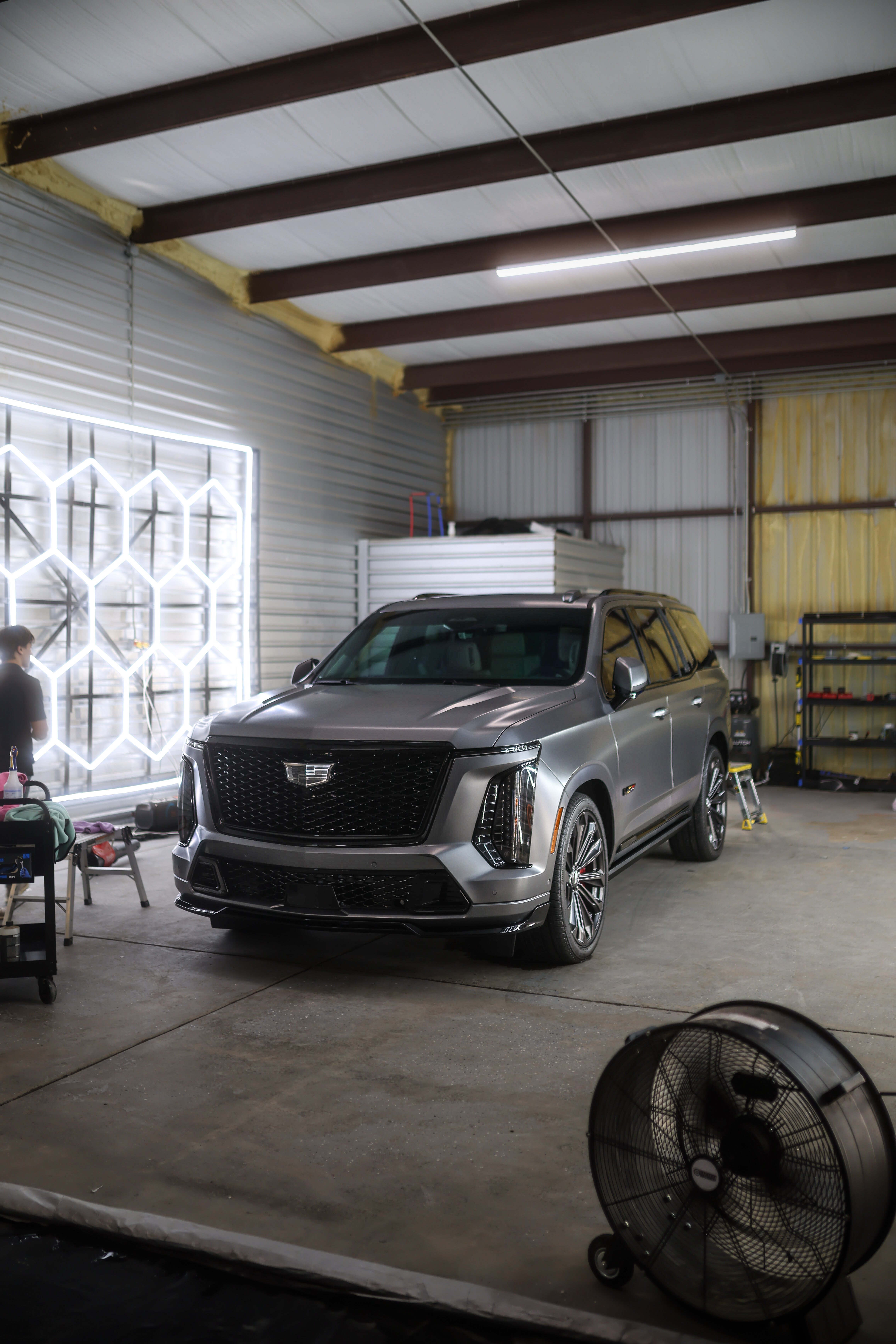
Ask to see recent installations on vehicles with similar glass, especially curved rear windows, frameless doors, factory privacy glass, or the same body style. A polished exterior photo shows the overall look; closer photos of edges, rear defroster glass, and finished door windows are more useful for judging fit and consistency.
Photos still have limits because lighting and camera exposure change how dark tint appears. Use them to evaluate workmanship and experience with the glass layout, then compare the actual shade beside your vehicle before making the final choice.
Do Not Treat Solar Tint as Security Glass
Standard carbon and ceramic tint are selected mainly for appearance, privacy, glare, UV, and solar-performance goals. They do not make automotive glass unbreakable. A manufacturer may say a specific film helps hold fragments after breakage, but impact resistance and glass retention depend on the exact film, thickness, adhesive, glass, installation, and tested system.
3M, for example, publishes a separate Scotchshield Auto Security technical sheet with product-specific shatter-protection and impact-resistance claims. That is different from assuming every film labeled carbon or ceramic has the same testing. If security is the goal, ask the shop to identify the exact safety product and written performance claim. Delicate Details' published carbon and ceramic prices should not be read as a security-film package.
A Simple Quote-Comparison Checklist
- Exact film manufacturer, line, and shade
- Documented VLT and solar-performance data for that film
- Every piece of glass included in the quoted price
- Cost of old-film and adhesive removal, if needed
- Vehicle-specific final price before the appointment
- How existing glass and final VLT are handled
- How the film is cut and the glass, seals, trim, wiring, and defroster are protected
- Written warranty provider, coverage, and exclusions
- Recent work on similar glass and the installation setting, preparation, inspection, and aftercare
If two quotes answer all nine points, you can compare them fairly. If one quote cannot identify the film or the covered glass, the prices are not yet describing the same job.
Frequently Asked Questions
What makes a good window tint shop?
A good tint shop identifies the exact film and shade, names every piece of glass in the quote, provides documented performance and written warranty terms, explains vehicle protection and preparation, shows relevant finished work, and gives film-specific aftercare.
How do I compare two window tint quotes?
Put both quotes on the same scope: exact film, exact glass, removal, preparation, installation, warranty, and vehicle-specific final price. If either quote cannot identify the film or covered glass, the prices are not yet comparable.
What should I ask a window tint shop before booking?
Ask for the exact film and shade, documented performance data, installed window coverage, vehicle-specific price, warranty terms, removal cost, and aftercare instructions.
Should a tint shop identify the exact film it installs?
Yes. The manufacturer, line, shade, technical data, and warranty let you compare a real product instead of a generic carbon or ceramic label.
Is computer-cut window tint always better than hand-cut film?
No. Manufacturers support both pattern-software and hand-cut training. A digital pattern can reduce the need to hand cut on the vehicle, but the finished fit still depends on the pattern, adjustments, preparation, shrinking, handling, and installer. Ask how the chosen method protects the glass, seals, trim, and defroster.
Does ordinary carbon or ceramic tint make car glass shatterproof?
No film makes automotive glass unbreakable. Fragment retention and impact-resistance claims are product- and system-specific. Ask for the exact technical sheet and tested safety claim instead of assuming ordinary solar-control tint is security film.
Is the lowest window tint price always a bad choice?
No. A lower price can be a good value when the product, coverage, preparation, warranty, and final quote are clear. Compare like-for-like work.
Why does a tint shop need the year, make, and model?
It helps confirm window count, quarter panes, rear-glass shape, seals, privacy glass, windshield or roof glass, and vehicle-specific difficulty.
What should happen after window tint is installed?
The finished work should be inspected, and you should receive film-specific guidance for roll-down timing, curing moisture, cleaning, and follow-up.
Related Window Tint Guides
- Window Tint Cost in Lubbock TX
- Carbon vs Ceramic Window Tint
- Window Tint Heat Rejection Numbers Explained
- Window Tint Warranty Guide
- Does Tint Affect Phone, GPS or Radio?
- Window Tint Percentages Explained
- Texas Window Tint Standards
- Window Tinting Lubbock TX — Options and Pricing
- How to Verify Ceramic Window Tint
- Windshield Brow Tint Guide
Compare the Exact Setup
Send the year, make, model, selected glass, and any existing film. We will confirm the coverage and price before you book.
Request a Tint Quote →