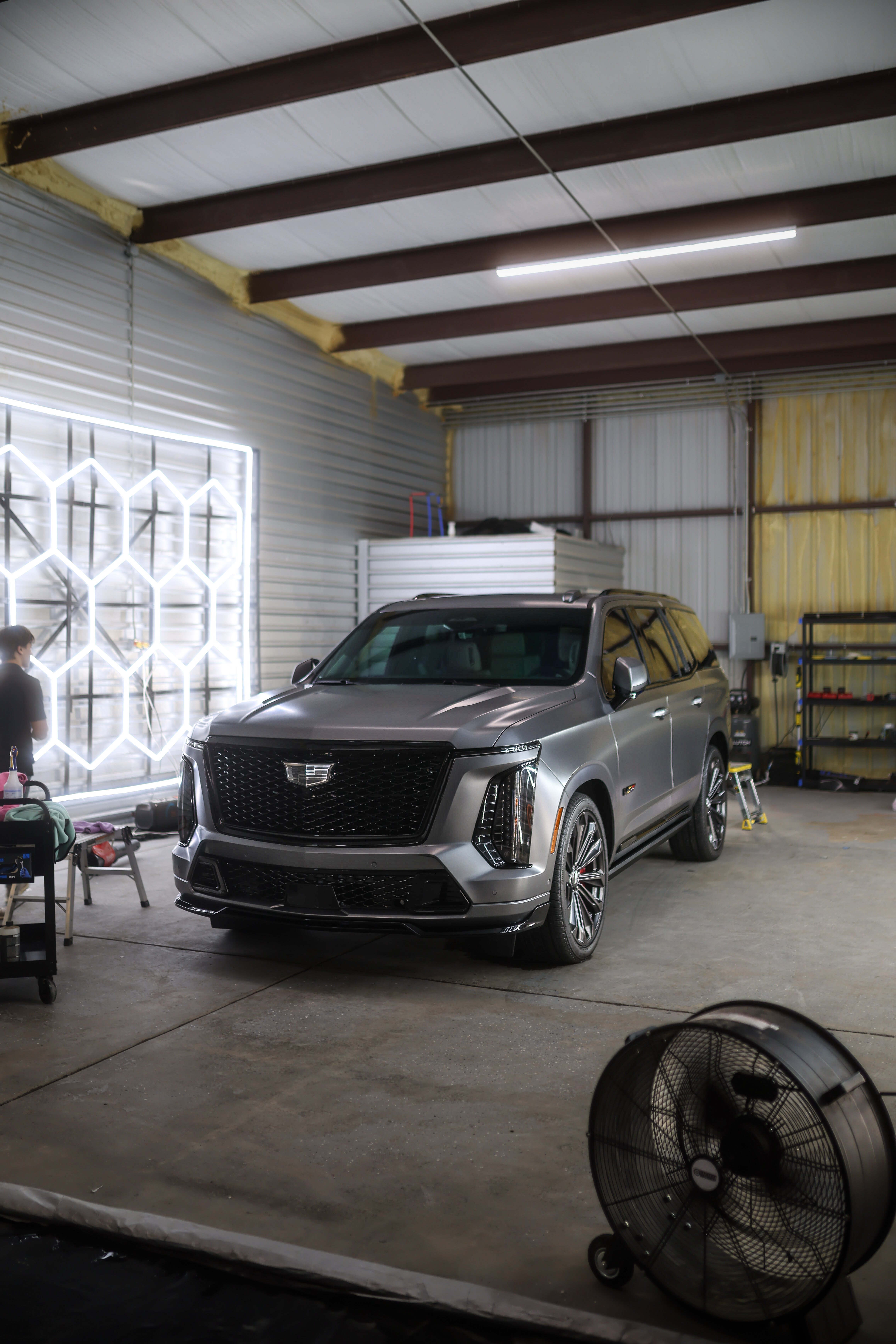
Factory Privacy Glass vs Window Tint
Quick answer: Factory privacy glass and aftermarket window tint are not the same thing. Privacy glass is darkened glass commonly found behind the front doors of trucks and SUVs. Window tint is an applied film selected for shade and solar-control performance. Film can often be installed over factory privacy glass, but the existing glass should be measured first because both layers affect the final darkness.
A new SUV can arrive with dark rear windows and clear front doors. That leads to two common questions: “Is the back already tinted?” and “Can you make the front match?” The back glass may already look dark, but appearance alone does not tell you how it handles solar energy or what film will create the best match.
This matters in Lubbock because trucks and three-row SUVs have a lot of glass. Rear passengers, child seats, cargo areas, and dark interiors can sit in direct West Texas sun for hours. The right setup starts with identifying the glass that is already on the vehicle instead of guessing from a percentage printed on a film box.
Privacy Glass and Applied Film: The Simple Difference
| Factory privacy glass | Applied window film | |
|---|---|---|
| What it is | Darkened automotive glass installed by the vehicle manufacturer | A film installed on the interior surface of the glass |
| Main visible effect | Rear-cabin privacy and a darker appearance | Chosen shade, glare control, and product-specific solar performance |
| Can it be changed? | The glass itself stays the same | Film can be removed and replaced by a qualified installer |
| How final darkness is determined | The glass has its own measured VLT | The film and existing glass combine |
Factory glass varies by vehicle. Two SUVs that look similar from across the parking lot can meter differently. The color can also lean gray, bronze, green, or neutral black, which affects how closely a front-door film will match.
Can Factory Privacy Glass Be Removed?
Not like aftermarket film. Factory privacy glass is darkened as part of the glass, so there is no separate film layer to peel away. Changing the factory darkness generally means replacing that piece of glass. Applied film installed over the privacy glass is a separate layer that can be professionally removed and replaced.
This distinction prevents the wrong quote. If the rear glass looks dark, tell the installer whether it came that way from the factory or whether a previous owner may have added film. Johnson Window Films gives the same practical distinction in its manufacturer FAQ about factory-tinted glass.
How Can You Tell Whether Rear Glass Is Factory Privacy Glass or Film?
Appearance alone is not enough. Start with the original window sticker, build sheet, owner's manual, or dealer parts record for that VIN. Then inspect the interior glass for a film edge, peeling, bubbles, adhesive, or a cut line and meter the glass before choosing another film. A clean-looking dark pane can still have aftermarket film from a prior owner.
Equipment varies even within one vehicle line. Ford's current F-150 windows-and-glass specifications, for example, distinguish fixed rear glass with solar tint from an available power-sliding rear window with privacy tint and a defroster. That is why the exact year, trim, cab, and glass—not a general truck label—should control the quote.
Does Factory Privacy Glass Block Heat?
Dark glass can reduce visible light, but darkness is not a complete heat-performance specification. Heat enters through different parts of the solar spectrum, and film manufacturers publish separate measurements such as total solar energy rejection. That is why a lighter performance film can sometimes manage more solar energy than a darker film built mainly for appearance.
The honest answer is vehicle-specific: factory privacy glass may provide some solar benefit, but its dark appearance does not automatically equal the documented performance of a selected carbon or ceramic film. If cabin comfort is the goal, compare the film's published data and consider treating the rear glass as well as the front doors.
Does Factory Privacy Glass Block UV?
Do not calculate UV protection from how dark the rear glass looks. Visible-light transmission, ultraviolet transmission, and total solar energy are different measurements. A very dark-looking pane does not, by appearance alone, document a specific UVA or UVB result.
If UV performance is part of the buying decision, request model-specific data for the original glass and the exact film's published test information. A claim such as 5% VLT means the product is very dark under its visible-light test; it does not mean the glass automatically blocks exactly 95% of ultraviolet energy.
Can Ceramic Tint Go Over Factory Privacy Glass?
In many trucks and SUVs, yes. A compatible film can be applied to the interior side of factory privacy glass. The goal is often stronger solar control for rear passengers and the cargo area rather than making the glass dramatically darker.
There are three things to check first:
- Existing glass condition: scratches, residue, aftermarket film, and damaged defroster lines can change the job.
- Measured light transmission: the glass and new film create a combined result.
- Desired outcome: matching the front doors, reducing glare, improving comfort, and increasing privacy are different goals.
Clear or lighter ceramic options may suit someone who wants more solar control without making already-dark rear glass difficult to see through at night. A darker choice may suit someone prioritizing privacy, but outward visibility should be part of that decision.
How We Approach a Front-Window Match
A “match” is not just picking the film number that looks closest in a catalog. We compare the vehicle's front and rear glass, account for interior color, and look at the vehicle in real light. Then we choose the closest practical shade and color tone from the available film.
An exact match is not always possible. The front and rear glass may have different base colors, and the windshield lets more light into the front cabin. From some angles the match can look nearly exact; from others the front may still appear lighter. We would rather explain that before installation than promise a perfect match the glass cannot produce.
How Much Is a Front-Window Match?
For standard automotive glass, our introductory price for the two front roll-down windows is $99 in carbon or $149 in ceramic. Carbon is the lower-cost choice when the main goal is a darker, more consistent appearance. Ceramic is the heat-focused upgrade when documented solar performance matters more.
The vehicle still needs to be confirmed before the appointment. Existing aftermarket film, unusually shaped glass, or work beyond the front pair can change the scope. Send the year, make, model, and a side photo so we can confirm the closest practical match and final price before you arrive. Pickup owners can use our truck window tint guide to check front-pair, cab, and sliding-rear details before requesting a quote.
What Percentage Is Factory Privacy Glass?
There is no single percentage for every truck or SUV. The only reliable answer comes from measuring that specific vehicle. The number molded into the glass is not always a simple statement of the final VLT, and photos are affected by lighting and camera exposure.
This is also why adding a 20% film to glass that already measures near 20% does not leave the window at 20%. The layers combine and the completed window becomes substantially darker. Use our combined VLT estimator and percentage guide for a planning estimate, then rely on the completed-window measurement.
Carbon or Ceramic for a Truck or SUV?
Carbon tint is the value choice when the main goals are a cleaner match, privacy, and glare reduction. Ceramic tint is the comfort-focused choice for vehicles that live outside, carry rear passengers, or spend long periods in afternoon traffic.
You do not have to choose the darkest film to prioritize heat control. Film type and shade are separate decisions. Start with how the vehicle is used, then choose the appearance.
Check the Completed Glass, Not Just the Film Box
Texas requirements apply to the completed glass-and-film combination in regulated positions. Existing factory glass therefore matters when a film is selected. Requirements can change, and vehicle exemptions or configurations can affect the answer, so use the current Texas Department of Public Safety window-tint standards as the primary reference. Our plain-language Texas tint guide summarizes the common questions without replacing the official source.
Frequently Asked Questions
Is factory privacy glass the same as window tint?
No. Privacy glass is darkened automotive glass; aftermarket tint is a film applied to the glass. Their appearance and performance should be evaluated separately.
Can factory privacy glass be removed?
Factory privacy glass is part of the glass rather than a peelable aftermarket film. Changing that factory darkness generally means replacing the glass; applied film over it can be removed and replaced separately.
How can you tell whether rear glass is factory privacy glass or film?
Check the original window sticker, build sheet, owner's manual, or dealer parts record for that VIN, then inspect the interior glass for a film edge, peeling, bubbles, adhesive, or a cut line and meter the glass. Appearance alone is not enough.
Can window tint go over factory privacy glass?
It often can. The glass should be inspected and measured first because the glass and film combine to determine the final appearance and VLT.
How do you match front windows to factory rear glass?
Measure the existing glass, compare available films on the vehicle, and choose the closest practical shade and color tone. Exact matches are not always possible.
How much does it cost to tint the two front windows?
Our introductory front-pair price is $99 for carbon film or $149 for ceramic film on standard automotive glass. We confirm the final price from the vehicle and any existing film.
Does factory privacy glass block heat?
Dark appearance alone does not establish heat-control performance. Product-specific solar data and the complete glass-and-film setup matter more than shade by itself.
Related Window Tint Guides
Start a Front-Pair Match Quote
Choose the starting film below, then add the truck or SUV and a side photo. We inspect the factory glass and confirm the closest practical match and final price.