Window Tint Bubbles & Cure Time: Lubbock Aftercare
Quick answer: Small moisture bubbles or light haze can be normal while fresh tint dries. Leave the windows up for the period your installer gives you and do not press, pierce, or heat the film. Roll-down, cleaning, and full-cure times vary by product, vehicle, and weather, so the instructions for the film actually installed should control.
The film may look finished when the vehicle leaves the shop, but the adhesive is still settling. Good aftercare is simple: do not disturb the lower edge, give trapped installation moisture time to escape, and clean the film gently.
Do Not Roll the Windows Down Too Soon
Rolling a window down can catch the fresh film edge before the adhesive has set. Follow the exact pickup instructions for your vehicle and film. If you forget the timing, call before lowering the glass instead of guessing.
If a window was lowered too soon, stop operating it and inspect the upper and lower edges without pulling on them. A lifted or creased edge should be photographed and shown to the installer. Do not press it down, peel it back, or use a heat gun; those attempts can turn a small correctable issue into permanent damage.
Can I Wash My Car After Window Tinting?
An exterior wash normally does not touch automotive tint because the film is usually installed on the inside of the glass. Keep every tinted window fully closed and follow the pickup instructions for your installed product. The part that needs a product-specific waiting period is cleaning the interior, film-facing surface—not simply rinsing the outside of the vehicle.
Avoid lowering the glass to clean the top edge, forcing a towel into the seals, or letting interior chemicals run into a fresh film edge. If your vehicle has an unusual exterior-applied film, windshield-protection film, paint-protection film, or a coating installed at the same visit, those products can have different wash rules. Ask which surface was treated before assuming the window-tint instructions cover everything. Our inside-versus-outside tint guide explains the usual installation location.
Can Rain Damage Fresh Window Tint?
Normal rain lands on the exterior glass, while automotive tint is usually bonded to the interior surface, so rain by itself does not directly touch the film. Keep the tinted windows fully closed and follow the roll-down instructions given at pickup.
Water entering through an open window, leaking seal, or interior cleaning is different because it can reach the film-facing surface or a fresh edge. If that happens, do not rub, press, heat, or peel the film. Photograph any lifted edge or crease and contact the installer for an inspection.
Does Lubbock Heat Make Tint Cure Instantly?
No. The National Weather Service's 1991–2020 Lubbock climate normals list a July normal high of 93.4°F, but a climate normal is not a cure-time guarantee for a specific vehicle. Film line, adhesive, glass angle, parking location, overnight temperatures, humidity, and the installer's product instructions still control the practical answer.
Warm conditions may help application moisture leave sooner, yet that does not make it safe to roll down or clean the glass early. Follow the pickup instructions even when the vehicle feels hot or the film looks dry.
Why Online Aftercare Times Differ
Manufacturers publish different windows because their films and adhesives are not identical. For example, 3M's automotive window-film care card says not to operate or clean the windows for at least 48 hours. XPEL's current product-care guidance gives an approximate one-to-five-day window based on installation climate and says haze or moisture bubbles can remain visible longer.
Those are examples of why a random number online should not override the installed product's care card or pickup instructions. Weather, shaded parking, glass angle, and the vehicle's window seals can also change the practical answer.
Small Moisture Pockets Can Be Normal
Tint is installed with a slip solution that lets the film be positioned and squeegeed. A light haze, tiny water pockets, or a slightly uneven appearance can be part of the drying process. XPEL's current automotive window-film care guidance says haze or moisture bubbles may remain visible for up to 10 days after installation while the application moisture dries. That is a product-specific example, not a universal deadline: the care instructions for the film actually installed control. Heat and dry air can speed some parts of curing, but temperature swings can make the appearance change day to day.
Do not push on a pocket, pierce it, or attack it with a heat gun. If an area is still concerning after the stated cure period, send us a clear photo or bring the vehicle back so we can inspect it.
New-Tint Appearance: Wait or Ask for Inspection?
| What you see | Best next step |
|---|---|
| Light haze or small moisture pockets during the stated cure period | Leave the film alone and follow the product-specific pickup instructions. |
| A mark that changes shape or becomes smaller as the film dries | Document it with a photo and continue observing it through the stated cure window. |
| A hard speck that does not change | Send a clear close-up and wider photo so the installer can check for contamination. |
| A sharply lifted edge, crease, or peeling area | Stop operating that window and contact the installer instead of pressing it down. |
| A large area that remains after the stated cure period | Schedule an inspection; do not pierce, heat, or peel the film. |
Time alone is not the only clue. Curing moisture should evolve as the film dries, while a solid particle, crease, or lifted edge may stay fixed. The cure window on your care card matters more than a universal number from another shop or film brand.
Why Tint Can Look Different Around Rear-Glass Dots
The black dotted border around some rear windows is not loose debris under the film. The IWFA automotive education guide describes these screen-printed coatings as a “dot matrix” and notes that the surface can be rough. Because film is meeting raised dots instead of uniformly flat glass, contact and reflected light can look different around that border.
That appearance is different from a random hard speck in the clear viewing area, but it should still be evaluated on the actual vehicle. If the border looks concerning, photograph both the close-up and the entire glass, then ask for inspection. Do not push on the dots, pierce the film, or apply heat yourself.
How to Inspect Fresh Tint Fairly
Do not judge the installation with your face against the glass, a flashlight held at a sharp angle, or while normal installation moisture is still drying. The International Window Film Association's automotive inspection guidance evaluates the film in natural daylight, viewed at right angles from inside the vehicle and from about three feet outside.
IWFA also separates temporary water distortion and water haze during the clearing and drying period from a permanent film defect. If something remains concerning, take one close photo to show the condition and one wider photo to show its location, then ask for an inspection after the product-specific cure window.
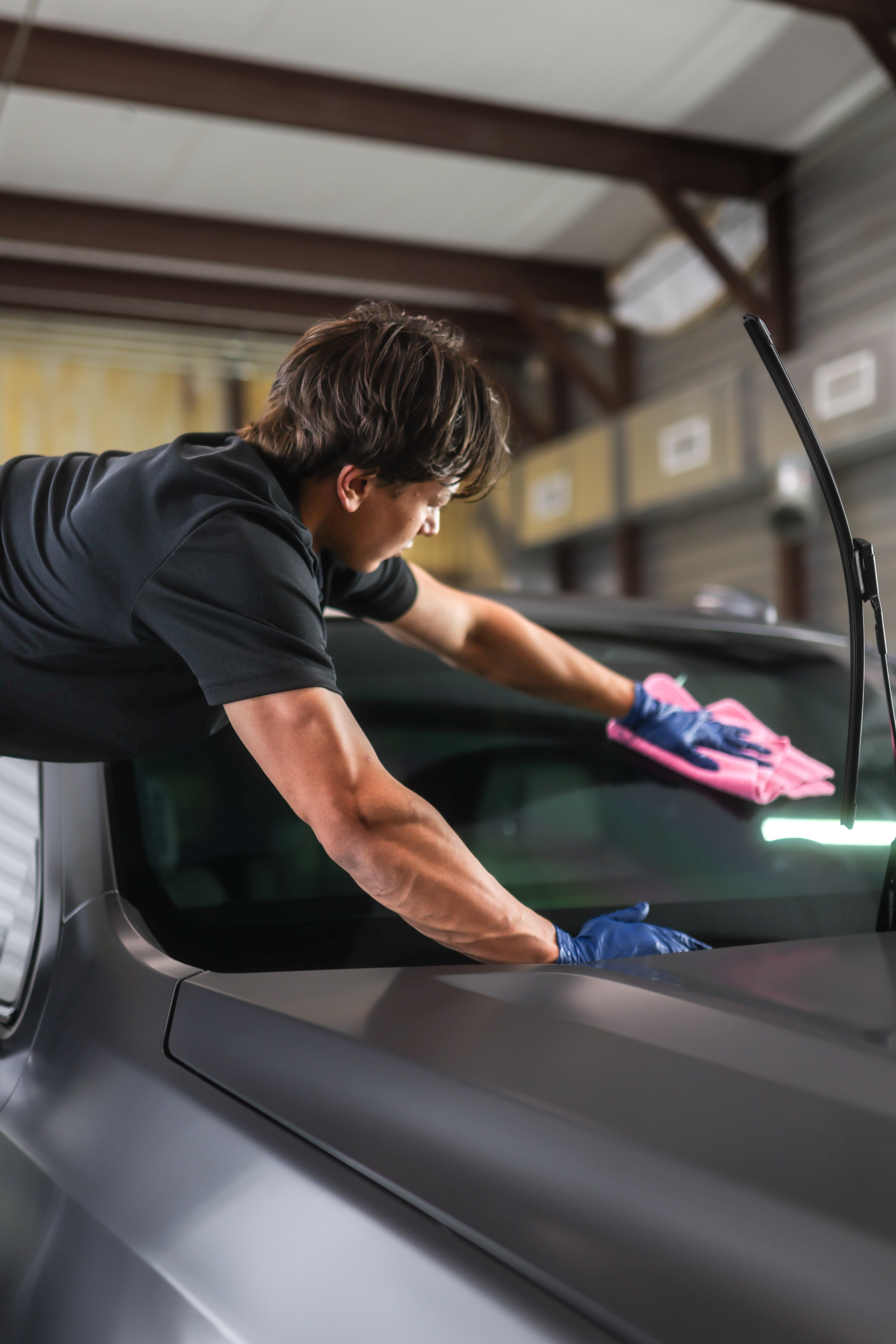
How to Clean Tinted Windows
Wait for the product-specific cleaning period given at pickup. After that:
- Use a clean, soft microfiber towel
- Use a cleaner approved by the film manufacturer
- Spray the towel when possible instead of soaking window edges
- Avoid razor blades, brushes, scrub pads, and abrasive towels
- Use light pressure around the film edge and rear defroster lines
- Keep dusty exterior towels away from the film-facing interior glass
Cleaner advice can differ by film line. The safest rule is to use the current care instructions for the installed product rather than assuming every household glass cleaner is compatible.
Is Scratch-Resistant Tint Scratchproof?
No. A scratch-resistant or abrasion-resistant coating is designed to improve durability; it does not make automotive film impossible to gouge. The film-facing surface is inside the vehicle, so pet claws, hard jewelry, metal seat-belt parts, cargo, razor blades, dirty towels, and abrasive pads can still damage it.
The LLumar automotive tint FAQ describes its film as scratch-resistant while still directing owners to non-abrasive towels. That distinction matters for every brand: check the care instructions for the exact installed product, keep hard or sharp objects away from the film, and photograph a scratch before trying to polish, scrape, or heat it.
What Is Not Normal?
Large fingers that do not settle, debris you can clearly feel, peeling edges, or film that lifts when the glass moves deserve inspection. A few small visual changes during curing are different from a permanent installation defect. The current LLumar automotive tint FAQ, for example, treats later cracking, bubbling, or yellowing as conditions that may fall under its product-specific limited warranty. Your coverage depends on the actual film and written terms. If the film is older, purple, hazy, or permanently bubbled, see our window tint removal guide.
Before You Leave the Shop
Confirm which windows were completed, the film type, your roll-down date, the expected cure window, and how to contact the installer with a concern. Take a quick look in daylight when possible. Clear pickup instructions make aftercare easier and give the shop a better starting point if you have a question later. Rear glass also needs care around printed grids and antennas; see the rear-window tint and defroster-line guide before cleaning, scraping, or planning removal.
Frequently Asked Questions
When can I roll my windows down after tinting?
Follow the time given at pickup because film, weather, and vehicle design affect the answer. If unsure, call before lowering the window.
Can I wash my car after window tinting?
An exterior wash normally does not touch automotive tint because the film is usually installed on the inside of the glass. Keep the windows closed and follow the installer’s exact directions before cleaning the interior glass or film-facing surface.
Can rain damage fresh window tint?
Normal rain lands on the exterior glass and does not directly touch film that is bonded to the interior. Keep the windows fully closed; if water reaches a fresh film edge through an open window or leak, do not rub or press it and contact the installer.
What should I do if I rolled a tinted window down too soon?
Stop operating the window, look for a lifted or creased film edge, and contact the installer. Do not push, peel, or heat the film yourself.
Are bubbles normal after window tint?
Small moisture pockets or haze can be normal during curing. XPEL says its automotive window tint may appear hazy or show moisture bubbles for up to 10 days; product-specific instructions control. Large persistent areas, debris, lifting, or peeling should be inspected.
Why does tint look lighter around the black dots on rear glass?
The black dotted border is a raised screen-printed coating, commonly called a dot matrix. Because it is not a flat glass surface, film contact and reflected light can look different there. Photograph the area and have the installer inspect any concern instead of pressing or heating it.
How can I tell curing moisture from a tint problem?
Curing moisture and light haze should change as the film dries. A hard particle, sharply lifted edge, crease, peeling area, or condition that remains after the product-specific cure window should be photographed and inspected.
How should fresh window tint be visually inspected?
IWFA guidance evaluates installed automotive film in natural daylight, viewed at right angles to the glass from inside and from about three feet outside. Normal water haze and distortion during curing should not be treated as permanent defects.
When can I clean newly tinted windows?
Follow the film-specific instruction given at pickup. Published manufacturer guidance varies, so do not assume one waiting period applies to every product.
Can I use regular glass cleaner on tint?
Use the film manufacturer's approved cleaner and a soft microfiber towel. Avoid abrasive cleaners, brushes, razor blades, and scrub pads.
Related Window Tint Guides
- How to Clean Tinted Car Windows Safely
- How to Prepare for a Tint Appointment
- How Long Does Window Tint Last?
- Window Tint Warranty Guide
- Window Tint Installation Time | Lubbock TX
- Window Tint Removal and Replacement
- Window Tint Cost Lubbock TX
- Texas Window Tint Laws | Lubbock TX
- Window Tinting Lubbock TX — Pricing
Get a Window Tint Quote in Lubbock
Carbon and ceramic film with simple introductory pricing. Tell us your year, make, model, and which windows you want.
Request a Tint Quote →