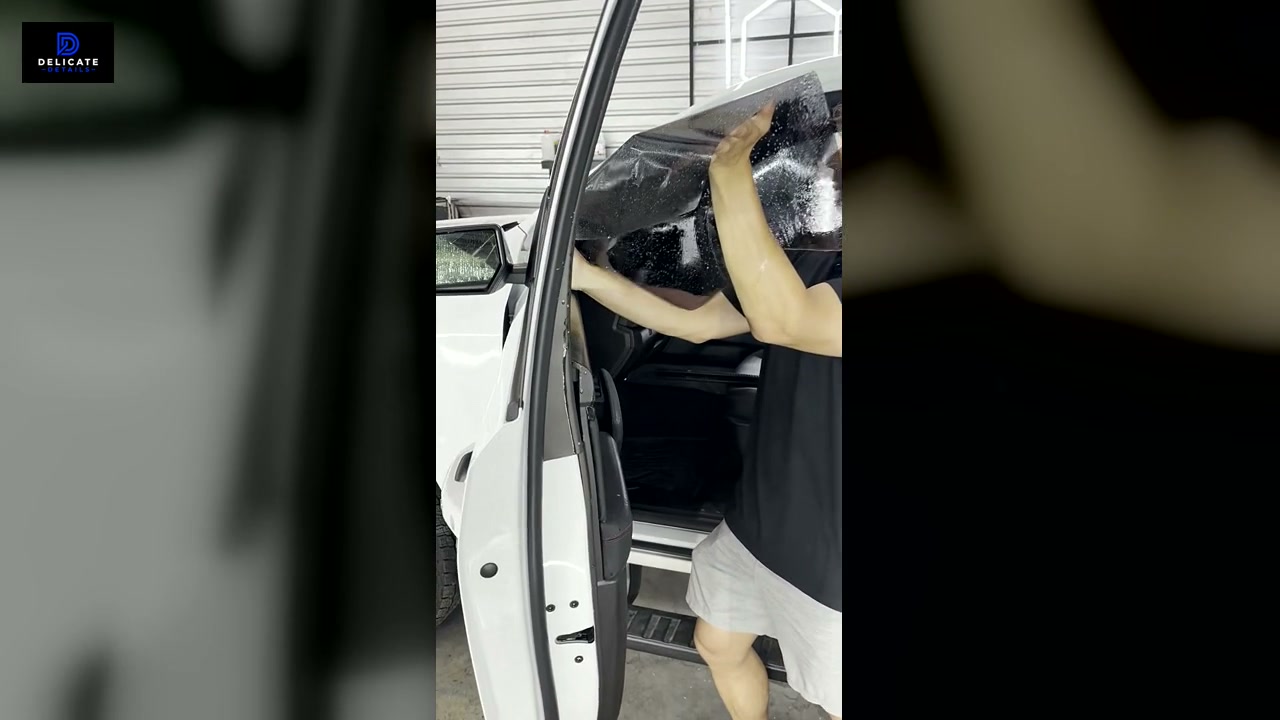
Panoramic Sunroof Tint in Lubbock: What to Check First
Quick answer: A panoramic roof, fixed glass roof, and opening sunroof are not automatically the same tint job. Before adding film, identify the exact glass panel, check the owner manual and glass markings, document factory shading and damage, verify that the film manufacturer approves the application, and confirm access around shades, trim, sensors, antennas, and moving hardware. Roof film is a separate, vehicle-specific quote—not an automatic part of a side-and-rear window package.
“Sunroof tint” can describe several different pieces of glass
Drivers often use one phrase for very different roof systems. A traditional sunroof may be one smaller movable panel. A panoramic roof may use a large fixed front panel, a movable section, a second fixed panel, or multiple laminated pieces. Some vehicles add a powered interior shade. Others use deeply shaded factory glass with no shade at all. The panel may also include frit borders, brackets, antennas, sensors, coatings, or laminated layers that are not obvious from the cabin.
That variety is why a phone quote based only on “I have a panoramic roof” is incomplete. The shop needs the year, make, model, body style, and the specific panel or panels under consideration. Photos from the interior and exterior help, but glass markings and manufacturer documentation may still be necessary. If a panel opens, its movement, seals, drainage, clearance, and shade operation also belong in the inspection.
The International Window Film Association installation overview explains that automotive film is normally positioned on the interior side of the glass. On roof glass, the interior side can be harder to reach and may sit close to a headliner, shade, trim, wiring, and moving mechanisms. Access affects whether the application is practical and how the work must be scoped.
Factory roof glass may already include solar-control technology
Dark-looking glass does not tell the entire story. Color, visible-light transmission, ultraviolet control, solar absorption, infrared reflection, coatings, interlayers, and laminated construction are different properties. A roof that looks dark may already contain technology designed into the glass, while another panel with a similar appearance may behave differently.
For example, 3M describes an automotive glazing film used inside laminated panoramic-sunroof glass. That is an original-equipment interlayer product, not proof that any aftermarket roll of film can be applied to every finished roof panel. It illustrates why “factory tint” and aftermarket film must not be treated as interchangeable. One is part of the manufactured glazing assembly; the other is installed later on an accessible surface.
Tesla likewise states that its vehicle glass is engineered for optical clarity, ultraviolet protection, acoustic properties, cameras, and antennas. The exact design varies by vehicle and model year. The Tesla vehicle-glass support page is a useful reminder that glass can participate in more systems than appearance alone suggests.
What the factory glass does not prove
A dark roof does not prove a particular total solar-energy rejection number. A manufacturer’s ultraviolet statement does not establish the panel’s visible-light transmission or complete heat performance. A product made for one laminated-glass construction does not establish compatibility with another. Use documentation for the exact vehicle glass and exact aftermarket film.
Can aftermarket window film go on panoramic roof glass?
Sometimes a manufacturer-approved automotive film can be applied to compatible roof glass, but there is no responsible universal yes. The answer depends on the glass construction, coatings, existing layers, curvature, panel condition, access, film design, installer guidance, and the vehicle manufacturer’s instructions. A shop should not assume compatibility from roof size or darkness.
The current IWFA Automotive Education Guide distinguishes automotive film types and warns against substituting architectural products without specific manufacturer approval. That distinction matters on a roof: building film and automotive film are engineered for different applications, and a generic “ceramic” label does not establish suitability.
A current product bulletin can help define a film’s intended surface and application method. The 3M Crystalline automotive-film bulletin, for example, describes use on flat to complex curved automotive glazing and provides product-specific application and maintenance information. It does not authorize every roof-glass combination. The installer still needs current manufacturer guidance for the exact product and panel.
| Item to verify | Why it changes the roof-film decision |
|---|---|
| Exact roof panel | Fixed front glass, movable sunroof glass, and rear fixed glass can have different construction, access, and hardware. |
| Glass markings and manual | They help identify laminated or tempered construction, factory features, restrictions, and service guidance. |
| Factory shade or coating | Existing darkness and solar technology affect the goal and prevent honest performance claims based on appearance alone. |
| Damage or replacement history | Chips, cracks, scratches, edge damage, repairs, replacement glass, and contamination require review before film. |
| Film approval | The exact automotive film—not merely “ceramic”—must be appropriate for the glass and installation position. |
| Shade, trim, and movement | Powered shades, headliner clearance, seals, tracks, sensors, and opening panels affect access and finished operation. |
Roof-film performance needs exact numbers and realistic expectations
Customers usually ask about heat, glare, brightness, ultraviolet exposure, or a more consistent appearance. Those are valid goals, but they should be separated. Visible-light transmission describes how much visible light passes through a tested glass-and-film system. Total solar-energy rejection accounts for a broader portion of solar energy. Infrared figures can be reported across different wavelength ranges, so two impressive-looking percentages may not measure the same thing.
Compare data for the exact film and, when available, the finished glass-and-film combination. Do not assume a darker film always controls more solar energy or that a nearly clear film performs poorly. Film construction and test method matter. Our window-tint heat-rejection guide explains VLT, TSER, infrared figures, and why the testing basis belongs beside the percentage.
No film makes a cabin heat-proof, eliminates all glare, or replaces the vehicle’s air conditioning and shade system. Roof glass receives direct exposure, and the cabin can still warm through the windshield, doors, body panels, and ventilation conditions. A written quote should describe the selected film and glass, not promise a universal temperature drop.
Visibility, night use, and interior shades still matter
A roof does not function like a front side window, but darker is still not automatically better. Drivers may want daylight brightness without harsh overhead glare. Passengers may prefer a darker appearance. A movable interior shade can change the practical need for film. The correct discussion includes how the vehicle is used, whether the shade stays open, the desired cabin appearance, and what the glass already provides.
On vehicles with heavily shaded roof glass, adding another dark layer may create a result that looks very different from a sample viewed on clear side glass. Color tone and reflectivity can also change when film is combined with factory glass. Samples should be evaluated honestly, and an exact visual match to side or rear windows should not be promised from a shade name alone.
For Tesla Model 3, the current owner manual states that the roof, windshield, and windows already provide ultraviolet protection. See the official Tesla Model 3 windows and UV guidance. That vehicle-specific statement should not be copied to every make, model, or replacement panel, and it does not answer every heat, glare, or aftermarket-film question.
Damage, warranties, leases, and replacement glass
Film is not a repair for cracked, chipped, scratched, delaminated, or leaking roof glass. Damage near an edge, mounting point, seal, or laminated layer deserves qualified glass or vehicle-service review before tinting. If the roof was replaced, identify the replacement part and allow all required glass-service work to finish before considering film.
Vehicle, glass, and film warranties are separate. Ask what the vehicle manufacturer says about aftermarket window treatments, what the film manufacturer covers for the exact application, and what installation workmanship terms apply. If the vehicle is leased, review the lease-return rules before modifying factory glass. Removal later is a separate service and does not come with a blanket promise that every coating, printed element, or previously damaged surface will remain unchanged.
Keep the invoice, film manufacturer, product line, shade, covered panels, installer information, and written warranty. “Ceramic roof tint” by itself is not enough documentation for a later claim, replacement panel, or matching request.
Panoramic-roof tint quote checklist
- Send the year, make, model, trim, and clear photos of the complete roof from inside and outside.
- Identify every panel you want reviewed and whether each panel is fixed, tilting, sliding, or paired with a powered shade.
- Photograph the glass markings and disclose replacement, repair, leak, crack, chip, scratch, coating, or prior-film history.
- Explain the goal separately: glare, visible brightness, appearance, ultraviolet control, documented solar performance, or another concern.
- Ask for the exact film manufacturer, product line, shade, and product data—not only a category label.
- Confirm written compatibility, selected panels, installation access, exclusions, warranty, final price, and appointment time before authorizing work.
Delicate Details does not include roof glass automatically in the published two-, four-, five-, or seven-window packages. Roof panels need a separate compatibility and access review. If the requested application is not supported by the available film documentation or the panel condition, the responsible answer may be to decline it.
Panoramic sunroof tint questions
Is panoramic roof tint included with full-car tint?
No. Published automotive packages are based on the selected side and rear glass described in the quote. Windshield, brow, roof glass, and old-film removal are separate unless the written scope expressly includes them.
Does a dark factory roof still need film?
Not automatically. Identify what the factory glass already provides, then define the remaining goal. Appearance alone does not establish VLT, TSER, infrared performance, or compatibility.
Can roof film crack panoramic glass?
Glass can fail for multiple reasons, and a generic answer cannot diagnose a specific panel. The glass construction, condition, film selection, solar absorption, edge condition, installation, and manufacturer guidance all matter. Have damaged or questionable glass reviewed before film.
Can you tint a roof with a powered shade?
The shade does not automatically prevent film, but it changes access and clearance. The shop must inspect shade travel, trim, panel movement, and the film application before confirming the scope.
Do you publish one panoramic-roof price?
No. Panel count, size, curvature, access, glass construction, compatible film, trim, movement, and condition vary too much for one responsible public price. Photos start the review; final approval may require an in-person inspection.
How this guide was prepared: Delicate Details combined local quoting workflow with current primary-source material from IWFA, 3M, and Tesla. Product lines, glass constructions, vehicle manuals, warranties, and application guidance can change. Current documentation for the exact vehicle, glass, and film controls.
Request a roof-glass film review
Send the vehicle, trim, roof photos, glass markings, shade or panel operation, damage history, and your goal. We will confirm whether the application can be quoted and what is included.
Request a Tint Quote