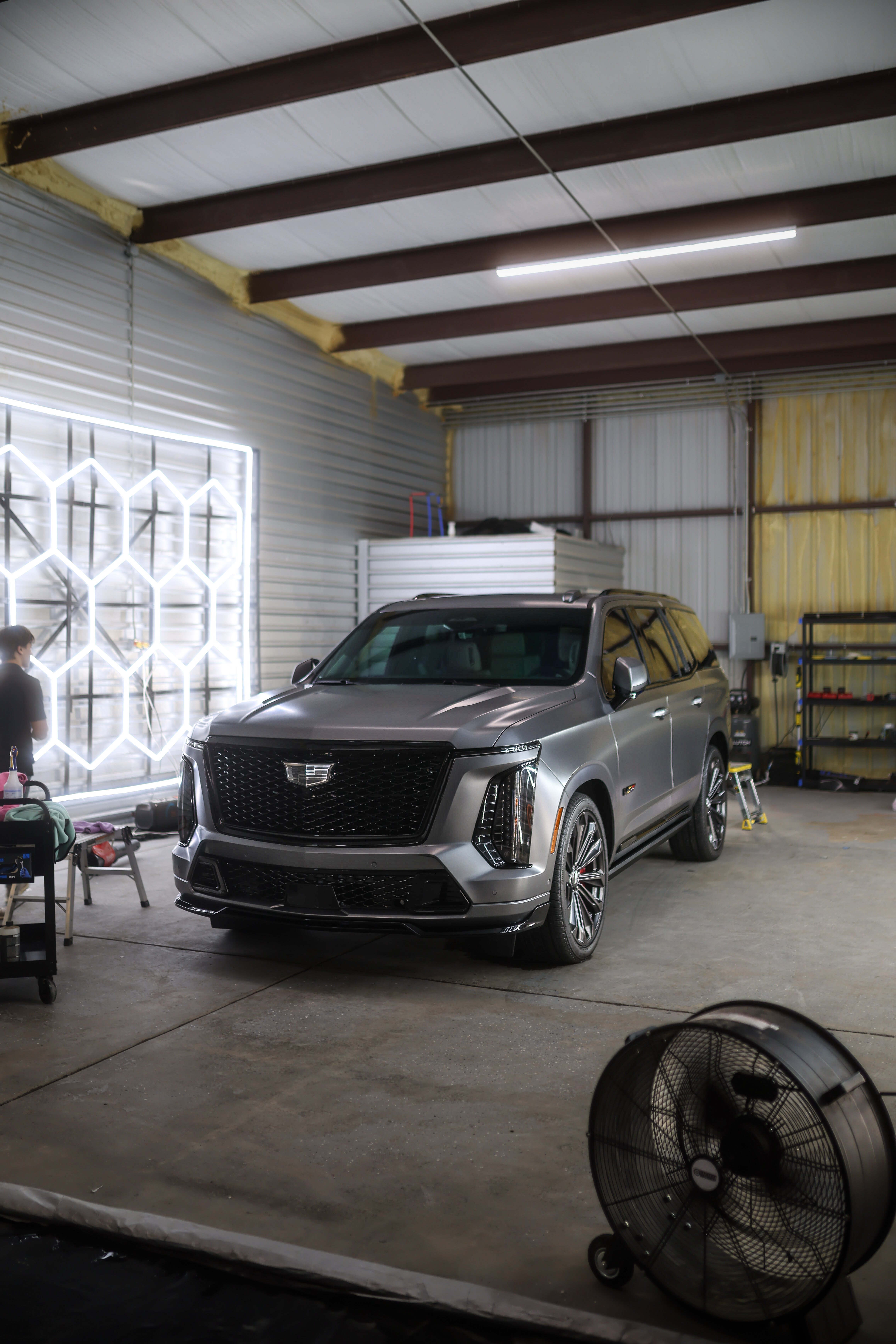
SUV Window Tint in Lubbock: Glass, Privacy and Options
Quick answer: An SUV tint quote should identify every requested pane instead of assuming that “full SUV” means the same thing on every vehicle. Confirm the four roll-down door windows, fixed quarter or cargo glass, liftgate glass, any split or movable panel, and roof glass separately. Factory-darkened rear glass can provide privacy without proving a specific heat-rejection result. Send the year, make, model, trim, straight-on side and rear photos, old-film details, and the appearance or comfort goal. The written quote should name the film, shade, included glass, removal, exclusions, warranty, and final price.
Why “full SUV tint” needs a pane-by-pane scope
SUVs range from compact two-row crossovers to long-wheelbase three-row vehicles. Two models can both have four doors while using different fixed quarter windows, cargo panes, liftgate assemblies, roof panels, antennas, cameras, defroster grids, and factory glass. A price based only on the word “SUV” leaves too much undefined.
Start with the four roll-down windows, then identify each separate pane behind the rear doors. Some SUVs use one fixed cargo pane per side. Others divide that area into multiple pieces or add small quarter glass near a pillar. The liftgate may be one large heated pane, a separately opening glass section, or part of a more complex rear assembly. A panoramic roof is not automatically included with side-and-rear coverage.
The Magna engineered-glass overview shows why modern vehicle glass can include fixed, sliding, flush, heated, and integrated systems. That source does not define the glass on a specific SUV, but it demonstrates why a shop should inspect the actual vehicle rather than quote from a generic body-style label.
Which SUV windows are usually discussed in a tint quote?
| Glass area | What must be confirmed |
|---|---|
| Front roll-down pair | Existing film, factory glass, desired shade, finished legal measurement, mirrors, trim, and condition. |
| Rear roll-down doors | Factory privacy color, existing film, child-safety hardware, glass shape, and whether appearance or measured solar performance is the goal. |
| Fixed quarter or cargo glass | Number of separate panes, interior access, trim, antennas, frit borders, old film, and whether each pane is included. |
| Liftgate glass | Defroster lines, printed antennas, wiper hardware, camera or brake-light area, opening mechanism, damage, and old-film removal. |
| Windshield or brow | Separate scope, current Texas requirements, cameras, sensors, inspection stickers, visibility, and exact film. |
| Panoramic roof | Separate compatibility review for glass construction, factory shading, coatings, shade movement, access, damage, and approved film. |
Our window-count guide explains common two-, four-, five-, and seven-window starting points. Those counts help organize a quote; they do not override the actual pane layout. Send photos so the final scope can name every piece of glass.
Factory privacy glass and applied film are not the same
Many SUVs leave the factory with darker rear doors, cargo glass, and liftgate glass. That color may be built into the glass instead of added as a removable interior film. It can reduce visible light and create privacy, but appearance alone does not prove a particular total solar-energy rejection, infrared result, ultraviolet claim, or aftermarket-film compatibility.
If the goal is to make the lighter front pair look closer to the rear, the shop can compare samples against the actual vehicle. An exact color or darkness match should not be promised from a shade label alone. Windshield light, interior color, glass color, viewing angle, and added film can make the front and rear look different even when meter readings are close.
If the goal is documented solar performance, ask for the exact film manufacturer, product line, shade, visible-light transmission, total solar-energy rejection, and the test basis. The IWFA Automotive Education Guide distinguishes film types and performance measurements. Our factory privacy glass comparison and heat-rejection numbers guide explain the difference in practical terms.
A useful SUV tint claim names the tested system
“Ceramic,” “privacy glass,” and “infrared” are not complete performance specifications. A useful comparison identifies the exact product, shade, glass basis, measurement, test method, and warranty. Do not transfer a percentage from one shade, one glass type, or film-only data to every SUV window.
Rear liftgate glass needs a closer inspection
Liftgate glass often combines defroster lines, printed antenna elements, dot-matrix borders, a wiper pass-through, trim, camera or brake-light areas, and limited interior access. Those features do not automatically prevent compatible film, but they change preparation and make the condition of the glass important.
Film is normally installed on the interior surface. The IWFA automotive installation overview describes the interior application process. On a liftgate, that is also where printed electrical elements and old adhesive may be present. Existing broken lines, scratches, chips, cracks, corrosion, peeling film, or adhesive should be photographed before work begins.
New film does not repair a weak defroster or damaged printed element. Old-film removal is a separate risk and scope because aggressive scraping or pulling can affect material bonded to the glass. Review our rear-window defroster guide before requesting removal or replacement on a liftgate.
Carbon or ceramic film for an SUV?
Carbon is the lower-cost option when the main goals are appearance, privacy, and glare reduction. Ceramic is the heat-focused upgrade when documented solar performance is a priority. A three-row SUV can have substantial glass area, but more glass does not make every ceramic product equal or guarantee a specific cabin-temperature change.
Compare the exact products under the same measurement basis. Total solar-energy rejection is broader than a selected infrared figure. Visible-light transmission describes brightness rather than complete solar performance. A darker shade is not automatically the best heat performer, and nighttime outward visibility still matters.
The 3M Crystalline product bulletin is an example of product-specific data for automotive glazing. It demonstrates the level of documentation worth requesting; it is not a recommendation that one film fits every SUV or every pane. The selected film and current manufacturer guidance control.
Texas requirements apply to the completed window
The relevant legal measurement is the completed glass-and-film system, not only the number printed on a film sample. Factory glass already transmits less than 100 percent of visible light, so added film can produce a finished reading below the film label.
The Texas Department of Public Safety window-tint standard explains current requirements for regulated windows, reflectance, windshield placement, labels, rear visibility, and exemptions. Read the current official source for the specific vehicle and registration situation. This guide is not a substitute for the law, a meter reading, or an enforcement decision.
Use the interactive estimator in our window-tint percentage guide to understand the calculation, then have the completed window measured when compliance matters. Estimates do not replace a meter.
Panoramic roofs, cameras, antennas, and connected equipment
A roof panel is a separate decision from door and cargo glass. Its construction, coatings, factory shading, curvature, powered shade, moving hardware, access, and manufacturer guidance can change whether aftermarket film is appropriate. Do not assume the roof is included because the quote says “all around.” Use the panoramic roof-glass tint guide to gather the required information.
Windshield-mounted cameras, mirror housings, toll tags, dashcams, antennas, and other devices also deserve attention. A side-and-rear quote should not imply that windshield work or device handling is included. Tell the shop about accessories, replacement glass, camera service, signal concerns, and recently completed glass work before the appointment.
SUV tint quote checklist
- Send the year, make, model, trim, and clear exterior photos of both sides and the complete rear glass.
- Identify the requested roll-down, fixed, liftgate, windshield, brow, and roof glass separately.
- Disclose factory-darkened glass, old film, removal needs, replacement glass, chips, cracks, scratches, defroster faults, and prior repairs.
- State the goal: appearance, privacy, glare reduction, daytime comfort, documented solar performance, or a combination.
- Ask for the exact film manufacturer, product line, shade, performance data, included panes, exclusions, and warranty.
- Confirm the finished legal target, final price, appointment timing, curing guidance, and cleaning instructions in writing.
SUV window tint questions
Does a five-window tint package cover every SUV window?
No. A common five-window starting point is four roll-down doors plus rear glass. Fixed quarter or cargo panes, split glass, roof glass, windshield work, and removal must be confirmed separately from the actual SUV.
Can front SUV windows match factory-darkened rear glass?
A shop can select the closest practical shade and color after seeing the vehicle, but an exact match is not guaranteed. Factory privacy glass and applied film are different systems, and windshield light changes the appearance of the front cabin.
Does dark factory glass already reject heat?
Dark appearance alone does not establish total solar-energy rejection or a comparable infrared figure. Check the vehicle-glass information and test data for the exact added film before making a performance claim.
Is liftgate glass included in an SUV tint quote?
Only when the written scope names it. The quote should also address defroster lines, old film, removal, printed antennas, damage, and access around the liftgate trim and hardware.
Is panoramic roof tint included with SUV side-window tint?
No. Roof glass requires a separate compatibility and access review and is not automatically included with published side-and-rear window choices.
Can old SUV tint be removed and replaced in one appointment?
Sometimes, but removal is a separate service and the actual glass condition controls. Multiple cargo panes, liftgate grids, adhesive, damage, and access can change the time and scope after inspection.
How this guide was prepared: Delicate Details combined its Lubbock quoting workflow with current primary-source material from Texas DPS, IWFA, Magna, and a manufacturer product bulletin. Vehicle glass, regulations, film lines, product data, warranties, and application guidance can change. Current documentation for the exact vehicle, glass, and film controls.
Request an SUV tint quote
Send the year, make, model, trim, side and rear photos, old-film details, requested panes, and your goal. We will confirm the glass and written scope before scheduling.
Request a Tint Quote