Six-figure paint does not get a bigger package. It gets a slower, more conservative process and a shop willing to say no.
Most of what we do is trucks and daily drivers, and we are not going to pretend otherwise. But the vehicles below are the ones that decide whether a shop actually knows what it is doing, because the margin for error is close to zero and the cost of getting it wrong is not a buff-and-move-on situation.
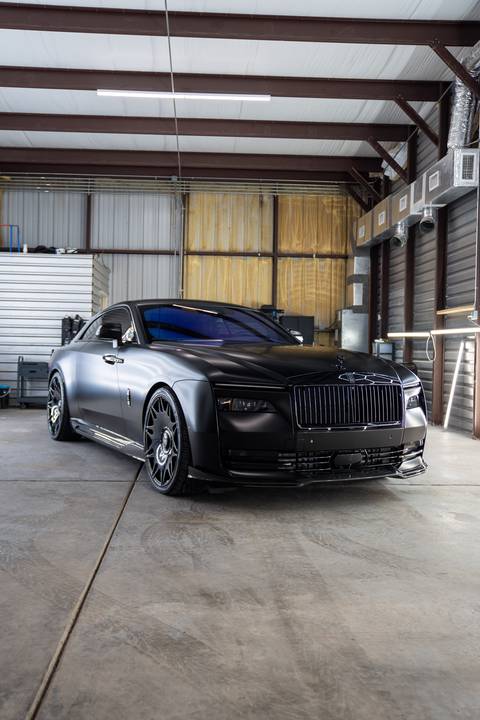
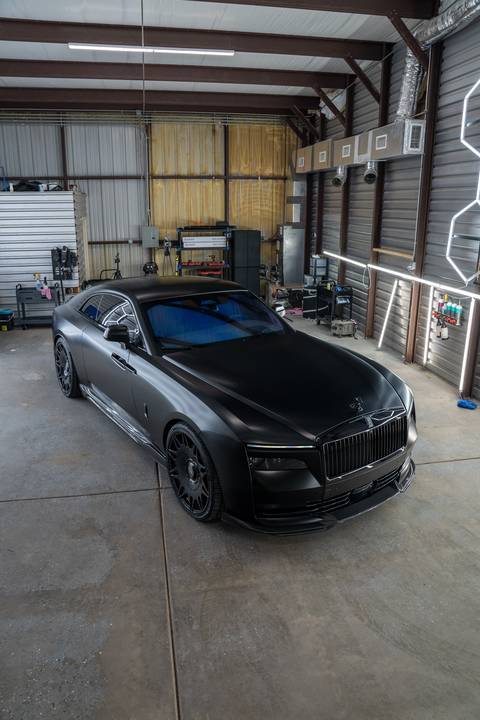
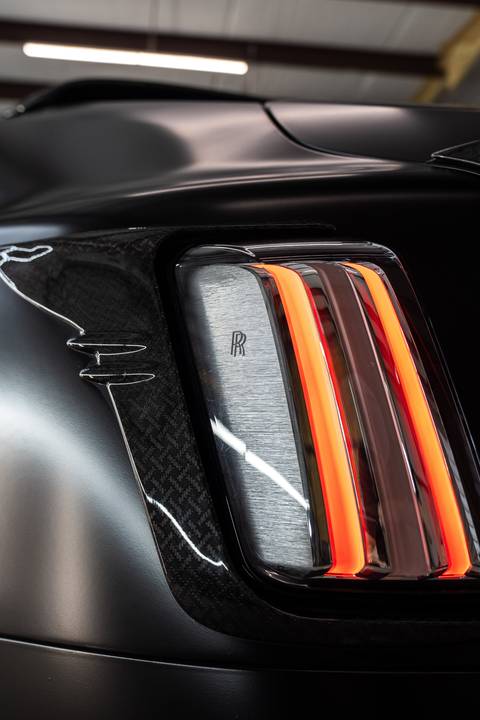
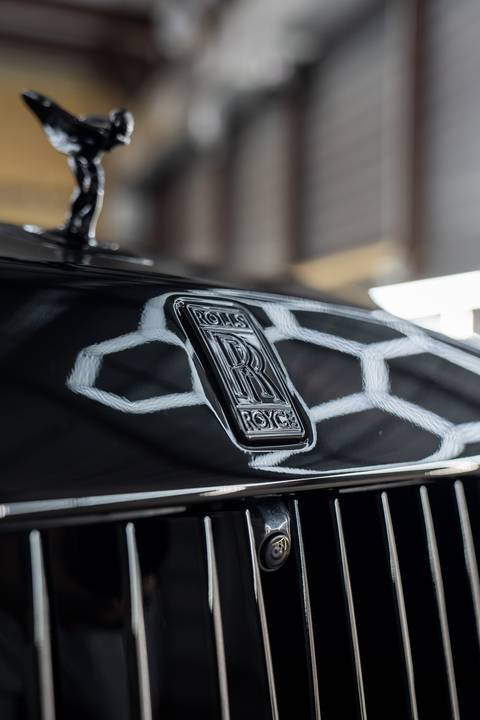
The Rolls-Royce below is finished in satin black with gloss carbon fibre accents. That combination is genuinely difficult, and it is difficult in a way most detailing shops are not set up to handle — because the two finishes on the same car require opposite processes.
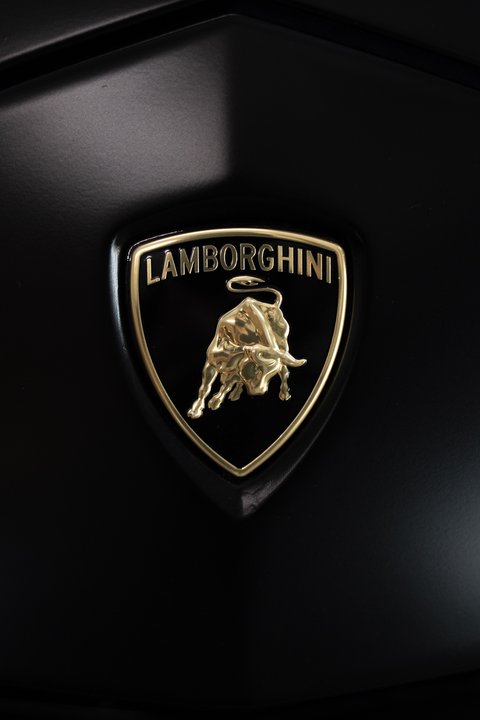
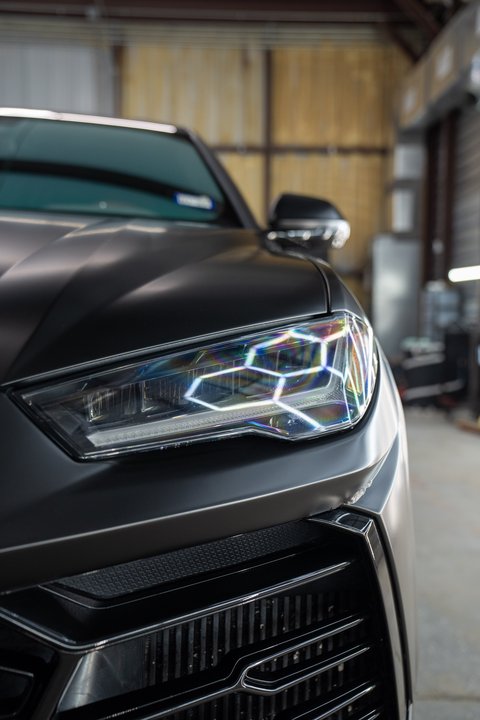
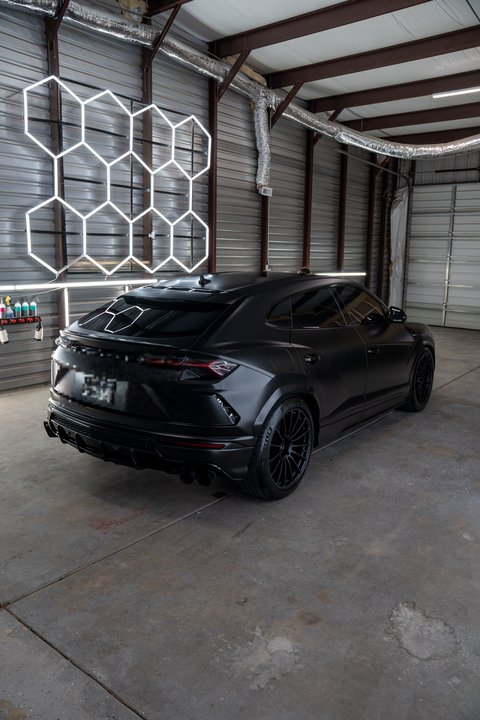
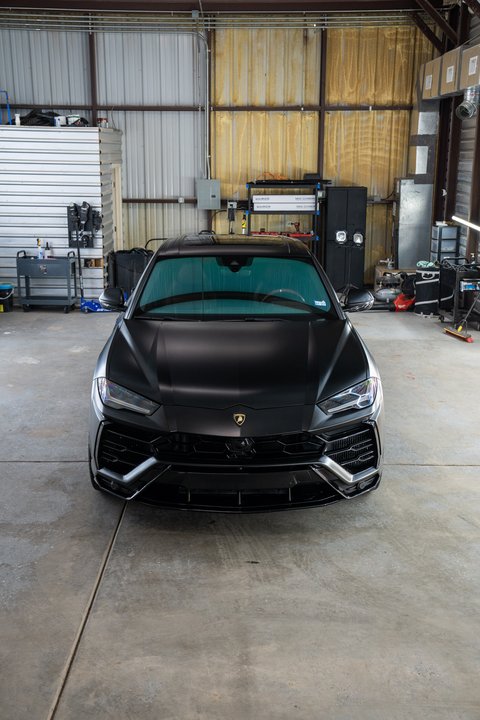
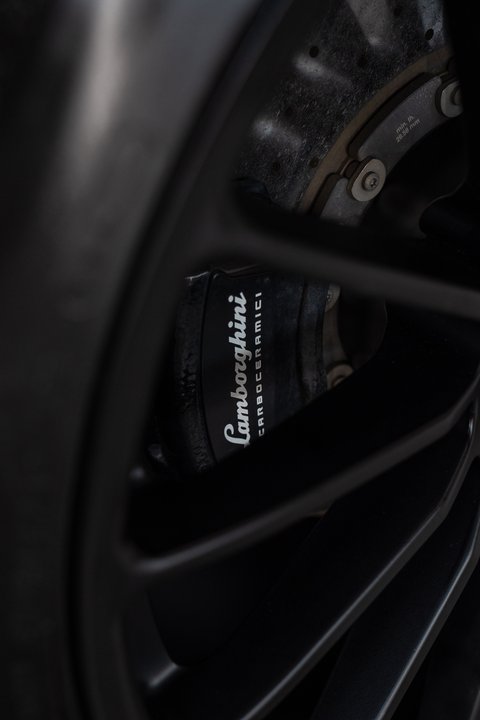
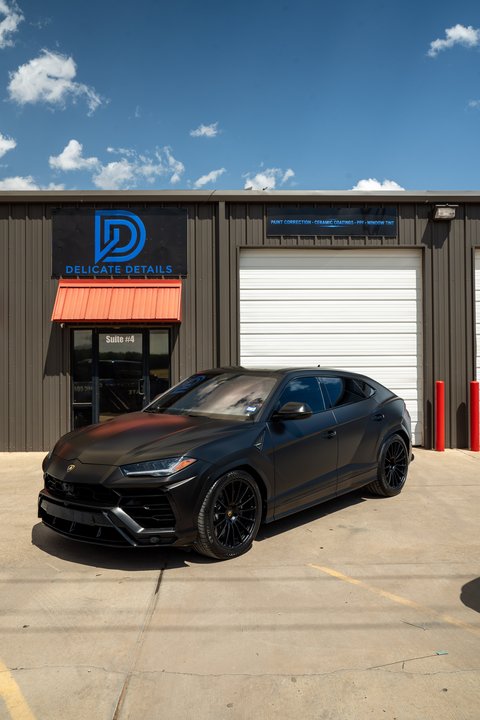
The Lamborghini Urus is the same category of problem: a full satin black wrap over the body panels, with gloss trim, gloss brake calipers, and gloss wheels on the same vehicle. Same rule applies — nothing that touches the satin panels can be the product or technique used on the gloss ones.
The Work
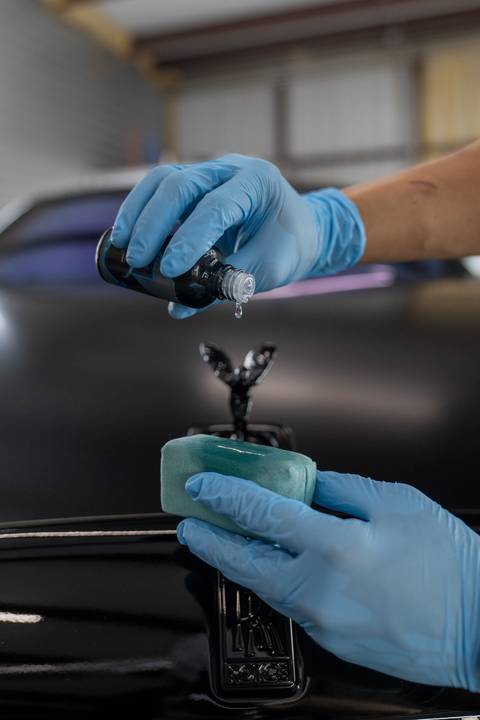
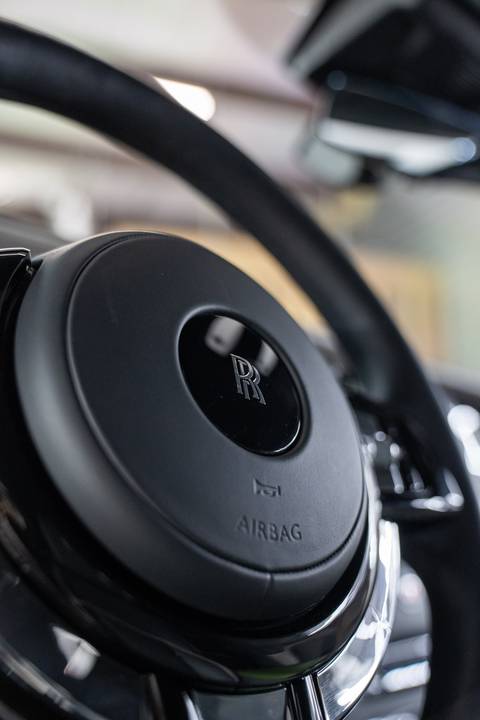
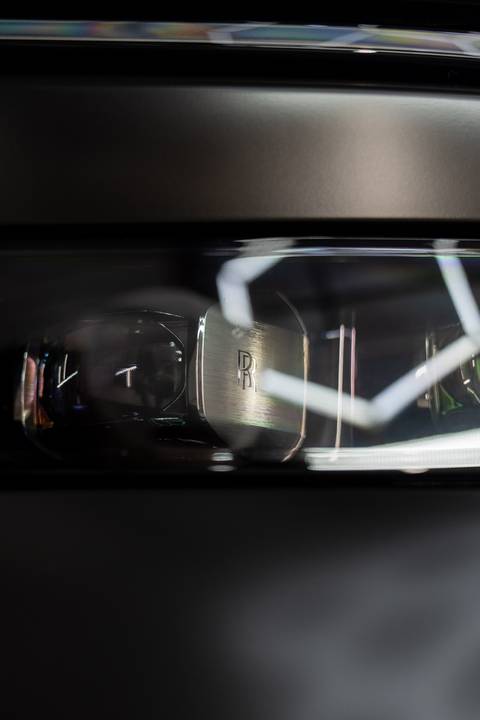
Rolls-Royce in satin black finish after ceramic coating in our Lubbock TX shop.Ceramic coating being dosed onto an applicator over the hood of a Rolls-Royce.Satin black Rolls-Royce coupe under shop lighting in Lubbock TX.Gloss carbon fibre and taillight detail against satin paint.Rolls-Royce grille, badge, and Spirit of Ecstasy after detailing.Rolls-Royce steering wheel and cabin after interior detailing.Rolls-Royce headlight detail after decontamination and coating.
The Lamborghini Urus
Satin black over every body panel, with gloss brake calipers, wheels, and trim left as-is. Same two-chemistry problem as the Rolls-Royce, on an SUV instead of a coupe.
Lamborghini badge in satin black on the hood of an Urus.Lamborghini Urus headlight and satin front fascia detail.Satin black Lamborghini Urus rear three-quarter in our Lubbock TX shop.Satin black Lamborghini Urus front three-quarter after detailing.Lamborghini Carboceramic brake caliper detail.Lamborghini Urus outside our Lubbock TX shop after detailing.
Satin and Matte Paint: The Rule That Governs Everything
There is exactly one thing you need to know about matte and satin finishes, and it eliminates most of the detailing industry's standard toolkit.
You Cannot Polish It
The Hard Rule
Matte and satin finishes get their appearance from a deliberately textured clear coat that scatters light instead of reflecting it. Polishing flattens that texture.
A polisher on satin paint creates a shiny patch. That patch is permanent, it cannot be blended, and the fix is a repaint of the panel. This is why we will decline correction work on matte paint rather than attempt it.
No Wax, No Gloss Sealant
Wrong Chemistry Entirely
Conventional waxes and gloss sealants fill and level the surface, which is exactly what you do not want. They leave the finish blotchy and uneven.
The coating has to be one formulated for matte and satin — it protects without adding gloss or filling the texture. Using a standard ceramic coating on satin paint ruins the finish.
Contamination Is Harder to Remove
Texture Traps It
The same texture that scatters light also holds contamination more stubbornly than a smooth gloss clear coat does.
Decontamination has to be chemical rather than mechanical. Clay bar on satin paint is a burnishing risk, so bonded contamination comes off with chemistry and dwell time instead.
Two Finishes, Two Processes
The Actual Difficulty
This car has satin body panels and gloss carbon fibre and brightwork. Each needs a different product and a different approach, on the same vehicle, without cross-contaminating.
Separate pads, separate towels, separate products, and taped boundaries. Getting a gloss compound onto satin paint is the single most expensive mistake available on a car like this.
What We Actually Do With a Vehicle Like This
The process is slower than a standard detail and most of the time goes into things you will never see.
Inspection and Documentation
Before Anything
The whole car is inspected and photographed under controlled lighting before any product touches it. Existing defects are identified and recorded.
On a high-value vehicle this protects both parties. We are not going to be blamed for a mark that arrived with the car, and you get an honest account of its condition.
Contact-Minimal Washing
Where Damage Comes From
Pre-rinse to flush abrasive grit, then a controlled wash with frequent fresh media, then drying rather than air-drying.
Nearly all wash-induced damage is a discipline problem, not a product problem. On satin paint, marring cannot be polished out afterward, so the wash has to be right the first time.
Finish-Appropriate Protection
Matched to the Surface
A coating formulated for matte and satin on the body panels; a conventional coating on the gloss carbon fibre and brightwork.
Same car, two chemistries, kept strictly separated. This is the step that most obviously separates a shop that has done this before from one that has not.
Interior to the Same Standard
Leather, Wood, Metal
Cabin surfaces get products matched to the material, applied conservatively, with no dressing that leaves a shine where the manufacturer intended none.
Over-dressed leather and glossy trim look wrong in a car like this. Restraint is the correct instinct throughout.
When we say no. If a matte or satin panel arrives with defects that would require polishing, we will tell you it needs paint, not correction — and we will not attempt it. There is no technique that removes a scratch from satin paint without leaving a gloss spot. A shop that promises otherwise is either inexperienced or planning to hand you back a worse car.
Frequently Asked Questions
Can you ceramic coat matte or satin paint?
Yes, with a coating formulated specifically for matte and satin finishes. It protects without adding gloss or filling the texture. A standard gloss ceramic coating on satin paint ruins the finish and the fix is a repaint.
Can scratches be polished out of matte paint?
No. Matte and satin finishes get their look from a textured clear coat, and polishing flattens that texture into a permanent shiny patch that cannot be blended. Defects in matte paint are a bodyshop problem, not a detailing one.
Do you detail exotic and luxury cars in Lubbock?
Yes. We handle luxury and exotic vehicles including Rolls-Royce, and vehicles with matte, satin, and gloss carbon fibre finishes. The process is slower and more conservative than a standard detail.
How is detailing a luxury car different?
Mainly in what does not happen. Less aggressive correction, more decontamination by chemistry rather than contact, strict separation of products between finishes, and a willingness to decline work that would make the car worse.
Do you charge more for exotic vehicles?
Pricing follows vehicle size and condition, same as everything else. What changes on an exotic is time — the process is slower, so complex or multi-finish vehicles are quoted after we see them rather than off a price list.
Have Something Special?
Tell us the vehicle and the finish. If it is matte or satin, say so up front — it changes the entire approach.