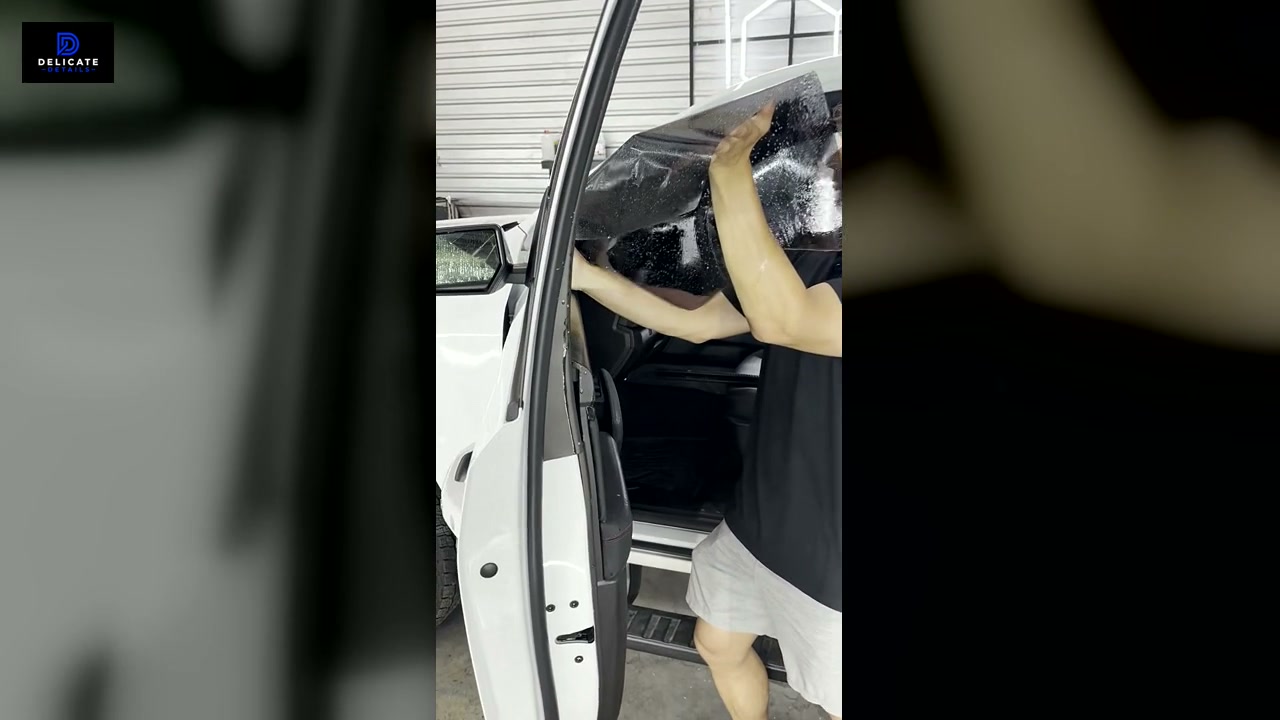
Rear Window Tint and Defroster Lines in Lubbock
Quick answer: Rear automotive glass can combine curved glass, printed defroster lines, embedded antennas, brake-light housings, dot-matrix borders, factory privacy glass, and old adhesive in one area. Tinting it is not just “one more window.” Before installation or removal, inspect the glass, test the rear defroster and affected electronics when practical, identify existing film, confirm visibility and Texas requirements, and document any pre-existing damage. Film normally installs on the interior surface, so cleaning and removal methods must respect anything bonded or printed there.
Why rear glass needs its own tint plan
A sedan backlight can be broad, steeply sloped, and strongly curved. A truck may have a sliding center section. An SUV may combine a large liftgate window with a wiper, printed border, brake-light housing, trim panels, and factory-darkened glass. Some vehicles also use the rear glass for radio or other antenna elements. Those differences affect access, film shaping, seams, visual expectations, and the amount of preparation required.
The International Window Film Association installation overview explains that automotive film is applied to the interior side of the glass. That matters at the rear because the installer works around interior components and printed elements rather than treating the pane like an empty exterior surface. The exact vehicle year, make, model, body style, and glass condition should be confirmed before film is cut.
A customer may use “rear window” to mean the back windshield, both rear doors, every window behind the driver, or an entire SUV cargo area. A useful quote separates those pieces. Delicate Details uses window-count packages on the main automotive tint pricing section, but we still confirm the selected glass so the written scope matches the vehicle.
What the horizontal lines actually are
The familiar horizontal lines on many rear windows are electrical heating elements for the rear defroster. They are bonded to or printed on the interior surface. When activated, they warm the glass to help clear fog, frost, or thin ice. They are not decorative marks and should not be scraped, sanded, or treated with an abrasive tool.
A Ford owner-guide example warns against sharp instruments and abrasive cleaners on the inside of rear glass because the bonded heating elements can be damaged. The exact instructions for a particular vehicle come from that vehicle’s owner manual, not from a generic blog post. The point for tint planning is simple: interior rear glass may carry functional components that deserve inspection and careful handling.
Not every visible line is necessarily a defroster element. Some rear glass incorporates antenna traces or other printed circuitry. Connectors and tabs may sit near the edges under trim. A vehicle can also arrive with a nonworking section, a repaired tab, scratched lines, prior removal damage, or an electrical issue unrelated to tint. Testing and documenting what works before service helps separate a pre-existing condition from the film work.
Can window tint go over rear defroster lines?
Automotive film is commonly installed across compatible rear glass that has intact printed defroster lines. The lines remain between the glass and the film. The installation does not erase them; they may still be visible through the finished film, especially from close range or at certain angles. The exact appearance depends on the glass, line thickness, film shade, adhesive, lighting, and viewing distance.
The useful question is not merely whether defroster lines exist. It is whether the glass and lines are intact, whether previous film or adhesive is present, whether a repair has been attempted, and whether the selected automotive film is intended for that application. A current product bulletin such as the 3M Crystalline automotive film bulletin identifies its material, adhesive, intended automotive glazing application, and performance data. Product documentation should be tied to the exact film actually offered—not used to imply that every “ceramic” product has the same construction or results.
What we will not promise
We do not promise that new film will repair a weak defroster, restore a damaged antenna, hide every scratch, eliminate every visual line, correct failed glass, or reverse damage from a previous installation or removal. Those are separate conditions. The vehicle and glass must be inspected, and existing issues should be documented before work begins.
Existing film changes the job
Installing on clean original glass and retinting a rear window after old-film removal are different scopes. Existing film may be faded, purple, bubbling, delaminating, scratched, or covered with adhesive. It may have been installed over intact lines, previously damaged lines, aftermarket repairs, or residue from more than one removal attempt.
Old film should not simply be covered with another layer. Our guide on tinting over existing film explains why stacking layers complicates appearance, finished light transmission, adhesion, warranty, and compliance. Rear glass should be evaluated for removal, cleaning, and replacement as separate work.
Removal risk cannot be reduced to one universal percentage. It depends on film age, adhesive condition, defroster-line condition, prior damage, temperature, access, and the method required. A careful inspection may reveal obvious risk, but it cannot guarantee that every weak or previously compromised printed element will survive removal. That uncertainty belongs in the quote conversation before the customer authorizes the work.
| Rear-glass condition | What to confirm before service |
|---|---|
| Original clear glass | Glass condition, defroster operation when practical, antenna or electronic elements, legal target, exact film, and access. |
| Factory privacy glass | Existing darkness, desired finished appearance, measured or documented glass, film VLT, and the difference between privacy glass and applied film. |
| Existing applied film | Whether removal is required, adhesive condition, line condition, prior repairs, removal risk, cleanup, and separate labor. |
| Replaced rear glass | Correct glass, markings, installed electronics, cure or service restrictions from the glass provider, and readiness for film. |
| Scratched or damaged glass | Pre-existing scratches, chips, cracks, connector damage, failed lines, and whether the condition should be repaired or declined before film. |
Factory privacy glass is not the same as applied tint
Many SUVs and trucks have darker glass behind the driver from the factory. That color is built into the glass; it is not automatically a heat-rejecting ceramic film, and it does not mean another layer will produce a specific finished number. Read the dedicated factory privacy glass versus window tint guide before trying to “match” front and rear windows by shade name alone.
If the goal is a balanced appearance, the original front and rear glass should be compared in the same lighting. If the goal is solar performance, compare the exact filmed-glass data and remember that the existing glass contributes to the result. If the goal is privacy, discuss daylight and nighttime conditions separately. A darker-looking rear window is not a promise of complete privacy under every lighting condition.
Texas rear-window requirements still matter
The current Texas Department of Public Safety window-tint page describes conditions for rear-window sunscreening and the role of outside mirrors. The official source and current vehicle configuration control. This guide is not legal advice, and a shade name by itself does not establish compliance.
The written quote should identify which glass is included, the exact film line and shade, whether old film removal is separate, and any known conditions. For a full vehicle, the front side windows, rear side windows, rear glass, windshield brow, and any clear windshield film do not all share the same legal or technical requirements. That is why a “seven-window” package still needs vehicle-specific confirmation.
What to expect immediately after installation
Automotive film is installed with a solution that helps position the film. The installer removes most of that liquid, but some residual moisture can remain while the adhesive develops its final bond. The IWFA automotive visual-inspection guideline notes that installed film is not expected to look identical to bare glass and that full adhesion takes time.
Temporary haze, small moisture patterns, or a not-yet-uniform appearance can occur during curing. Drying time varies with film, weather, glass, and vehicle conditions. Do not press bubbles, pick at edges, scrape the surface, or run an abrasive tool over the rear glass. Follow the written aftercare for the exact film and contact the installer if an area is worsening rather than improving.
Inspection also needs a reasonable viewing method. Standing inches from the glass with a flashlight is not the same as evaluating normal visibility through the window. At the same time, a persistent crease, contamination cluster, lifting edge, cut, or damaged printed element deserves review. Photos taken in ordinary daylight can help document what changed.
Cleaning rear tint without harming the surface
Use the care instructions supplied for the installed product. The 3M automotive film support page provides one manufacturer’s cleaning guidance and emphasizes a soft, lint-free cloth or towel while avoiding abrasive products. That guidance applies to the named 3M products; another manufacturer’s written instructions may differ.
The safest routine is gentle: remove loose grit first, use a compatible cleaner, wipe with a clean soft towel, and avoid hard scrubbing over the lines and edges. Do not use razor blades, scouring pads, gritty towels, or sharp tools on the filmed surface. If a sticker, suction mount, adhesive, or cargo contact damages the rear film, ask the installer before attempting a chemical or mechanical removal.
Rear-window tint quote checklist
- Send the year, make, model, and body style.
- State whether the quote is for the rear glass only, rear doors and rear glass, or the full vehicle.
- Photograph the rear glass from inside and outside in clear light.
- Disclose existing film, bubbles, adhesive, scratches, cracks, repairs, or replaced glass.
- Test the defroster and relevant reception or electronics when practical, then report any known issue.
- Explain the priority: appearance, privacy, glare, solar performance, replacement of failed film, or a combination.
- Confirm the exact film, shade, selected glass, removal scope, written warranty, final price, and appointment timing.
A detailed quote is faster than discovering an old layer or damaged connector after the vehicle is already in the bay. If photos do not show the condition clearly, an in-person glass review may be required before a final removal or installation price is confirmed.
Rear window tint questions
Will tint stop the rear defroster from working?
Film is commonly installed on compatible rear glass with intact defroster lines, but the system should be inspected and any known failure documented. Film is not a repair for damaged lines, connectors, wiring, switches, or glass.
Can old rear tint be removed without damaging the lines?
Removal can often be completed carefully, but no honest installer should guarantee that weak, repaired, scratched, or previously damaged printed elements will survive every removal. The risk depends on the actual film, adhesive, lines, glass, age, and prior work.
Why are there tiny light areas around some printed lines or dots?
Raised printed surfaces, dot-matrix borders, contamination, and the way adhesive contacts textured areas can affect appearance. The specific area should be inspected after normal cure time rather than diagnosed from a generic description.
Can the rear film match factory privacy glass on an SUV?
The front and rear glass can be visually coordinated, but an exact match cannot be promised from shade names alone. Original glass, film VLT, lighting, interior color, and viewing angle all affect the result.
Do you price rear-glass film separately?
The published automotive packages are organized by selected window count, while removal and condition-based work are separate. Send the vehicle and exact glass you want treated so Delicate Details can confirm the applicable package and final scope.
How this guide was prepared: Delicate Details combined local shop workflow with current primary-source material from Texas DPS, IWFA, 3M, and a vehicle manufacturer owner guide. Product instructions, vehicle designs, glass conditions, and official requirements can change; the current agency, film manufacturer, glass provider, and vehicle manual control.
Request a rear-window tint review
Send the vehicle, rear-glass photos, existing-film condition, known defroster or antenna issues, and the exact windows you want treated. We will confirm the film, removal scope, final price, and appointment before work begins.
Request a Tint Quote