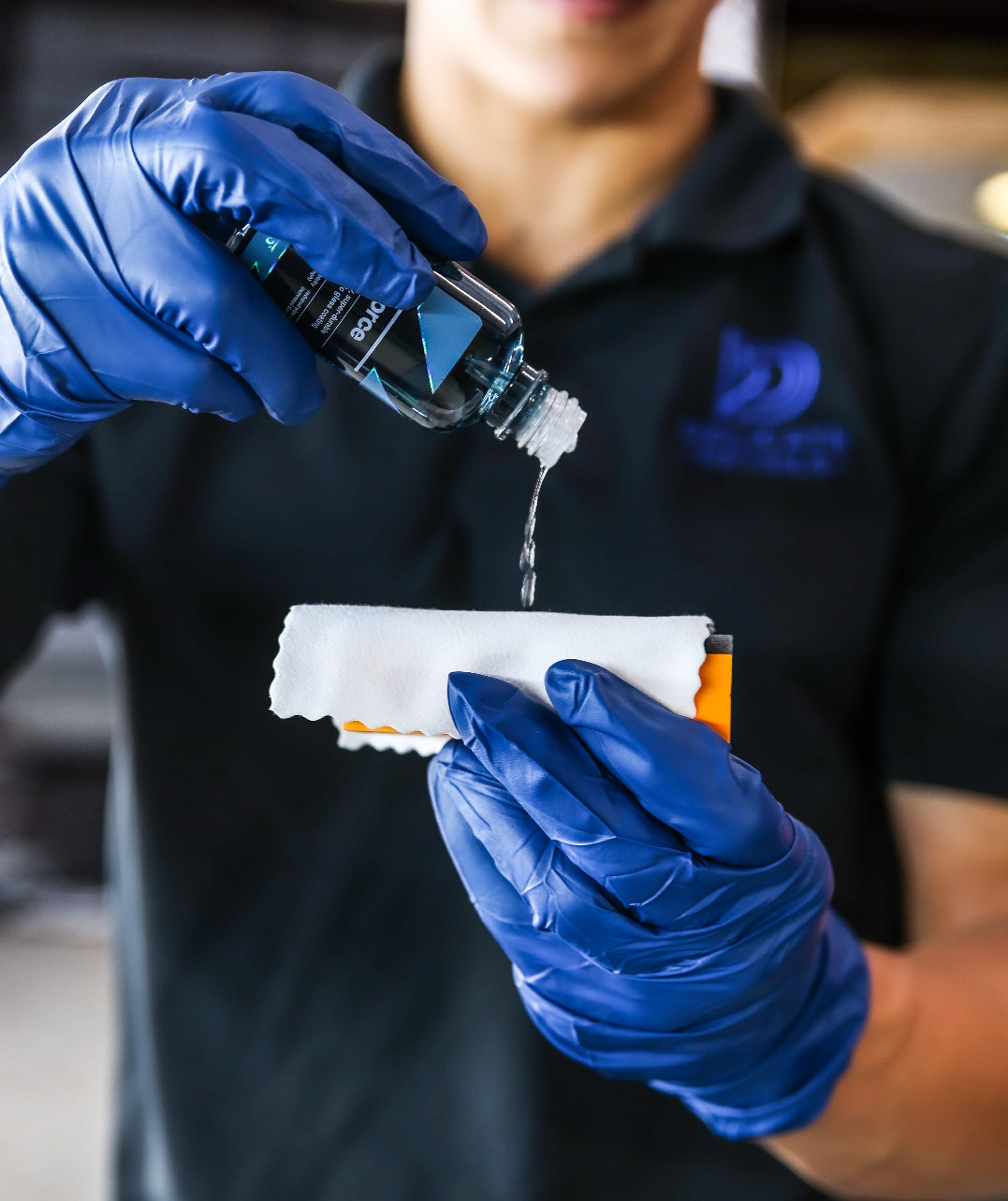
Cleaning and conditioning are two different steps, and doing one without the other is the mistake. Conditioner applied over dirt seals the dirt in. Standard guidance says condition every 6–12 months; at 3,200 feet with minimal humidity and 100°F+ summers, Lubbock needs every 3–6. Included in Full Reset & Protect and Premium, not offered standalone.
Leather seats are one of the most misunderstood surfaces in auto detailing. Most people either ignore them entirely or wipe them down with whatever all-purpose cleaner they have under the sink. In Lubbock TX, that approach has consequences. Leather seat conditioning in Lubbock TX is not optional maintenance — it's damage prevention. The West Texas climate is one of the harshest environments leather can face, and the math is simple: condition regularly or pay for cracked, peeling seats that can't be restored. This guide breaks down why Lubbock heat is so damaging, what proper conditioning actually involves, and how often you need to do it here in the South Plains.
Before anything else, you need to understand that leather cleaning and leather conditioning are not the same service — and doing one without the other is a mistake.
Leather cleaning removes surface contamination: body oils, sunscreen residue, food grease, the grime that builds up in seam lines and stitching. Cleaning opens the pores of the leather and strips away the debris that sits on top of or just inside the surface. It's critical work, but it does nothing to restore the leather's flexibility or moisture content.
Leather conditioning replenishes the natural oils and emollients that keep leather supple and crack-resistant. Leather is a treated animal hide — it has a moisture content that, when depleted, causes the fibers to stiffen, shrink, and eventually crack. Conditioning puts that moisture back. You must clean before you condition. If you condition over a dirty surface, you're sealing contamination into the leather rather than nourishing it.
Lubbock, TX sits at 3,200 feet elevation on the Llano Estacado with minimal humidity and intense solar radiation. In summer, ambient air temperatures routinely exceed 100°F. That heat translates directly into your vehicle's interior:
The result is what we see constantly on vehicles coming into the shop: leather that is bone dry, stiff to the touch, and showing hairline cracks along high-flex areas like seat bolsters and the center of the seat bottom. That's moisture loss. The leather fibers have contracted and started to fracture. In early stages, conditioning can restore most of the suppleness. In late stages — when the surface is actively peeling or large cracks have formed — conditioning can slow further damage but cannot reverse the structural failure.
There's a meaningful difference between leather that is dry and dull versus leather that is actively cracking. Both benefit from conditioning, but the outcome is very different.
Dry but intact leather — no visible cracking, just a lack of sheen and a stiff feel — responds extremely well to conditioning. A thorough clean followed by a quality penetrating conditioner will restore flexibility and appearance significantly. Most customers with this level of wear see a dramatic improvement after one conditioning treatment at Delicate Details.
Cracked leather — hairline cracks along seat bolsters, wear lines at the seat cushion fold — is still treatable with conditioning, but conditioning alone will not close existing cracks. What conditioning does at this stage is halt further cracking, darken and fill the cracks slightly, and restore some flexibility to the areas that haven't yet fractured. Realistic expectation: improved appearance and arrested deterioration, not full restoration. Seats with active peeling or delamination of the surface coating are past the point where conditioning helps — that's a reupholstery or seat cover situation.
At Delicate Details, leather conditioning follows a specific sequence. This is not a wipe-and-go service:
Not all leather conditioners are built the same. In Lubbock's extreme heat, you want products that penetrate deeply and last between services. The brands we use and recommend at Delicate Details:
Consumer products like Armor All Leather Wipes or store-brand conditioners typically use silicone and wax bases that coat the surface, create a greasy feel, and attract more contamination over time without actually nourishing the leather.
Standard detailing guidance for leather conditioning is every 6–12 months. In Lubbock TX, that guidance needs to be tightened. We recommend conditioning leather every 3–6 months for vehicles in the South Plains climate. Vehicles that park outside all day in summer are on the 3-month end. Garaged vehicles can stretch toward 6 months.
A simple test: press the back of your hand against your leather seat. If it feels rough, stiff, or slightly tacky rather than smooth and slightly cool to the touch, it's time to condition. Don't wait until you can see cracking — by then, the leather has already lost structural integrity in the damaged areas.
Leather seat conditioning is included as part of our Stage 2 (Full Reset & Protect) and Stage 3 (Premium Detail) packages. It is not offered as a standalone service — it is performed within the context of a full interior detail because cleaning must precede conditioning, and the interior must be properly prepared first.
| Package | What's Included | Sedan | Mid-Size | SUV / Truck |
|---|---|---|---|---|
| Stage 1 — Essential Detail | Vacuum, wipe-down, exterior wash | $195 | $220 | $240 |
| Stage 2 — Full Reset & Protect | Full interior steam clean, leather clean & condition, protectants | $350 | $375 | $400 |
| Stage 3 — Premium Detail | Everything in Stage 2 plus machine paint correction | $695 | $795 | $895 |
If you're in Lubbock and your leather seats are looking dry, dull, or starting to show early cracking, Stage 2 is the right starting point. If the vehicle needs exterior correction as well, Stage 3 covers both. Call us at (806) 855-8042 or book below.
Delicate Details conditions leather the right way — clean first, penetrating conditioner, professional-grade products. Serving Lubbock, Wolfforth, Slaton, Levelland, and the South Plains.
Book Your Detail →Often, but not always. Fresh contamination extracts well. Anything that soaked into the foam or carpet backing and sat — especially through West Texas heat — may be permanent. We assess and tell you before you commit.
Cleaning solution is injected into the fabric or carpet and pulled straight back out under vacuum. That removes contamination from the material rather than pushing it deeper, which is what surface scrubbing does.
A thorough interior is most of a day. Heavy pet hair, stain extraction, or odour work adds hours — those are quoted as add-ons before we start rather than discovered afterward.
Stage 1 Essential is $195, Stage 2 Full Reset & Protect is $350, Stage 3 Premium is $695 — sedan pricing, with SUVs and trucks priced by size.