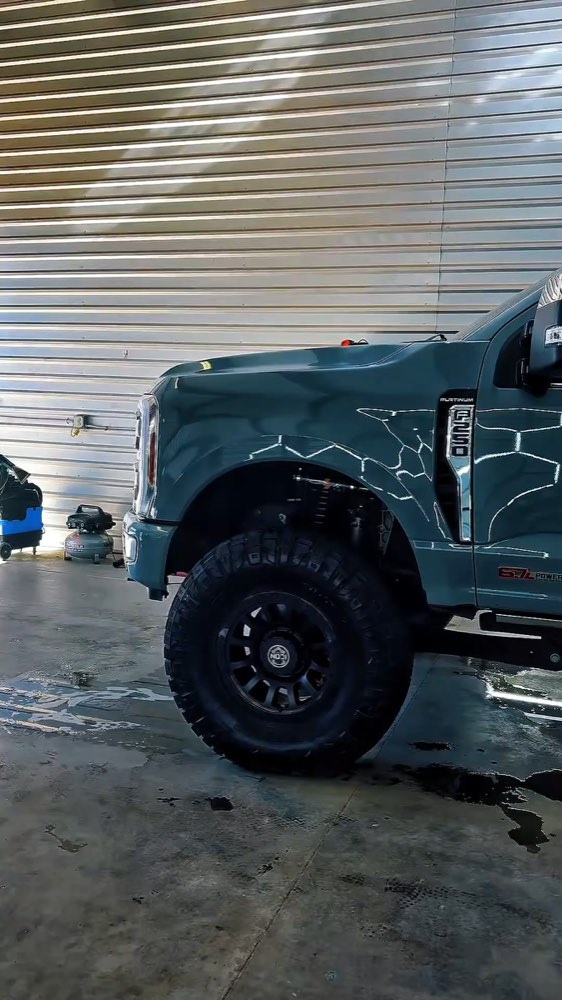
West Texas mud is caliche-heavy, so it sets hard instead of flaking off the way topsoil does. It also holds moisture against the metal underneath, which is where the real damage happens. Rinse before it dries if at all possible. Undercarriage cleaning needs pressure and knowing where not to aim it: bearings, CV boots, and electrical connectors. Quoted after inspection.
West Texas mud is caliche-heavy, meaning calcium carbonate. When it dries it does not flake off like topsoil — it sets hard and bonds to whatever it is on. It also holds moisture against metal underneath, which is where corrosion starts.
Playa lakes, caliche pits, and canyon trails around Post and Ransom Canyon are the local spots. That mud is fundamentally different from the clay most off-road advice assumes.
High pressure aimed directly at wheel bearings, CV boots, or electrical connectors forces water past the seals. Undercarriage cleaning needs pressure and knowing where not to point it.
Post-off-road cleanup is quoted after inspection since accumulation varies hugely. Expect it to exceed a standard detail when the undercarriage is packed.
Caliche is calcium carbonate. When it dries it sets hard and bonds to the surface rather than flaking off like clay or topsoil. It also holds moisture against metal, which accelerates corrosion.
Yes. Packed mud holds moisture against bare metal and accelerates rust, and mud in the radiator and condenser fins restricts airflow and causes overheating. Both are commonly missed in a normal wash.
You can, but aim matters. Direct high pressure at wheel bearings, CV boots, differential seals, or electrical connectors forces water past the seals and creates a bigger problem than the mud.
Before the mud dries if possible. Caliche that has set hard takes several times the labor to remove and has already begun trapping moisture against metal.
Volume of water before any contact, and patience. Soak it until it releases rather than pressure-blasting or wiping it off dry. Caliche sets hard and dragging it across paint is the same as sanding.
The frame rails, skid plates, and the top of the fuel tank. Mud packed up there holds moisture against metal long after everything visible looks clean, which is where corrosion actually starts.
Yes with the right approach. What causes damage is high pressure aimed directly at wheel bearings, CV boots, and electrical connectors, which forces water past seals designed for rain rather than a pressure jet.
Delicate Details is a shop-based studio at 13209 Frankford Ave, Suite 4, Lubbock TX 79424. Serving Lubbock, Wolfforth, Shallowater, Slaton, Idalou, Levelland, and the South Plains.
Book Now →