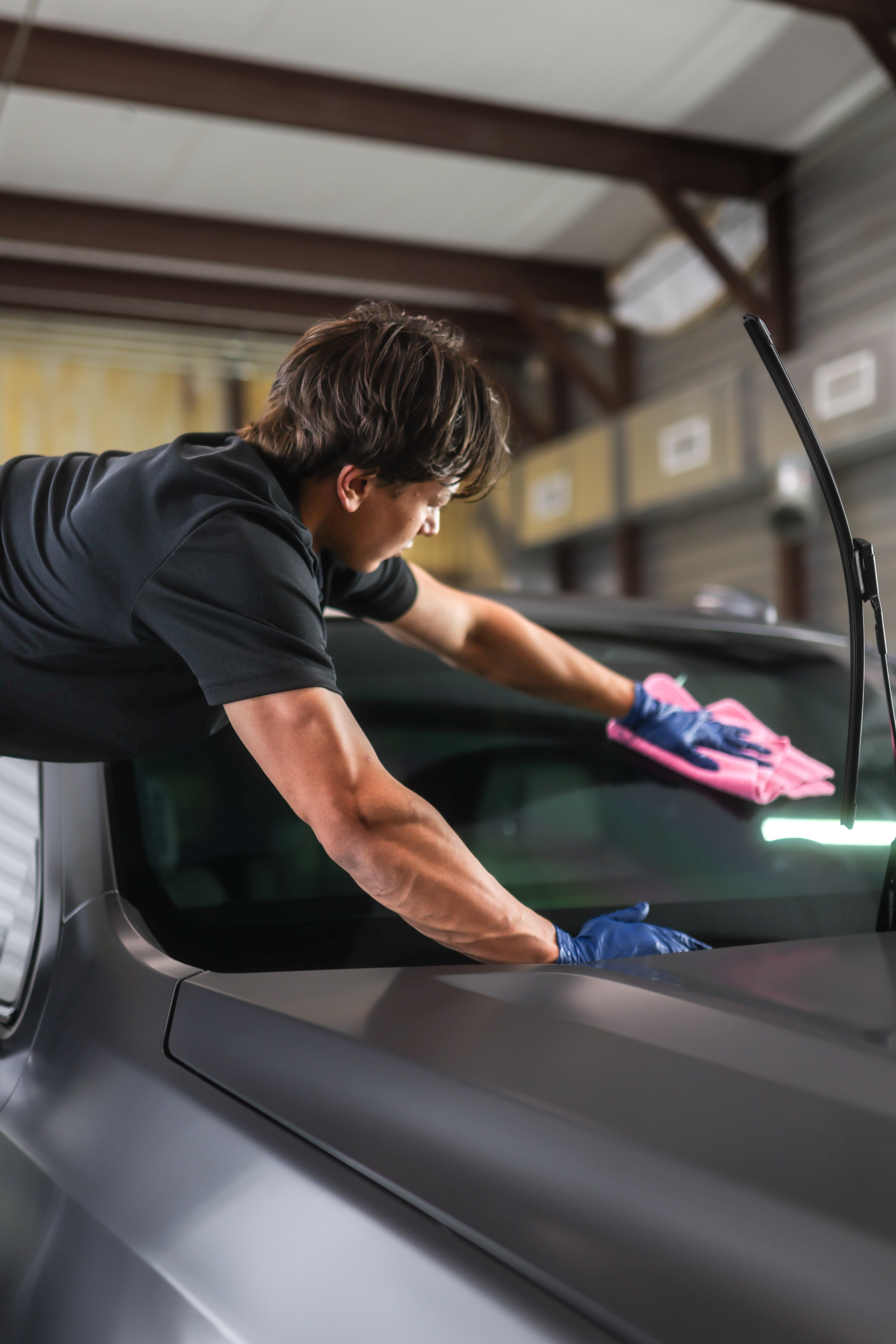
Window Tint Removal in Lubbock TX
Quick answer: Old tint should be inspected when it stays bubbly after the original cure period, turns purple or brown, becomes hazy, peels at the edges, or interferes with visibility. Removal at Delicate Details currently starts at $75. The final price depends on how many windows are involved, how the film and adhesive release, access around the glass, and whether the rear window has delicate defroster lines.
Replacing failed tint is not the same job as tinting clean factory glass. The old film has to come off, remaining adhesive has to be removed, and the glass has to be prepared before a replacement can bond correctly.
That is why a removal quote starts with the vehicle and the condition of the film. Two cars with the same number of windows can require very different amounts of preparation.
Four Signs Old Tint Is Ready for Inspection
1. Bubbles that do not change
Small moisture pockets can appear while newly installed film cures. That temporary drying stage is different from older film with widespread bubbles that remain after the original cure window. Persistent bubbles can distort the view and usually indicate a problem with the film or its bond to the glass.
2. Purple, brown, or uneven color
Tint that changes color unevenly no longer looks consistent across the vehicle. A visibly faded rear window beside darker side glass is a common reason owners decide to remove and replace the set.
3. Peeling or lifting edges
Once an edge lifts, dust and contamination can collect under the film. Pressing it back down is not a lasting repair when the adhesive or film has already failed.
4. Haze that affects visibility
Old film, failed adhesive, scratches, and contaminated glass can all create a cloudy appearance. The correct next step is an inspection because the haze may be in the film, on the glass, or between layers.
New-Tint Moisture vs Failed Old Film
| What you see | Likely next step |
|---|---|
| Light haze or tiny moisture pockets during the stated cure period | Follow the installer's aftercare instructions and allow the film to dry |
| Large, persistent bubbles in older film | Schedule an inspection for removal and replacement |
| Purple, brown, peeling, or cracked film | Removal is usually required before new film |
| A concern immediately after installation | Contact the original installer before touching or piercing the film |
Do not puncture a bubble, scrape the film, or use a household heat gun to force a result. That can turn a film problem into scratched glass, damaged trim, or extra adhesive cleanup.
Why Rear-Window Removal Needs Extra Care
Many rear windows have defroster lines printed on the same inside surface where the film is bonded. Film condition, adhesive strength, previous removal attempts, and existing grid damage all matter. The glass should be inspected before anyone promises a perfect result.
We also need to know if the rear defroster already has broken sections, if the film has been scraped, or if part of it was pulled away. That information helps set a realistic plan before the vehicle is dropped off.
Can New Tint Go Over Old Tint?
Failed aftermarket film should be removed before replacement. A new layer does not repair bubbles, peeling edges, contamination, or discoloration underneath it. It also makes the final darkness and performance harder to predict because the glass and every film layer combine.
Factory privacy glass is different: the dark appearance is usually built into the glass rather than added as a removable film. Applied carbon or ceramic film can often go over factory-darkened rear glass after the existing glass is checked. Our factory privacy glass guide explains that distinction.
What If the Tint Is Too Dark?
Adding a lighter film over dark tint will not make the window lighter. Every glass and film layer combines to reduce visible-light transmission, so the existing aftermarket film generally has to be removed before a lighter replacement can be installed.
Start by checking which glass is factory-darkened and which glass has removable film. Then compare the completed reading, outward visibility, and current requirements before choosing the replacement shade. Do not peel or scrape the film yourself; removal starts at $75 and the lighter carbon or ceramic replacement is quoted separately.
Can One Replacement Window Match the Existing Tint?
A broken or replaced side window can often be retinted by itself, but an exact visual match should not be promised before the remaining film and new glass are inspected. The strongest reference is the original tint invoice or warranty record showing the manufacturer, film line, and shade. Without that record, a meter and visual comparison can narrow the choice but cannot identify every product.
Glass color, film age, outdoor exposure, and product availability can all change the final appearance. If the original film is unknown or visibly aged, compare the price and consistency of one replacement window with redoing the matching front pair. A single standard window currently starts at $59 carbon or $79 ceramic. After glass replacement, follow the glass installer's safe-drive and adhesive instructions before scheduling film.
Can You Tint a Leased Car?
Ask the leasing company and read the lease before installing aftermarket film. Lease-return standards are not universal. As one official example, Toyota Financial's lease-end guidance lists damaged, broken, or non-factory-tinted glass among conditions that may be treated as excess wear. Your lessor's agreement and inspection process control your vehicle.
If the lessor requires the vehicle returned to factory condition, do not wait until the final day to peel the film. Professional removal may still leave adhesive work, and rear glass needs special care around defroster lines. Schedule any lease-end inspection early enough to clarify the requirement, then allow time for removal, glass inspection, and correction of any pre-existing damage.
Are Removal and Replacement Included Together?
No. Old-film removal and new film are separate parts of the quote. Removal currently starts at $75. Replacement is then priced by the carbon or ceramic film and the confirmed glass coverage: for example, a front pair starts at $99 carbon or $149 ceramic before any required removal.
The quoted removal scope includes taking the selected film off and completing the adhesive preparation needed before compatible replacement film can be installed. Brittle layers, heavy residue, prior DIY work, scratched glass, and rear-defroster concerns can change the final scope, so the $75 figure should not be treated as a guaranteed full-vehicle removal price.
Can Window Tint Be Removed Without Replacing It?
Yes. Applied aftermarket film can be removed and the glass can be left without replacement film after the selected windows and adhesive-cleanup scope are confirmed. Removal does not require buying a new carbon or ceramic package.
The result depends on what created the original darkness. Removing applied film exposes the underlying glass, but it does not remove factory privacy color built into the glass. A rear door or cargo pane may therefore stay darker than a clear front window even after every removable film layer is gone.
What Changes the Removal Price?
- Number of windows: a single door glass is different from a full vehicle.
- Film condition: film that releases in large sections may take less preparation than brittle or separated film.
- Adhesive residue: the glass must be clean enough for the replacement film to bond correctly.
- Glass shape and access: tight rear decks, curves, trim, and sensors can slow the work.
- Rear defroster grid: rear glass often requires a more cautious approach.
- Previous attempts: torn film, scraper marks, and chemical residue can change the scope.
Our current published removal price starts at $75. Send photos plus the year, make, and model for a useful first estimate. We confirm the final scope after seeing the film and glass.
How Long Does Window Tint Removal Take?
There is no honest one-time estimate for every vehicle. Removing one door-window film that releases cleanly is different from stripping a full vehicle with brittle layers and heavy adhesive. Rear glass, tight access, sensors, and a defroster grid can add time because speed is not worth damaging the glass.
Replacement adds another step: after the film and adhesive are removed, the glass must be prepared before new film is installed. We confirm the vehicle-specific drop-off and pickup window after seeing photos and the condition of the existing film.
Should You Remove Old Tint Yourself?
DIY removal can leave adhesive, scratch glass or trim, and damage rear defroster lines. Pulling a corner does not show how the rest of the film will release, and a metal scraper or excessive heat can turn a removal job into damaged glass or interior materials. For one product-specific example, 3M's current Crystalline technical sheet recommends steam assistance and a controlled removal angle; that guidance does not replace a glass, grid, and film inspection.
If the film is brittle, layered, or bonded to rear glass, have it inspected before pulling or scraping it. If part of the film has already been removed, send a clear photo and explain what tools or chemicals were used so the remaining work can be scoped accurately.
Choosing the Replacement Film
Removal is a good time to decide what bothered you about the old setup. If you mainly want privacy, glare reduction, and a clean appearance for the lowest price, carbon may be enough. If documented heat performance matters more, compare the exact ceramic product's specifications and warranty.
Choose the shade separately from the film construction. A darker-looking film is not automatically the highest-performing film, and the existing glass changes the final visible-light transmission. See our window tint percentage guide before choosing by appearance alone.
Frequently Asked Questions
How much does window tint removal cost in Lubbock?
Removal currently starts at $75 at Delicate Details. The final quote depends on the windows, film condition, adhesive residue, access, and rear defroster lines.
Does the $75 tint-removal starting price include new tint?
No. Old-film removal and replacement film are separate. Removal starts at $75; replacement is priced by the selected carbon or ceramic film and confirmed glass coverage.
What should I do if my window tint is too dark?
Have the completed glass and film inspected. Adding lighter film over dark tint will not make it lighter; the existing aftermarket film generally must be removed before a lighter replacement is installed. Do not peel or scrape the film yourself.
Can one replacement car window be retinted to match the others?
Often, but an exact match is not guaranteed. The best starting point is the original invoice or warranty record showing the film manufacturer, line, and shade. Existing glass color, film age, and sun exposure can change the appearance; if the original film is unknown, compare a one-window replacement with redoing the matching pair.
Can I tint a leased car?
Check the lease and ask the lessor before installation. Lease-return standards vary, and some official lease guidance treats damaged or non-factory-tinted glass as chargeable. If removal may be required, plan enough time for professional removal, glass and defroster inspection, and any lease-end pre-inspection.
Does professional tint removal include adhesive cleanup?
The quoted removal scope includes removing the selected film and the adhesive preparation needed before compatible replacement film can be installed. Brittle layers, heavy residue, prior DIY work, glass damage, and rear defroster concerns must be inspected before the final quote.
How long does window tint removal take?
There is no honest one-time estimate for every vehicle. Window count, brittle film, adhesive residue, glass access, rear defroster lines, and whether replacement film is included all affect the drop-off window.
Can new window tint be installed over old tint?
Failed aftermarket film should be removed first. New film does not repair peeling, bubbling, contamination, or discoloration underneath it.
Can old tint damage rear defroster lines?
The film and adhesive sit on the same inside surface as many defroster grids, so removal needs extra care. Existing damage and film condition should be inspected before work begins.
Should I remove old window tint myself?
DIY removal can leave adhesive, scratch glass or trim, and damage rear defroster lines. If the film is brittle, layered, or bonded to rear glass, have the condition inspected before pulling or scraping it.
Are bubbles always a sign that tint needs removal?
No. Small moisture pockets or haze can be normal during the stated cure period. Older film with persistent bubbles, peeling, discoloration, or reduced visibility should be inspected.
Related Window Tint Guides
Get a Tint Removal Estimate
Send photos plus the year, make, and model. We will confirm what needs to come off and quote the removal before replacement.
Request a Tint Quote →