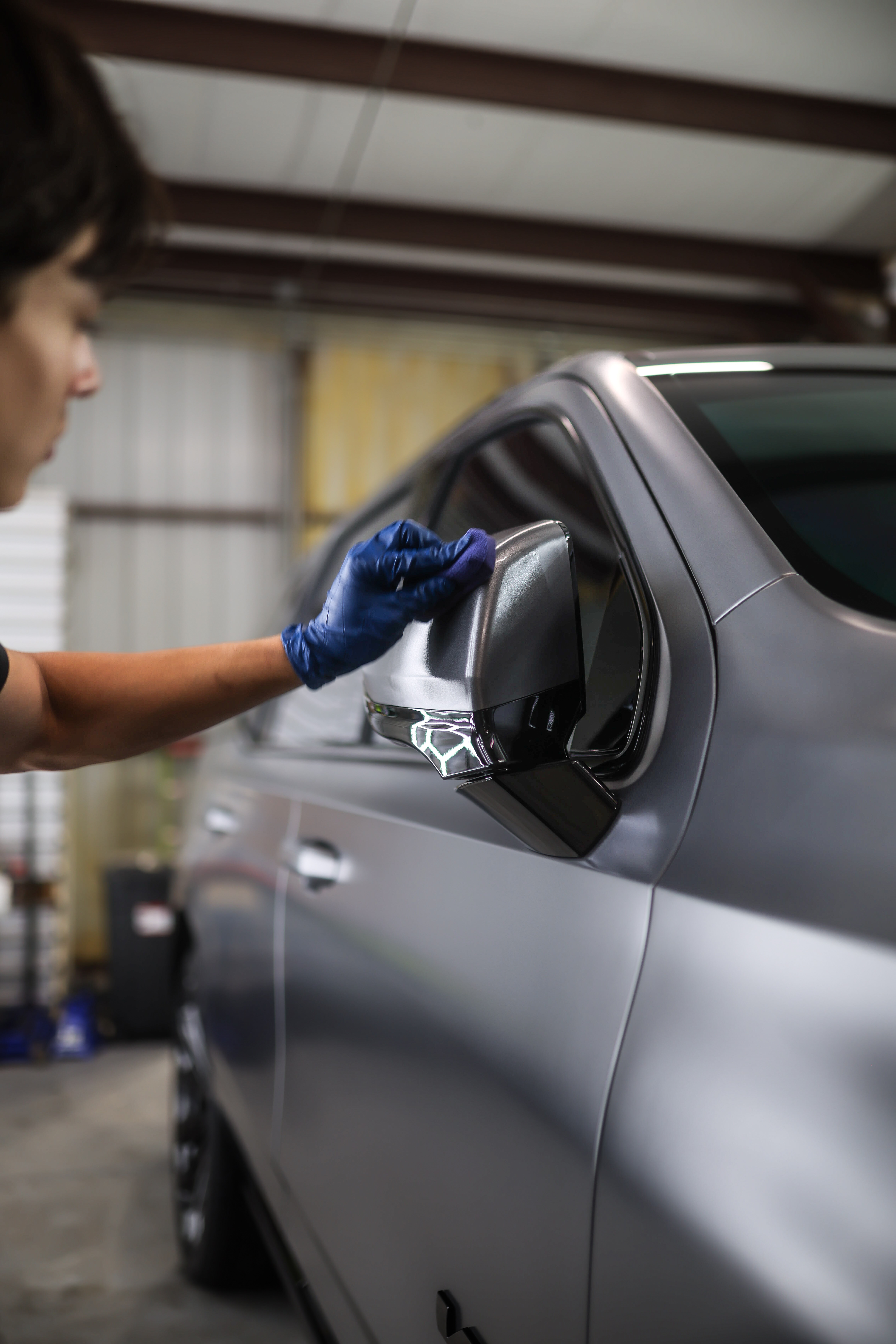
Wash the vehicle before touching the tar: otherwise you grind grit into the paint while working the solvent. Chip seal season on Lubbock County roads and FM highways throws binder for weeks, and summer heat keeps it soft enough to stick then bake on. Tar removers are aggressive solvents that strip protection, so lower panels need resealing afterward.
Road tar is petroleum-based asphalt binder thrown up by tires. It bonds to paint as it cools and collects heaviest on rocker panels, lower doors, behind the wheels, and across the rear bumper.
Chip seal season on Lubbock County roads and FM highways is the main source. Fresh oil-and-gravel surfacing throws binder for weeks, and summer heat keeps it soft enough to stick and then bake on.
Tar removers are aggressive solvents. Left to dry on the panel, or used on hot paint, they can haze or stain clear coat. They also strip whatever protection was there, so the lower panels need resealing afterward.
Tar removal is included in Full Reset & Protect (from $350) and Premium Detail (from $695). Heavy accumulation after chip seal season may add labor.
Use a dedicated tar remover on a cool panel out of direct sun. Let it dwell 30-60 seconds to break the bond, then wipe with light pressure on a clean microfiber. Never scrub aggressively — the tar contains grit that will scratch.
Not when used correctly, but it is an aggressive solvent. Allowing it to dry on the panel or applying it to hot paint can haze the clear coat. It also strips wax and sealant, so the area must be reprotected afterward.
Chip seal resurfacing on county roads and FM highways throws asphalt binder for weeks after application. Summer heat keeps it soft enough to stick to lower panels and then bake on.
It will not stop tar from landing, but coated paint releases it far more easily and with less solvent, which means less risk to the clear coat during removal.
Delicate Details is a shop-based studio at 13209 Frankford Ave, Suite 4, Lubbock TX 79424. Serving Lubbock, Wolfforth, Shallowater, Slaton, Idalou, Levelland, and the South Plains.
Book Now →