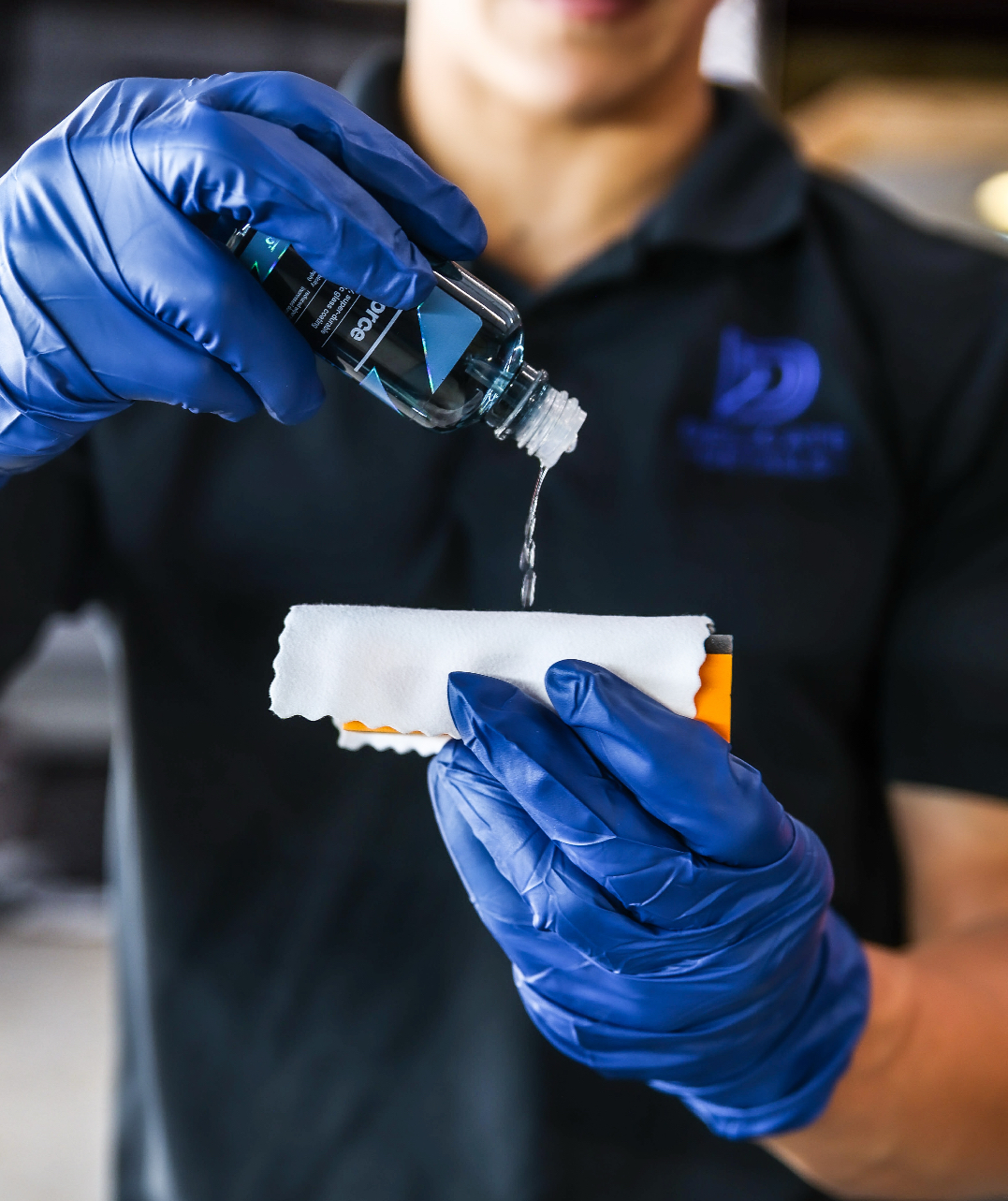
Smoke odor should be assessed by source, affected material, access, and exposure history before treatment. Reachable residue may be cleaned with material-compatible methods, but odor can remain in foam, padding, a headliner, cabin filter, or HVAC components. Complete removal is not guaranteed, and ozone is not a shortcut for source removal.
Smoke or vape residue may settle on glass, trim, cloth, carpet, leather coatings, headliner, and other cabin surfaces. Odor can also involve inaccessible material below the visible surface. This guide explains how inspection, material limits, cleaning access, cabin filters, HVAC concerns, and safety affect a condition-based quote.
Fragrance, powders, and surface sprays may change the perceived smell without showing where residue is located. They can also leave additional product on materials. Before another treatment, document what was used and inspect likely source areas.
Residue can collect on reachable surfaces and porous materials, while heat and airflow may make remaining odor more noticeable. The pattern differs by smoking history, ventilation, storage, material, filter condition, and previous cleaning.
Cleaning begins with identifying reachable residue and deciding what can be treated safely. Material replacement or another specialist may be needed when contamination is inaccessible or a component cannot be cleaned safely.
There is no universal process for every vehicle. We inspect the materials, exposure history, cabin filter, visible residue, moisture, electronics, adhesives, and access before choosing a method.
Ozone is not a substitute for source removal. EPA says ozone is a lung irritant, should not be used in occupied spaces, and has limited ability to remove many contaminants at concentrations within health standards. Any use requires written equipment, unoccupied-space, and ventilation procedures. Review the U.S. EPA guidance on ozone generators.
Vacuuming, hand cleaning, low-moisture cleaning, extraction, or steam may be used only where the material label, condition, electronics, adhesives, backing, and drying plan allow it. Not every seat, headliner, control, vent, or trim piece is suitable for the same method.
After cleaning and drying, we reassess what improved and what remains. Repeat work, filter service, disassembly, material replacement, HVAC repair, or referral may be more appropriate than adding another deodorizer.
A headliner may hold residue, but its fabric, foam, adhesive, wiring, microphones, airbags, and trim can limit moisture, heat, agitation, and access. It should be inspected rather than assumed to be the main source.
Many headliners use fabric, foam, and adhesive over a backing board. Excess heat, moisture, or agitation can affect those layers, so the material label, existing sagging, stains, prior repairs, and drying plan should be checked before cleaning.
When the material and condition allow cleaning, we use a compatible low-moisture method and document limits. Sagging, staining, damaged foam, prior repairs, or severe contamination may require a headliner specialist or replacement instead.
Exposure history is not always available, especially after a private sale, auction, fleet assignment, rental use, or family transfer. Heat and airflow can also make remaining odor more noticeable without proving when or where the residue originated. A quote should separate known facts from assumptions.
Useful details to document include:
These situations do not all receive the same treatment. Smoke-odor work is condition-based and is included only when it appears in the written quote. The Essential Detail, Full Reset & Protect, and Premium Detail have published core scopes; additional odor investigation or treatment must be confirmed separately.
Outcome cannot be predicted from odor strength alone. Exposure history, residue depth, access, material condition, filter and HVAC involvement, previous treatments, and drying all matter. We quote after inspection, explain what is reachable, and do not promise complete removal or a fixed number of treatments.
| Service | Sedan | Midsize SUV/Truck | Large Truck/SUV |
|---|---|---|---|
| Essential Detail | $195 | $220 | $240 |
| Full Reset & Protect | $350 | $375 | $400 |
| Premium Detail | $695 | $795 | $895 |
Call Delicate Details at (806) 855-8042 for an inspection-based quote. We will separate the published package scope from condition-based odor work and explain when a filter, repair, replacement, or outside specialist may be needed.
Request a written scope covering reachable materials, cleaning methods, drying, safety limits, exclusions, and any separately quoted odor work.
Book Your Detail →Residue may remain in inaccessible foam, padding, a headliner, cabin filter, HVAC components, or another material. Heat and airflow can make remaining odor more noticeable. Reinspection is needed before choosing another treatment.
Ozone is not a substitute for source inspection and cleaning. EPA says ozone is a lung irritant, should not be used in occupied spaces, and has limited ability to remove many contaminants at concentrations within health standards. Any use requires written equipment, unoccupied-space, and ventilation procedures.
Complete removal cannot be promised. Outcome depends on residue depth, access, headliner and seat-foam condition, carpet backing, cabin filter, HVAC involvement, prior treatments, and whether affected material needs replacement.
It is quoted after inspection because the source, vehicle size, affected materials, access, drying, filter or part replacement, and outside repair needs can change the scope.