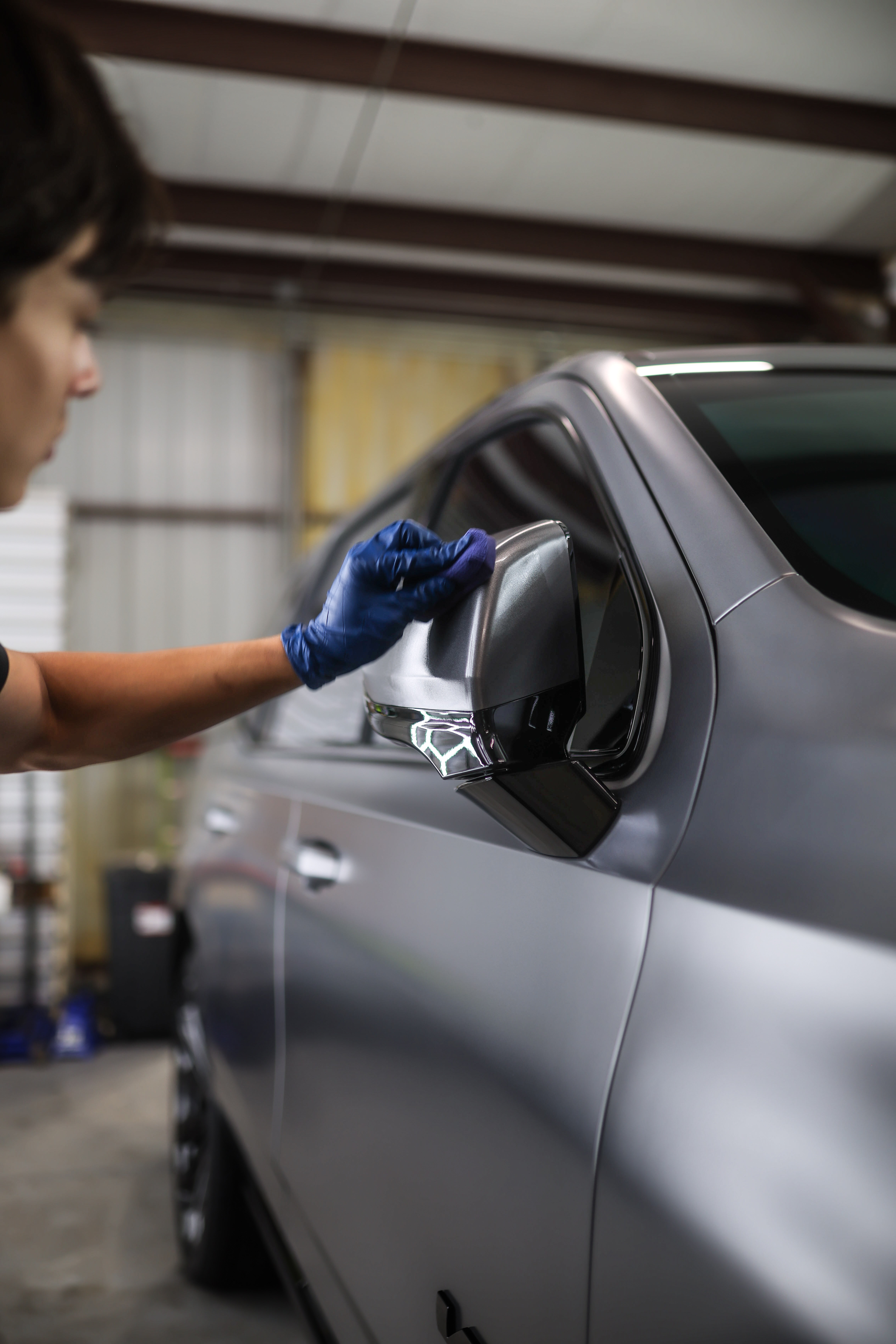
Do not scrape, pick, or use a razor on bonded sap. Inspect the finish, work on a cool surface, test a paint-compatible remover, allow the residue to soften, and lift it with clean materials. After removal, a remaining mark may be staining, etching, scratching, or prior damage and should be inspected before polishing.
Tree sap can dry into a sticky or hardened residue that traps dirt and becomes more difficult to remove. The residue, paint system, prior repair, protection product, surface temperature, and time exposed all affect the safest removal method. Appearance alone does not prove whether the clear coat underneath is damaged.
Warm panels and outdoor exposure can change how sap dries, but there is no honest universal temperature or timeline that predicts damage. Different trees produce different residues, and the vehicle's finish, parking, prior products, dust, washing, and removal attempts all influence the condition.
A fingernail, razor, abrasive pad, or uncontrolled solvent can scratch the finish, affect trim, or damage repaired paint. If the residue does not respond to a compatible test process, stop and inspect rather than escalating force or chemistry.
Tree-sap removal is quoted after photos or inspection because the number of spots, residue condition, affected materials, access, and any remaining paint damage change the scope. If machine correction is appropriate, published paint-correction pricing starts at $350 for a 1-Step service; deeper defects may not be safely removable.
Inspect the finish first, work on a cool surface, test a paint-compatible sap remover in a small area, allow the product to soften the residue, and lift it with clean materials rather than scraping. Product choice and dwell time depend on the sap, finish, prior repairs, and product instructions.
It can leave staining, etching, or a visible outline, but the outcome cannot be predicted from time or temperature alone. After safe residue removal, inspect the area before deciding whether correction is appropriate or whether damage remains.
Sap can harden and collect dirt as it remains on the surface. Heat and repeated exposure may change the residue, but species, age, paint condition, prior products, and environmental conditions all affect removal.
Do not assume it will. A normal wash may remove fresh or loose residue, but bonded sap may need a targeted, paint-compatible process. Avoid aggressive wiping or scraping because trapped contamination and hardened residue can mark the finish.
The price is confirmed after photos or inspection because the number of spots, residue condition, affected materials, access, and any remaining paint damage change the scope. If correction is appropriate, published paint-correction pricing starts at $350 for a 1-Step service.
Delicate Details is a shop-based studio at 13209 Frankford Ave, Suite 4, Lubbock TX 79424. Serving Lubbock, Wolfforth, Shallowater, Slaton, Idalou, Levelland, and the South Plains.
Book Now →