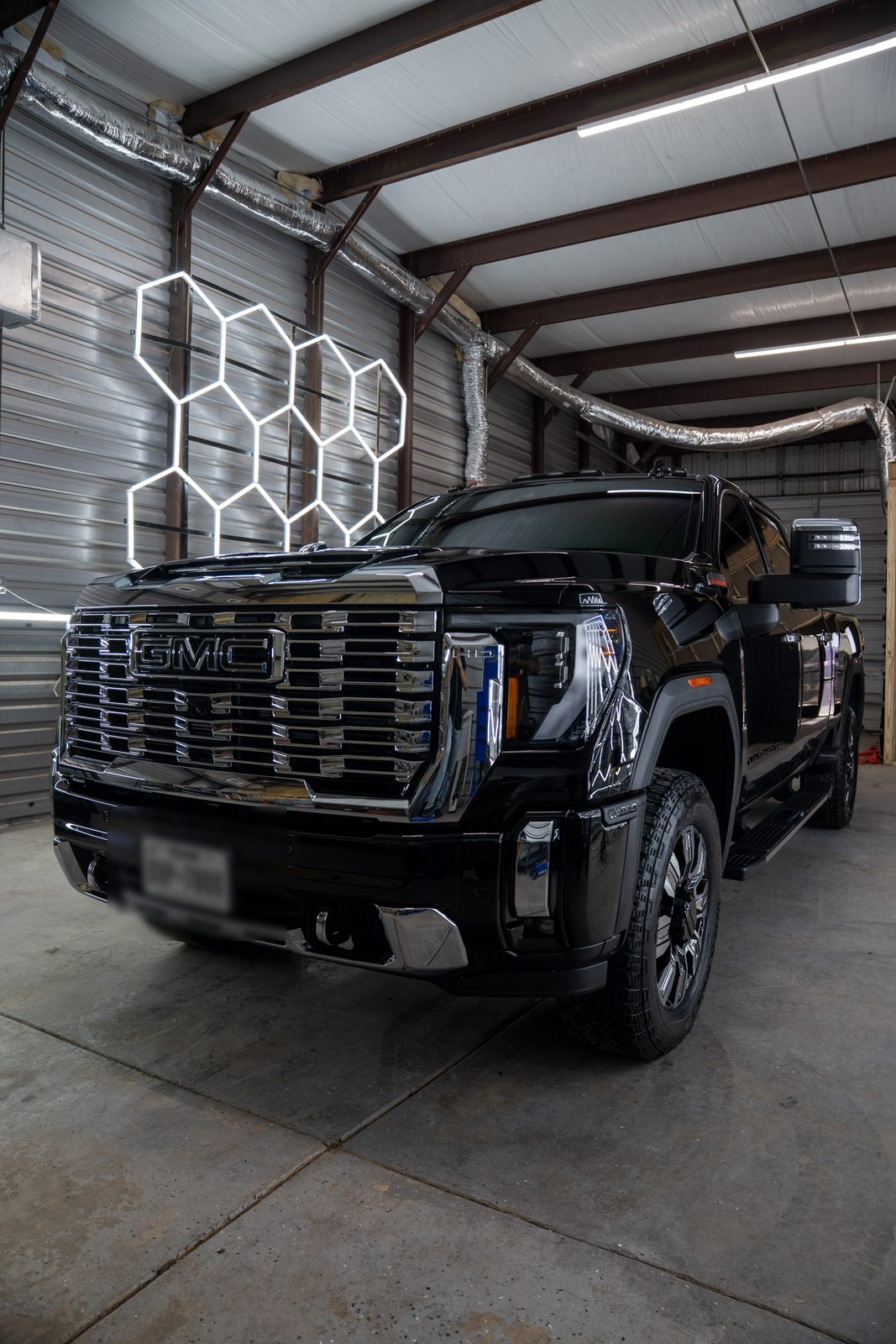
Truck Window Tint in Lubbock TX: Options and Prices
Quick answer: A truck front pair currently starts at $99 carbon or $149 ceramic at Delicate Details. Four door windows start at $179 or $229, and a common four-door-plus-rear setup starts at $199 or $249. Send the year, make, model, cab style, and straight-on side and rear photos because sliders, fixed panes, factory privacy glass, and old film change the exact scope.
Truck tint sounds simple until the rear glass, cab style, and factory-darkened windows enter the quote. A regular cab may have two doors and one rear opening. A crew cab may have four roll-down door windows, fixed quarter panes, and a rear assembly with a manual or powered slider. Those are not always the same job even when two owners both ask for a “full truck.”
The clearest quote identifies the exact glass, film type, current condition, and separate windshield work. This guide explains the decisions before you book a truck tint appointment in Lubbock.
Truck Tint Prices at a Glance
| Starting setup | Carbon | Ceramic |
|---|---|---|
| One standard window | $59 | $79 |
| Two front roll-down windows | $99 | $149 |
| Four door windows | $179 | $229 |
| Four doors plus rear glass | $199 | $249 |
| Windshield brow | $49 | $69 |
These are introductory prices for standard automotive glass. Clear ceramic windshield film is currently $169, and old-film removal starts at $75. A split or sliding rear assembly, extra fixed panes, unusual glass access, and existing film are confirmed from the specific truck before the final quote.
Front-Pair Tint for a Truck with Factory Rear Glass
Many pickups leave the factory with darker rear door glass and rear cab glass but lighter front roll-down windows. Tinting only the two front windows is a common way to reduce the visual contrast. At current pricing, that front pair starts at $99 carbon or $149 ceramic.
A practical match is more than choosing the same printed percentage. Factory privacy glass usually gets its color from the glass itself, while aftermarket film is an added layer. Base glass color, film color, interior color, and windshield light all affect the finished appearance. We can choose the closest practical shade after checking the truck, but an exact front-to-rear match should not be promised from a number alone. See the full factory privacy glass comparison.
Crew Cab, Extended Cab, and Regular Cab
Cab labels help identify the truck, but they do not replace photos or a glass count. Manufacturers use different door, fixed-pane, and rear-window layouts under similar cab names.
- Regular cab: commonly two roll-down door windows plus rear glass, but vents or fixed panes can add pieces.
- Extended or double cab: may have two front roll-down windows, smaller rear door windows, and extra fixed panes.
- Crew cab: commonly has four roll-down door windows, though the rear assembly and small fixed glass still vary.
- Older trucks: may have vent windows, aftermarket replacement glass, or previous film that changes preparation.
Use our window-count guide for a starting estimate, then send the truck details before assuming it fits a four- or five-window price.
Why Sliding Rear Glass Needs a Photo
A truck's rear opening may be one solid pane, a manual slider, or a powered slider with multiple moving and fixed sections. Seals, handles, motors, defroster lines, antenna elements, and access around the rear seat can affect how the assembly is prepared and counted. Automotive supplier Magna's engineered-glass overview shows why “rear window” can describe several fixed and sliding system designs rather than one universal pane.
Do not choose a rear-glass price from a side photo. Send a straight-on image of the complete rear window from inside or outside, plus a close photo if old film, damaged defroster lines, or an aftermarket slider is present. That lets the shop confirm whether the center section, surrounding panes, and removal are included.
Can Truck Rear Glass with Defroster Lines Be Tinted?
Compatible film can be installed over an intact rear defroster grid, but the grid and glass need inspection first. Tint does not repair damaged lines, and scraping, harsh chemicals, sharp tools, or later removal can damage grid elements bonded to the inside surface.
Defroster grid lines are bonded to the inside surface of many truck rear windows—the same surface where film is installed. Ford's current 2020 F-150 owner-manual guidance, for example, warns against harsh chemicals, razor blades, and other sharp objects on the heated rear window because they can damage the grid lines. That is vehicle-care guidance, not a promise that every truck uses the same rear-glass construction.
Before tinting or removing old film, photograph any broken, faded, or missing lines and disclose whether the defroster already works. Tint cannot repair an existing grid fault. The year, model, glass condition, and owner's manual should control the inspection rather than a generic “rear window included” assumption.
Carbon or Ceramic for a Work Truck?
Carbon is the lower-cost option when the main goals are privacy, glare reduction, appearance, and keeping the initial price down. Ceramic is the heat-focused upgrade when documented solar performance matters more—for example, when a truck spends long days outside or covers many daytime miles.
The category name is not enough to prove performance. Ask for the exact manufacturer, product line, shade or visible-light transmission, total solar energy rejected, the definition behind any infrared number, and the written warranty. Our heat-rejection numbers guide explains how to compare unlike percentages without treating them as equal.
Shade, Visibility, and the Finished Glass
Film shade and film construction are separate choices. A darker film is not automatically the better heat performer, and it can reduce outward visibility at night. The glass already has its own visible-light transmission, so the completed glass-and-film result—not just the film label—is what matters.
The Texas Department of Public Safety window-tint standard sets requirements for regulated windows, including transmission, reflectance, and windshield-strip placement. Check the current official rule for the finished installation. Use our combined VLT estimator for a planning calculation and the plain-language Texas tint guide for common questions; neither replaces the completed-window measurement or the official standard.
What Window Film Can and Cannot Do
Automotive film can reduce glare, add privacy, change appearance, and improve cabin comfort. It cannot repair weak air conditioning, a cracked window, a failed seal, or a broken defroster grid. It also does not make valuables secure; anything left inside a truck can still be visible from the windshield or when a door opens.
The International Window Film Association's 2026 automotive guide recommends comparing visible-light transmission, total solar energy rejected, visible reflectance, ultraviolet transmission, and warranty information. That product-specific data is more useful than assuming every carbon or ceramic film performs the same.
Before Requesting a Truck Tint Quote
- Year, make, model, and cab style
- Which door, rear, and fixed panes you want tinted
- Whether the rear window is solid, manual sliding, or powered sliding glass
- Whether any glass already has applied film
- Photos of peeling, bubbling, adhesive, scratches, or damaged defroster lines
- Whether you want a windshield brow or clear windshield film quoted separately
- Your priority: lowest price, privacy, appearance, glare control, or documented heat performance
With those details, the starting price becomes a useful quote instead of a guess. Delicate Details installs automotive tint at 13209 Frankford Ave, Suite 4, Lubbock, TX 79424.
Frequently Asked Questions
How much does it cost to tint a truck in Lubbock?
A front pair currently starts at $99 carbon or $149 ceramic. Four door windows start at $179 carbon or $229 ceramic, and a common five-window setup with four doors plus rear glass starts at $199 carbon or $249 ceramic. The exact truck, fixed panes, sliding rear glass, and old film can change the final scope.
Does a truck's sliding rear window count as one window?
Do not assume it does. A powered or manual slider can have multiple moving and fixed panes, seals, hardware, or defroster lines. Send a straight-on rear photo so the shop can confirm what is included before quoting.
Can a truck's sliding rear window be tinted?
Many truck rear sliders can be tinted, but the exact assembly must be inspected first. Moving and fixed panes, seals, handles, motors, defroster or antenna elements, factory-darkened glass, and old film can change the coverage and quote.
Can truck rear glass with defroster lines be tinted?
Compatible film can be installed over an intact rear defroster grid, but the grid and glass need inspection first. Tint does not repair damaged lines, and scraping, harsh chemicals, sharp tools, or later removal can damage grid elements bonded to the inside surface.
Can front truck windows be matched to factory-tinted rear glass?
A shop can choose the closest practical shade and color after checking the glass, but an exact match is not guaranteed. Factory privacy glass and applied film are different materials, and the front cabin often looks lighter because of windshield light.
Is a windshield brow included with truck tint?
No. The published side-and-rear prices do not include a windshield brow. Current introductory brow pricing is $49 carbon or $69 ceramic, subject to the vehicle and current Texas requirements.
Should I choose carbon or ceramic tint for a work truck?
Choose based on how the truck is used. Carbon is the lower-cost choice for privacy, glare reduction, and appearance. Ceramic is the heat-focused upgrade when documented solar performance matters. Compare the exact product data and warranty rather than the category name alone.
Related Window Tint Guides
Start a Truck Front-Pair Quote
Choose the starting film below, then add the year, make, model, cab style, old-film details, and photos. We confirm the glass and final price before the appointment.