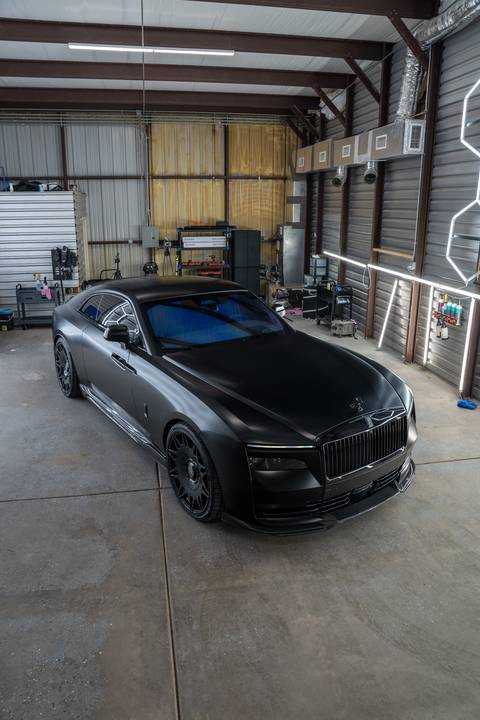
Inspection-led paint correction for Tech Terrace vehicles, with 1-step, 2-step, and 3-step options to improve suitable swirl marks, oxidation haze, water-spot etching, and clear-coat scratches. Shop-based at 13209 Frankford Ave in Lubbock; check live directions before leaving.
Paint correction for Tech Terrace vehicles at Delicate Details starts at $350 for a sedan. Three tiers by polishing stages: 1-Step at $350 sedan ($450 SUV, $550 truck), 2-Step at $650 sedan, and Full 3-Step at $850 sedan, with SUV and truck pricing running higher across all tiers. The shop is at 13209 Frankford Ave, Suite 4. Check live directions from Tech Terrace because route and travel time vary with traffic and road work. Machine polishing removes a controlled amount of damaged clear coat and can improve suitable defects; the achievable result depends on defect depth, paint history, current condition, and the response of a test area.
Tech Terrace is near Texas Tech University, but the neighborhood name does not tell us how a vehicle has been stored, washed, repaired, or maintained. A street-parked vehicle may have sap, bird droppings, mineral deposits, or wind-blown dust, while a garaged vehicle can still have wash marring or prior bodywork.
We base the recommendation on the clean paint in front of us. Lighting, a test area, defect depth, panel edges, paint history, and the owner's priorities matter more than the vehicle model or ZIP code. Protection is discussed separately after the correction scope is clear.
Check the live route
13209 Frankford Ave, Suite 4
Lubbock TX 79424
Tree sap, bird-dropping marks, mineral deposits, oxidation haze, wash swirls, and deeper scratches can look similar in a phone photo but respond differently to cleaning and polishing. That is why an online quote is preliminary. The paint first needs a safe wash and any justified decontamination so bonded residue is not mistaken for a defect in the clear coat.
Under inspection lighting, we look for repainted panels, thin edges, chips, checking, clear-coat failure, and scratches that may extend beyond the polishable layer. Paint-depth readings can add information where appropriate, but a reading alone does not guarantee that aggressive polishing is safe. A small test area shows how the particular paint responds and helps establish a realistic improvement target.
The one-, two-, or three-step choice follows that test rather than a preset rule. A lighter process may be the responsible answer for thin, repainted, or sensitive paint even when deeper marks remain. Damage through the clear coat, failing paint, or unsafe panel edges may need touch-up or body repair instead of additional compounding.
Once the safe correction scope is agreed on, we can discuss a sealant or ceramic-coating option based on storage, washing habits, budget, and the selected product's written care terms. Photos are useful for planning, but the final price, expected result, and pickup window are confirmed after the clean-paint inspection and before unapproved extra work begins.
Prices are by vehicle size. Get an exact quote for your specific vehicle.
Single-stage machine polish to improve light swirl marks, oxidation haze, and minor clear-coat defects when paint condition allows. Good for vehicles in decent shape that need a clarity boost.
Two-stage compound and polish for moderate swirl marks, oxidation, and water-spot etching, subject to paint condition and safe clear-coat depth. Recommended only when inspection and the test area justify the added cut.
Multi-stage correction for severe clear-coat defects after inspection. It aims for the strongest safe improvement the tested paint supports; deep damage may require touch-up or body repair instead of more polishing.
Lubbock's environment is harder on vehicles than most people realize.
Automatic car wash brushes and ribbons drag abrasive particles across clear coat in circular patterns — visible as a spiderweb in direct sunlight. Machine polishing can improve many of these defects, but the safe result depends on defect depth, paint condition, prior repairs, and the test area.
Sun exposure and age can contribute to dull or chalky-looking paint. Polishing may improve removable surface oxidation when the clear coat remains serviceable, but clear-coat failure cannot be restored by machine polishing.
Evaporated water can leave mineral deposits or etched marks. Some residue responds to compatible chemical treatment; some etching may improve with polishing. Wet sanding is considered only when inspection, paint condition, and the risk justify it.
Road debris, contact, and abrasive wiping can leave deeper scratches. Additional polishing is not automatically the answer: if a defect is too deep or the surrounding paint cannot be safely reduced, we leave it and explain repair alternatives.
Timing depends on vehicle size, paint condition, tested polishing response, selected correction stage, and any approved additional work. We confirm an estimated pickup window after inspecting the clean paint and contact you if the safe scope changes.
Scratches through the clear coat into the color layer or bare metal cannot be corrected with polishing. They may need touch-up paint or body repair. We explain what appears safely improvable after inspection and a test area.
Swirl-like defects can come from contaminated wash media, dry wiping, abrasive contact, or some automated wash equipment. Polishing may improve suitable defects, while careful washing can reduce the chance of adding new ones. A coating or sealant can make cleaning easier but does not prevent scratches.
Coating preparation depends on the paint condition and the selected product instructions. Some vehicles need only cleaning and light refinement, while visible defects may justify more correction. We quote extra correction separately when it is not included in the selected coating scope.
Yes. We serve Tech Terrace from our shop at 13209 Frankford Ave, Suite 4. Check live directions and confirm your appointment and pickup window before leaving.