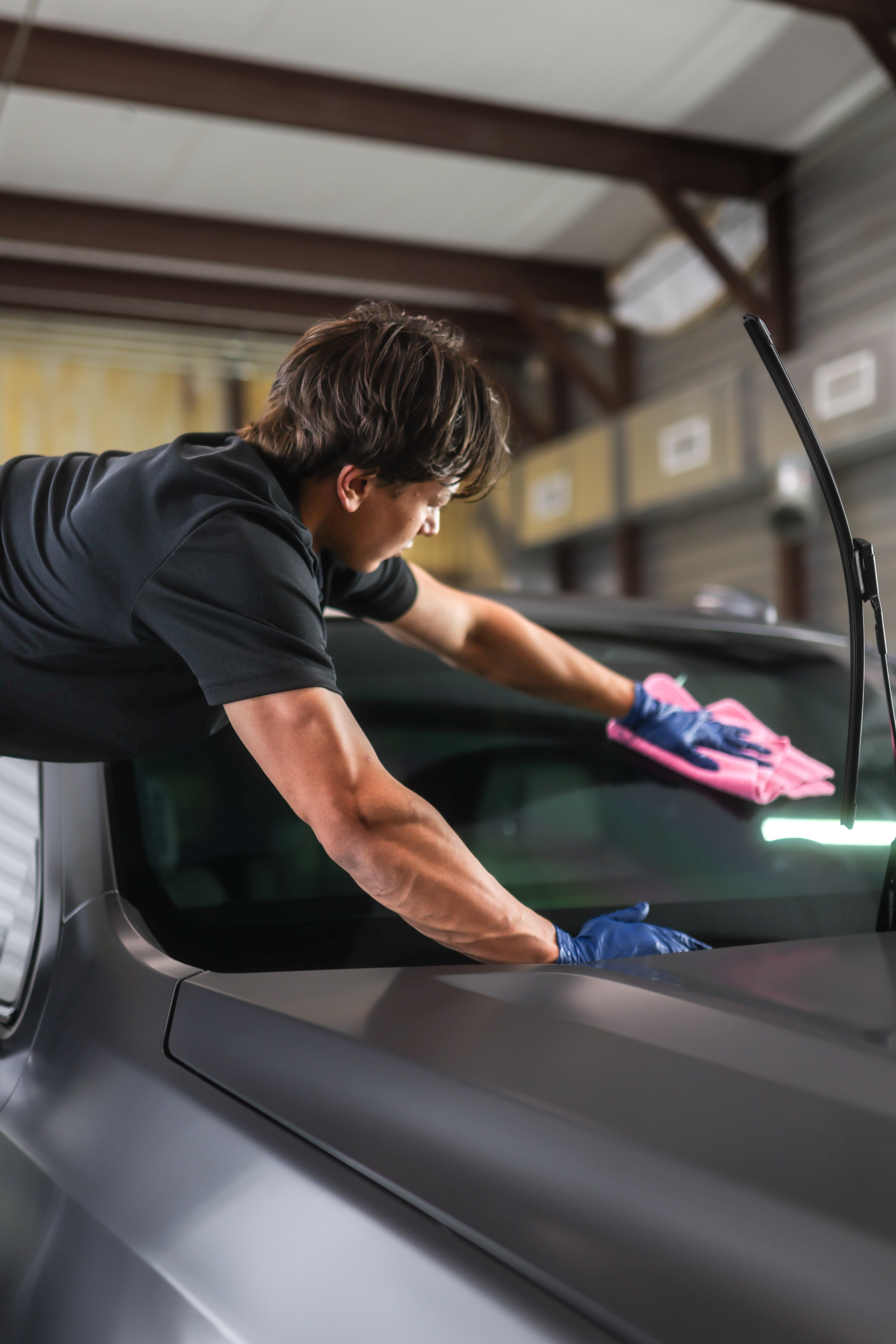
Ceramic coating preparation starts with inspection, washing, and a clean test surface—not one fixed checklist for every vehicle. Chemical or mechanical decontamination, paint correction, and panel preparation are selected from the actual finish, chosen service tier, product directions, and approved result.
Preparation affects how consistently a coating can be applied to the inspected surface. Existing protection, bonded contamination, mineral residue, oxidation, repainting, clear-coat limits, and polishing oils can require different work. This guide explains how Delicate Details selects the preparation rather than assuming every Lubbock vehicle needs the same sequence.
Preparation begins with a visual inspection and a wash method suited to the paint, existing protection, soil load, trim, and weather exposure. A pre-rinse or foam step may be used to loosen surface soil before contact washing. The goal is to remove accessible loose contamination without promising that one soap or tool fits every finish.
After washing and rinsing, the vehicle is dried and reinspected. That second look helps separate remaining bonded material, mineral deposits, paint defects, and prior-product residue before a decontamination or correction plan is approved.
Ferrous contamination can come from several sources, including brake and rail-related particles. Its amount varies by vehicle use, parking, transport history, and prior care, so proximity to one location does not prove that a panel needs an iron-removal step.
When inspection indicates a compatible iron-removal product is appropriate, it is applied and rinsed according to its directions while sensitive surfaces are considered. A color reaction can indicate product activity, but it is not a measurement of total contamination or proof of future coating failure.
Mechanical decontamination may be appropriate when compatible bonded material remains after washing or chemical treatment. Clay media can also mar some finishes, so the material, lubricant, pressure, and need for later polishing are selected from the panel condition rather than used automatically.
A test area and surface inspection guide where mechanical decontamination is used. Tactile feedback can help identify a change in surface texture, but it does not diagnose every deposit, etching mark, or clear-coat defect.
Paint correction is selected from the inspected condition and the preparation included with the chosen coating tier. A transparent coating does not hide existing scratches, chips, oxidation, or etching, but not every defect can or should be polished. A test area helps determine what may improve safely.
When additional correction is recommended, the quote should identify the number of stages, expected improvement, known limits, and any defects better handled by touch-up or body repair. The final scope is agreed before application.
After polishing, a compatible panel-prep product may be used to remove oils or residue before coating application. The product, dilution, towel method, dwell time, ventilation, and compatibility should follow the coating system instructions and surface condition.
The panel is inspected again after preparation. A panel-prep wipe supports a clean application surface, but it does not guarantee adhesion or durability by itself; cure conditions, application method, maintenance, storage, washing, and exposure also matter.
Lubbock vehicles can arrive with several conditions worth checking before a coating is selected:
The purpose of preparation is to create an inspected, compatible surface for the selected coating system—not to force every vehicle through identical steps. Call (806) 855-8042 or send the year, make, model, condition notes, and photos for a condition-based quote.
We inspect the finish, confirm the coating tier and preparation scope, explain visible limits, and provide the written care terms before application.
Book Now →Package years identify the service tier, not a maintenance-free guarantee. Actual life varies with preparation, outdoor exposure, washing, contamination, storage, and aftercare. We explain the written care and maintenance terms for the selected tier.
No. Ceramic coating is not an impact barrier and does not stop rock chips or road-debris damage. Delicate Details does not currently install paint protection film, so chip protection should be discussed with a qualified PPF installer.
No single prep sequence fits every vehicle. We inspect and test first, then select chemical or mechanical decontamination and the correction level required by the paint condition, chosen service tier, product directions, and approved result.
A compatible panel-prep step can remove polishing oils or other residue before application. The product, dilution, method, and timing should follow the coating system instructions and the condition of the surface.
Ceramic coating runs $799 (2-year), $1,299 (5-year) and $1,899 (10-year) on a sedan; $899/$1,399/$2,299 on an SUV; $1,099/$1,499/$2,599 on a truck. Every package includes decontamination and paint preparation matched to the vehicle's inspected condition.