Can You Coat a Car
in 100-Degree Heat?
There is no universal best temperature for every ceramic coating. Use the selected manufacturer's application range and measure the panel—not just the outdoor air. Humidity, airflow, lighting, panel size, flash behavior, cure requirements, and release timing also matter.
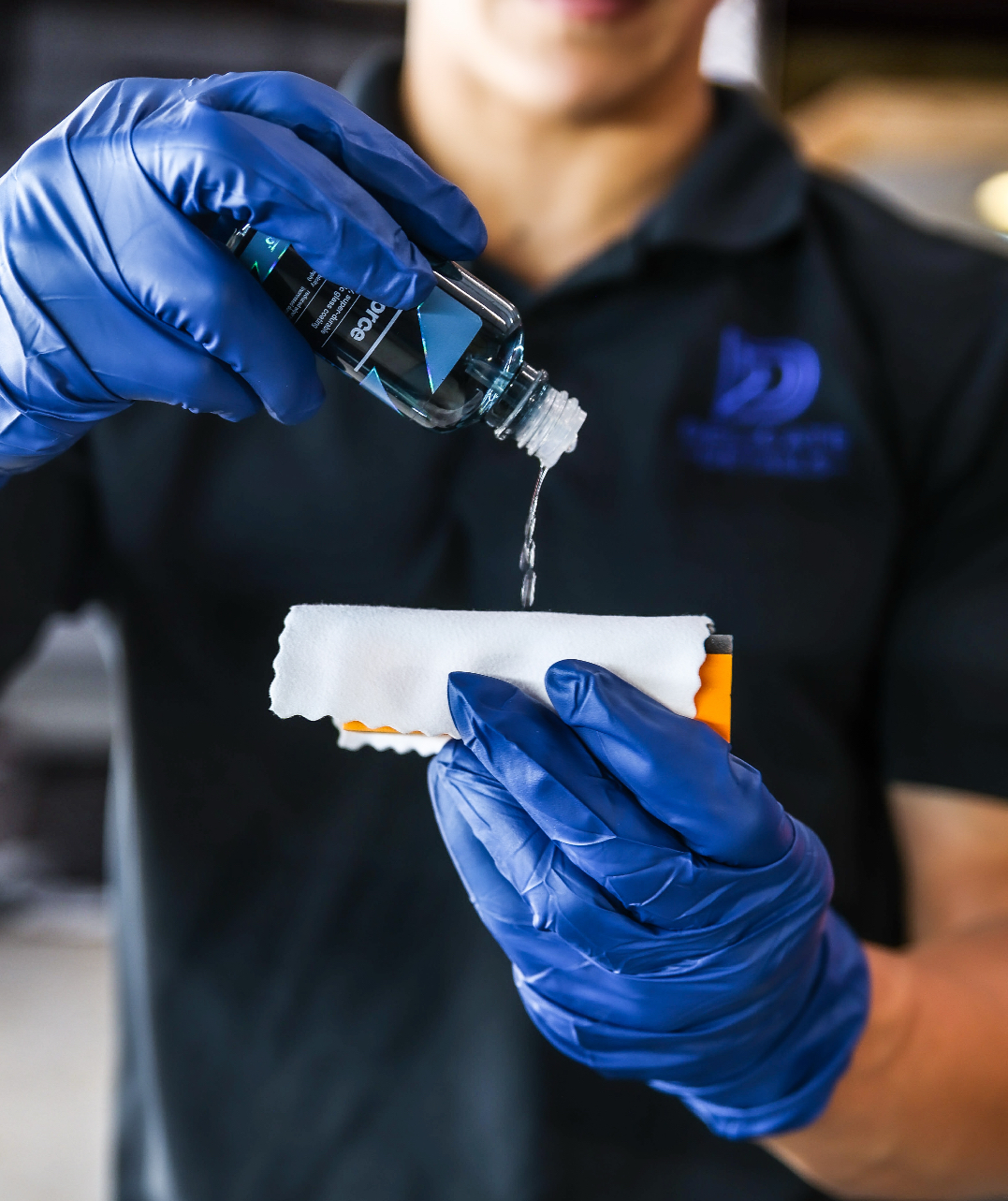
Temperature matters, but it is not a standalone pass-or-fail number. The selected product instructions define the application and cure requirements, while the installer evaluates panel temperature, humidity, airflow, lighting, and actual flash behavior. That is why Delicate Details applies coatings indoors rather than treating the outdoor forecast as the specification.
What “Flashing” Means and Why It Matters
After application, the product begins to flash and set according to its chemistry and the surrounding conditions. The installer watches the actual surface cues and levels the section inside the product's working instructions. Uneven or excess product can create high spots that appear darker, streaked, or rainbow-like.
Too Hot Is the Bigger Problem Here
A panel in direct sun can be much hotter than the reported air temperature, and different panels on the same vehicle may not match. Application should proceed only when the measured surface and indoor working conditions meet the selected product instructions. If they do not, the shop changes the conditions or reschedules the application rather than guessing.
Too Cold Slows the Cure Instead
Cold conditions can also fall outside a product's application or cure requirements. The correct threshold and cure plan come from the selected product—not a generic rule for every coating. Panel temperature and the expected environment through application, cure, and release all need to be considered.
Humidity Is the Other Variable
Humidity, airflow, panel size, lighting, and product load can influence how an installer reads and levels a coating. The relevant ranges and cure instructions vary by product, so the process follows the selected manufacturer's documentation and observed panel behavior.
Why We Do This Indoors
Indoor application reduces direct sun and weather exposure and gives the installer a better place to measure panels, inspect lighting, manage airflow, and monitor the vehicle through the selected product's initial cure requirements. Indoor work does not replace measurement or product instructions; it makes those controls practical.
What This Means for Booking
You may not need to wait for a particular season if the shop can meet the selected product's panel-temperature, humidity, application, cure, and release requirements. Shop time is confirmed for the specific package, preparation plan, product instructions, and current conditions rather than promised as a fixed number of hours.
Do not assume every high spot has the same fix. The appropriate correction depends on the product, cure stage, paint condition, and manufacturer guidance. Inspection comes before wiping, polishing, or reapplication.
If weather has delayed a coating elsewhere, ask whether the selected product's required panel and cure conditions can be met indoors. We will explain the preparation plan, expected shop time, and release guidance for the specific package.
Related Reading
Ready to Protect Your Vehicle?
We'll inspect your paint and tell you exactly what it needs — we will share current appointment availability.
Keep Your Coating Performing.
Founding memberships are $99 for Exterior Detail, $149 for Full Detail, or $249 for Premium Detail. Each option has one set rate for qualifying cars, trucks, and SUVs.