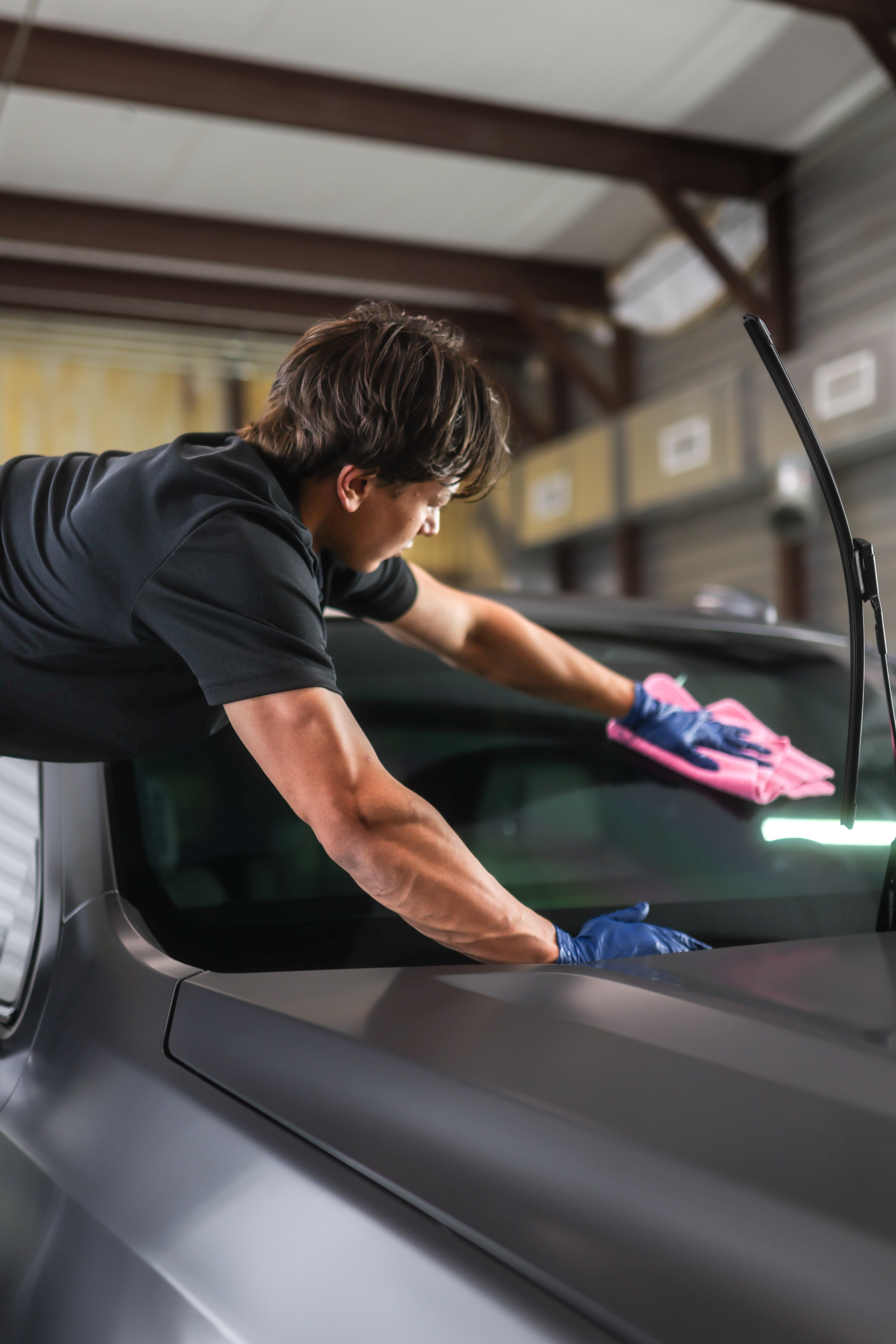
DIY can be reasonable when the product instructions, workspace, preparation, and your experience match the job. Professional installation adds condition-based inspection and preparation, a controlled process, documented products and coverage, and written aftercare. Compare the whole process—not only the bottle price.
The phrase “ceramic coating” appears on products with different chemistry, application methods, cure requirements, maintenance instructions, and written performance terms. A fair DIY ceramic coating vs professional installation comparison starts with the exact product and the condition of the vehicle—not assumptions about every consumer or installer-only formula.
Before buying a DIY product, confirm what the manufacturer calls it, where it can be applied, how the surface must be prepared, the required temperature and humidity range, how long it should remain undisturbed, and what maintenance it needs. A spray product, wipe-on sealant, and multi-step coating kit may all use ceramic language while requiring different work.
Every vehicle should be washed and inspected before a coating decision. Additional decontamination depends on what remains bonded to the surface. Paint correction depends on the defects, available clear coat, and desired finish. Because a coating is transparent, it does not hide existing swirls, etching, chips, or prior repair.
A DIY installer should be comfortable identifying contamination, residue, repaint, touch-up work, and defects that should not be polished. If the paint condition is uncertain, an inspection before application can prevent unnecessary abrasion or coating over an unsuitable surface.
The correct working range is product-specific. Direct sun, a hot panel, dust, wind, moisture, or poor lighting can make application and leveling harder. That does not mean every driveway application fails; it means the workspace must satisfy the instructions for the chosen product.
Use lighting that reveals residue and high spots from multiple angles. Work in sections small enough to level within the product's stated timing. Keep clean towels separated by task, and do not improvise solvents or abrasives if a mistake appears—follow the manufacturer's correction procedure.
A professional quote should make the scope easy to compare. Ask for:
A DIY budget can include the coating, compatible wash and preparation products, towels, applicators, lighting, workspace needs, and any tools the instructions require. It also includes your time. Do not assume a repair cost in advance; if an application problem occurs, the remedy depends on the product and paint condition.
| Delicate Details Tier | Coating | Sedan | SUV | Truck |
|---|---|---|---|---|
| 2-Year Tier | CarPro CQuartz SiC | $799 | $899 | $1,099 |
| 5-Year Tier | CarPro DQuartz | $1,299 | $1,399 | $1,499 |
| 10-Year Tier | CarPro DQuartz + Gliss | $1,899 | $2,299 | $2,599 |
Our published packages include condition-matched decontamination and inspection-based paint preparation. Correction depends on paint condition and the finish requested. Package years identify the service tier; they are not a maintenance-free promise, and written terms apply.
Tell us your vehicle size, paint condition, storage, and maintenance goals. We will explain the inspection, preparation, current pricing, and written package terms.
Request a Coating Quote →No. Product chemistry, preparation, application, cure, maintenance, and written performance terms vary. Read the exact product instructions instead of relying on the word ceramic alone.
Follow the product instructions. At minimum, the surface must be washed, inspected, and prepared so the product is applied to compatible, residue-free paint. Decontamination and correction depend on condition and the desired finish.
Professional service combines condition-based inspection and preparation with a controlled process, documented products and coverage, and written aftercare. Results still depend on paint condition, maintenance, and package terms.
Package years identify the service tier, not a maintenance-free promise. Written maintenance terms apply, and actual performance depends on preparation, exposure, washing, contamination, and aftercare.
Sedans are $799, $1,299, or $1,899 for the 2-, 5-, or 10-year tier. SUVs are $899, $1,399, or $2,299. Trucks are $1,099, $1,499, or $2,599.