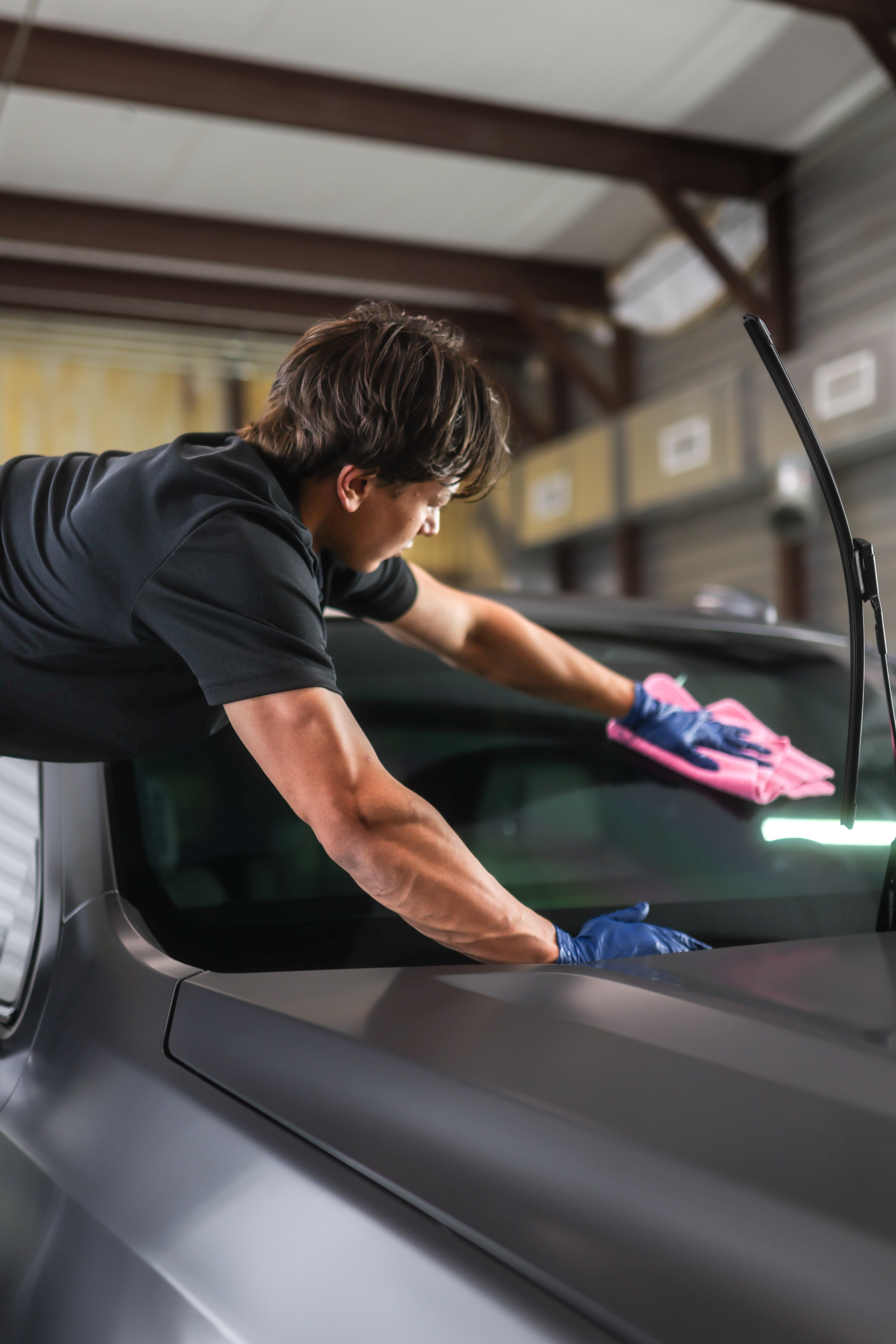
Restoration removes the failed surface layer; renewed UV protection helps preserve the restored lens. A ceramic product formulated for compatible plastics can be used as that protective final step. Results are not permanent and depend on preparation, product, exposure, washing, and lens condition.
Modern polycarbonate headlights rely on a factory UV-resistant surface layer. Once that layer wears or degrades, the plastic can oxidize and haze. Outdoor parking and repeated surface wear can accelerate the process, but there is no universal Lubbock timeline. This guide explains what restoration removes, what a protective coating can do afterward, and what it cannot guarantee.
Polycarbonate headlight lenses commonly use a factory UV-resistant surface layer. Cumulative sun exposure, abrasion, incompatible cleaners, and prior restoration can weaken that layer. When the exterior surface changes, the lens may become yellow, hazy, rough, or uneven.
How quickly a lens changes depends on its materials, remaining factory coating, parking angle, outdoor exposure, cleaning history, and prior restoration. Vehicles kept under cover generally receive less cumulative UV exposure than vehicles parked outside.
Headlight restoration methods vary. Some kits use abrasives, sanding steps, polishing compounds, wipes, or a final protective product. The useful comparison is the exact process, the condition of the lens, and whether a compatible protection step is applied after exterior oxidation is removed.
The weak point in any restoration is often the protection applied after sanding and polishing. If the restored polycarbonate is left bare or the final product is poorly applied, haze can return sooner. Product instructions, surface preparation, curing, and later washing all affect durability.
Repeated aggressive sanding also removes more lens material, so the goal should be a careful restoration followed by compatible protection and conservative maintenance—not frequent unnecessary abrasion.
The ceramic coating process for headlights differs from the kit process in one critical step: what gets applied after the restoration sanding and polishing.
When inspection shows the lens can be restored, compatible sanding and polishing may improve the failed exterior layer and clarity. The lens is then cleaned according to the selected protection product's instructions before a plastic-compatible UV-protective product is applied.
A compatible headlight coating adds a sacrificial, UV-resistant layer over the restored surface. It can help delay renewed oxidation, but it cannot make the lens permanent or establish one lifespan for every vehicle. Product choice, prep, cure, parking, and aftercare all matter.
| Service | Details | Pricing |
|---|---|---|
| Headlight Ceramic Coating | Restoration + ceramic — both lenses | Call for quote |
| Add-on to Detail Appointment | Restoration scope confirmed separately from the selected detail package | Call for quote |
| Add-on to Paint Ceramic Coating | Lens condition, product compatibility, and covered surfaces confirmed in writing | Call for quote |
Headlight ceramic coating is available as an add-on to any detail appointment or ceramic coating service. Pricing depends on the current condition of the lenses — severely oxidized lenses require more restoration work before the ceramic can be applied. Call (806) 855-8042 for current pricing and to discuss the condition of your headlights.
Previous restoration history matters because repeated sanding removes material and may change which repair path remains appropriate. We inspect for exterior oxidation, cracks, internal moisture, damaged reflectors, and inside-surface haze before recommending restoration, protection, or replacement.
We can inspect the lenses, identify visible limits, and quote the condition-matched restoration and protection scope before work is approved.
Book Your Detail →Polycarbonate lenses can change as the factory surface layer ages or wears. Sun exposure, abrasion, cleaners, prior restoration, and lens construction all affect the visible condition.
No. Sanding and polishing may improve restorable exterior oxidation, while compatible protection can help preserve the result. Performance depends on the lens, preparation, product, exposure, washing, and aftercare.
Sometimes. Exterior oxidation may be restorable, but cracks, internal moisture, damaged reflectors, inside-surface haze, or material failure can require repair or replacement instead.
Pricing is quoted after inspection because lens condition, previous restoration, required sanding or polishing, product compatibility, and replacement needs can change the scope.