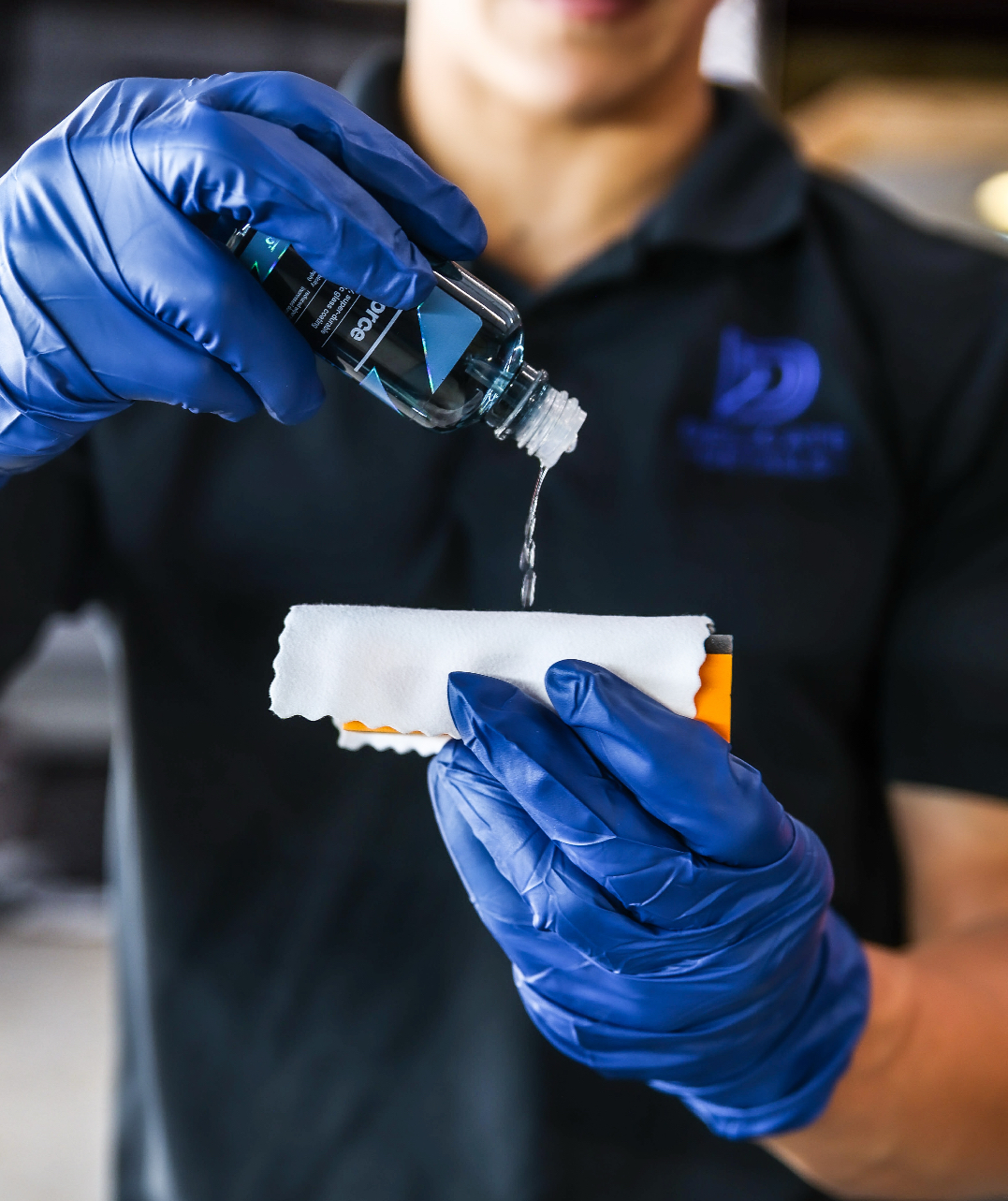
A compatible fabric protector may slow liquid absorption and make some fresh spills easier to blot, but it does not make upholstery waterproof or stain-proof. Suitability, coverage, cure guidance, and durability depend on the exact product, material, preparation, use, and care. Confirm whether protection is included or quoted separately for your selected scope.
The outside of a vehicle gets all the attention when it comes to protection — ceramic coating, paint sealant, wax. The inside is an afterthought for most owners, right up until someone spills a drink on cloth seats or a dog tracks mud across the carpet. Car fabric protection in Lubbock TX is the interior equivalent of a paint sealant: an invisible hydrophobic barrier applied to cloth seats, carpet, and headliner that buys you critical seconds when liquid hits fabric — enough time to blot it out before it soaks in and bonds. Here's what it is, how it works, and what you realistically get from it.
Fabric protectors are designed to change how compatible fibers interact with some liquids and soil. Beading and blotting time vary with the exact product, material, application, cure, spill, wear, cleaning history, and maintenance. Follow the written product instructions rather than relying on a universal response window.
The protection does not make fabric waterproof. Liquid can still reach fibers, seams, foam, electronics, or adhesive depending on the spill and material. Follow the product and vehicle care guidance, blot without spreading when appropriate, and arrange material-specific cleaning when residue remains.
This is where the difference matters and where honest detailers will tell you the truth:
At Delicate Details, fabric-protection suitability and preparation are confirmed from the actual material and product instructions. Existing stains, wear, dye transfer, damage, or absorbed contamination are separate concerns and may not be corrected by applying protection.
Fabric protection makes the most practical difference for:
Package names and base prices are shown below. Fabric protection is included only when it appears in the written scope confirmed for the vehicle; otherwise it is quoted separately.
| Package | Interior Cleaning | Fabric Protection | Sedan / Truck / SUV |
|---|---|---|---|
| Essential Detail | Vacuum & surface wipe-down | Confirm separately | $195 / $220 / $240 |
| Full Reset & Protect | Deeper material-compatible cleaning | Confirm written scope | $350 / $375 / $400 |
| Premium Detail | Full Reset scope plus machine polishing | Confirm written scope | $695 / $795 / $895 |
Fabric protection applied over a dirty interior doesn't bond correctly and won't perform as advertised — which is why it's built into packages that include proper interior cleaning first. Essential Detail clients who want fabric protection can add it on; just let us know when you book so we can plan the interior prep accordingly.
Fabric protection is not a permanent stain barrier and does not remove existing stains. Results vary by liquid, material, product, preparation, exposure, and response. Oil-based and water-based residue can require different cleaning methods, and some staining or damage may remain even after professional cleaning.
Blot fresh spills without spreading them, follow the protector and material-care instructions, and arrange material-appropriate cleaning when residue remains. Steam or extraction is not automatically suitable for every fabric, adhesive, foam, electronic component, or headliner. Call (806) 855-8042 to ask whether fabric protection fits your vehicle.
Ask us to confirm the exact product, compatible materials, covered surfaces, preparation, care instructions, and whether fabric protection is included or quoted separately. Serving Lubbock, Wolfforth, Slaton, Levelland, and the South Plains.
Book Now →Pre-rinse to flush abrasive grit before anything touches the paint, then two buckets or foam with frequent clean media, then dry rather than air-dry. Ogallala water spots as it evaporates, so drying matters here.
Brush washes are the fastest way to put swirl marks into clear coat. Touchless washes avoid contact but use aggressive alkaline chemistry that strips protection. Neither is a good routine for a car you care about.
It depends on where it lives. A garaged commuter does well on a maintenance detail a few times a year. A truck parked outside on a jobsite needs more, mainly to remove abrasive and acidic material before it bonds.
Caliche dust is abrasive and alkaline and settles on every horizontal surface. Mineral-heavy Ogallala water etches as it dries. Sun exposure, outdoor storage, mineral deposits, and wash habits all affect how a finish ages.