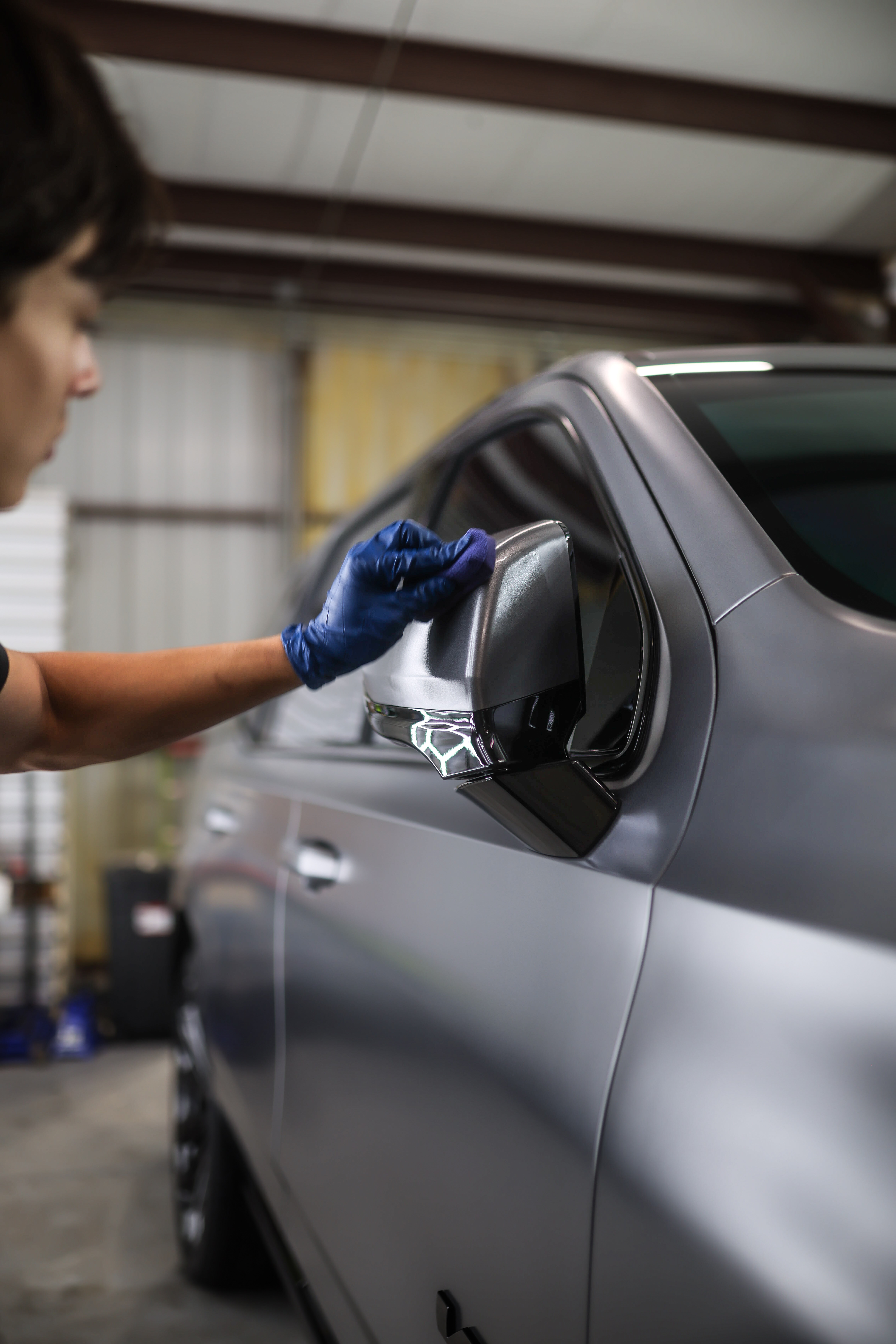
Rinse a fuel spill: do not wipe it. Gasoline and diesel soften clear coat on contact, and a shop towel grinds fuel and grit into that softened surface, which is the most common way this becomes permanent. Diesel is worse than gasoline because it evaporates slowly and sits longer. Staining or dulling needs correction, from $250 for enhancement.
Gasoline and diesel are solvents. Splashed on paint they soften the clear coat and dissolve wax and sealant instantly. Left to evaporate they leave behind additives and dye that stain the softened surface.
Summer heat is the aggravating factor. Hot paint absorbs solvent faster, and rapid evaporation concentrates the residue. Diesel is worse than gasoline because it evaporates slowly and sits longer.
Wiping a fuel spill dry with a shop towel is the most common way this becomes permanent — it grinds fuel and grit into softened clear coat. Rinse, do not wipe.
If only protection was stripped, a sealant reapplication is minor. Staining or dulling requires correction, from $250 for enhancement.
Yes. Gasoline is a solvent that softens clear coat and dissolves wax and sealant on contact. Rinsed quickly the damage is usually limited to lost protection. Left to evaporate it can stain the softened clear coat.
Yes. Diesel evaporates far more slowly, so it sits on the paint longer and has more time to penetrate. Diesel spills more often require machine polishing rather than just rewashing.
Rinse with water immediately — dilution matters more than anything else. Do not wipe it dry, which grinds fuel and grit into softened clear coat. Wash with car soap afterward.
It provides a sacrificial barrier and buys you time, but fuel is still a solvent. A coated vehicle is much more likely to survive a spill with no correction needed, provided the fuel is rinsed rather than left to evaporate.
Usually not permanently. A quick, high-volume rinse dilutes the solvent before it can do more than strip wax or sealant. What causes lasting damage is letting it evaporate in the sun or wiping it with a towel.
Diesel evaporates slowly, so it stays in contact with the clear coat far longer and keeps working. Gasoline flashes off relatively quickly. Diesel also leaves heavier residue and dye behind on the softened surface.
It strips a wax or sealant outright. A ceramic coating is far more chemically resistant and usually survives a rinsed spill, though repeated exposure at the fuel door will degrade hydrophobics in that spot over time.
Delicate Details is a shop-based studio at 13209 Frankford Ave, Suite 4, Lubbock TX 79424. Serving Lubbock, Wolfforth, Shallowater, Slaton, Idalou, Levelland, and the South Plains.
Book Now →