Polished Aluminum on a Rig:
Why It Dulls So Fast Out Here
Bare aluminum has no plated barrier like chrome: the moment you polish it, the fresh surface starts oxidizing again. That grey film is aluminum oxide forming immediately. Mill-finish tanks will never mirror without heavy cutting; polished tanks and wheels can come back. A metal sealant over fresh polish is the difference between quarterly touch-ups and monthly fighting.
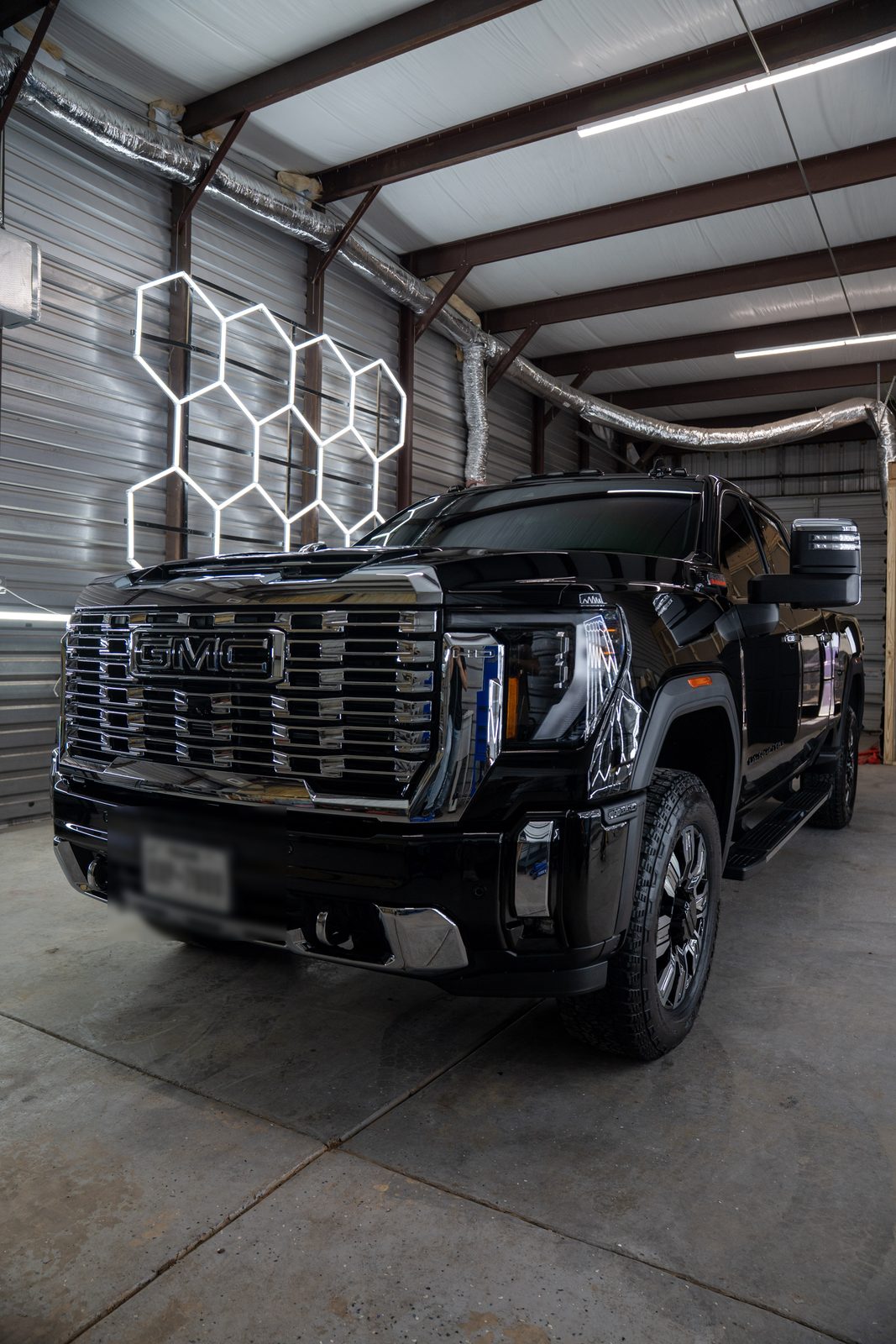
Aluminum is not chrome, and treating it like chrome is why so many rigs look great for two weeks and dull for the rest of the year. Understanding the difference changes what you should expect and how often you should be paying for it.
Aluminum Never Stops Oxidizing
Chrome has a plated barrier over the base metal. Bare aluminum does not — the moment you polish it, the fresh surface begins reacting with the air again. That grey film is aluminum oxide forming, and it starts immediately. Polishing does not stop the process, it resets it.
What West Texas Does to It Faster
Three things stack up here. Caliche dust is abrasive and mildly alkaline, so it both scratches and etches. Our hard water leaves mineral deposits that bond to the porous oxidized surface. And sustained UV with big temperature swings keeps the metal moving. A rig running I-27 and US-84 sees all three every week.
Mill Finish vs Polished vs Coated
Not every aluminum surface on your truck is the same. Mill-finish tanks came from the factory rough and will never mirror without heavy cutting. Polished tanks and wheels can be brought back. Some newer wheels are clear-coated aluminum — and polishing those is a mistake, because you cut through the clear and create a patchy finish that only gets worse. Identifying which you have comes first.
The Realistic Interval
A full polish on neglected aluminum is a multi-stage cut, and it takes real hours. Once it is done, expect to maintain rather than repeat — a light maintenance pass a few times a year holds it. Anyone promising a permanent mirror on bare aluminum is selling you something that does not exist.
Sealing Buys You Time
A dedicated metal sealant or coating over freshly polished aluminum slows the oxidation restart considerably. It does not stop it forever, but it is the difference between touching up quarterly and fighting it monthly. On a truck that is your business card at every dock, that math works out.
Before anyone touches your wheels: confirm whether they are bare polished aluminum or clear-coated. Polishing a clear-coated wheel cuts through the coating and leaves a blotchy finish that then has to be fully stripped to fix.
If your tanks and wheels have gone grey, they are almost always recoverable. Send photos and we will tell you what stage they are at and what it takes to bring them back.
Related Reading
Ready to Protect Your Vehicle?
We'll inspect your paint and tell you exactly what it needs — we will share current appointment availability.
Keep Your Coating Performing.
Founding memberships are $99 for Exterior Detail, $149 for Full Detail, or $249 for Premium Detail. Each option has one set rate for qualifying cars, trucks, and SUVs.