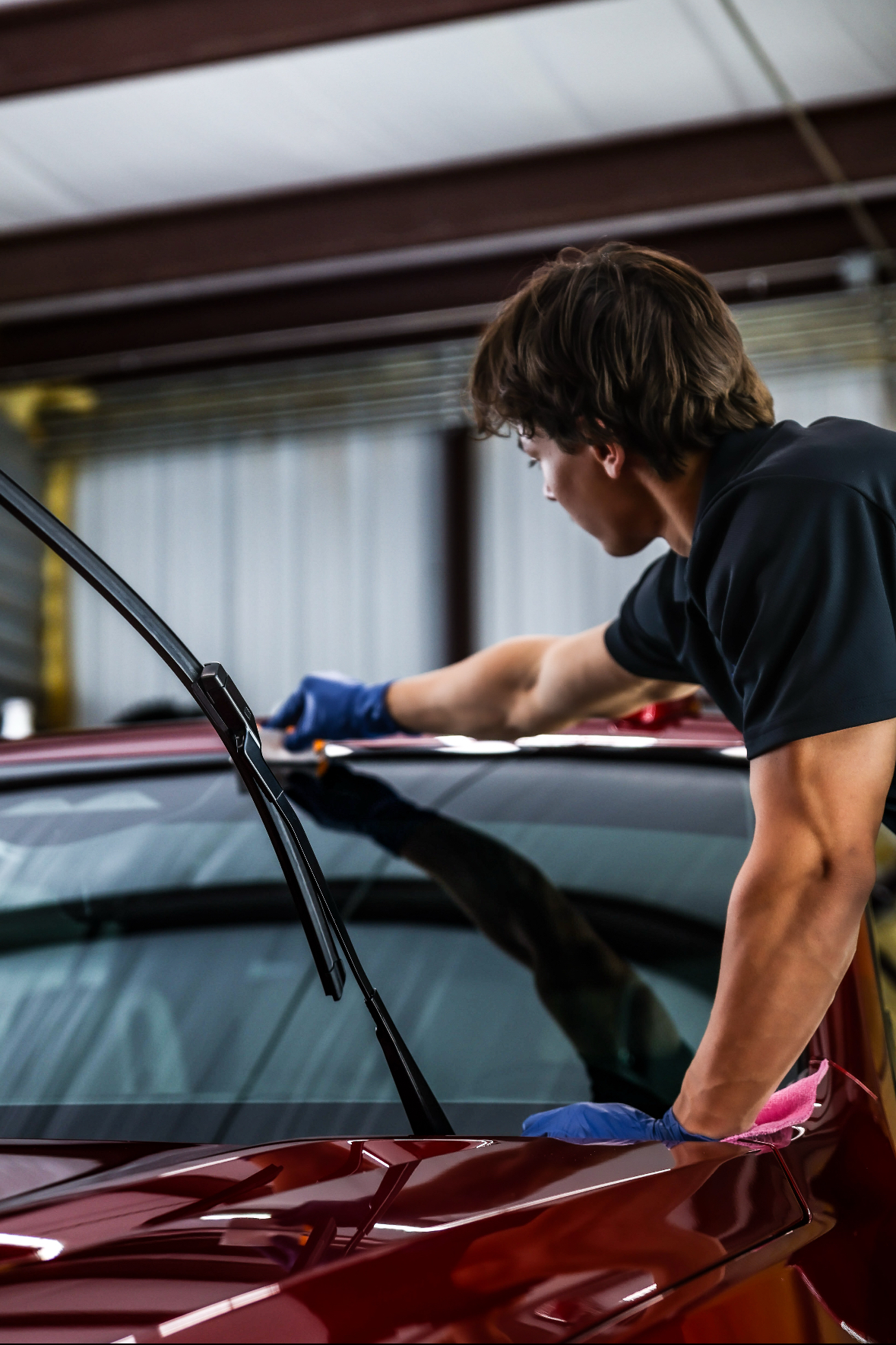
A pre-purchase cosmetic review documents visible paint, trim, glass, wheel, and interior condition. It cannot certify collision history, structural safety, mechanical condition, title history, or market value. Treat paint readings and finish differences as observations that may justify follow-up with a qualified mechanic or body shop—not proof by themselves.
A condition review records what is visible and accessible at the time of the appointment. Depending on the vehicle and agreed scope, that can include scratches, swirl marks, water spotting, oxidation-like haze, overspray-like residue, finish-texture differences, trim and glass condition, wheel damage, upholstery stains, unusual odors, and visible moisture lines.
Clean surfaces and suitable lighting may make some conditions easier to see, but the notes remain observations. They do not establish who performed prior work, when it happened, whether a collision occurred, or what the vehicle is worth.
Comparative readings on compatible panels can identify a difference worth investigating. Results can also vary because of panel substrate, factory coating processes, panel shape, equipment calibration, access, and materials applied during previous repairs. A reading by itself does not prove body filler, repainting, an undisclosed collision, or structural damage.
When a visible difference or measurement raises a question, a qualified collision-repair shop can evaluate the panel and supporting records in the proper context.
A cosmetic review is one part of due diligence. It does not replace an independent mechanical inspection, a body-shop or collision-repair evaluation, a title and vehicle-history report, a recall check, or a qualified appraisal. The Federal Trade Commission's used-car guidance recommends an independent mechanical inspection and explains that a vehicle-history report is not a substitute for one. You can also check a VIN for open safety recalls through the National Highway Traffic Safety Administration.
Pre-purchase cosmetic review scope, price, and timing are confirmed case by case. Send the vehicle year, make, model, location, requested review scope, and purchase deadline. We will confirm what can be reviewed, the written price, and the expected appointment window before work begins.
It can document visible paint, trim, glass, wheel, upholstery, and cabin condition, including contamination, scratches, stains, finish differences, and access limitations. These are condition notes, not repair-history certification.
No. Comparative readings can flag a difference for follow-up, but substrate, factory process, panel shape, equipment calibration, and prior materials can affect results. Confirmation may require a qualified body shop and supporting records.
No. A cosmetic review does not assess drivetrain, safety systems, structural condition, title history, or market value. Use a qualified mechanic, body shop, history report, or appraiser for those questions.
No. Suitable lighting and clean, accessible surfaces can make some visible conditions easier to document, but prior products, contamination, access, and previous work can limit what can be observed.
Scheduling and price are confirmed case by case after the vehicle, location, requested scope, and current shop availability are reviewed. Delicate Details provides the scope and price before work begins. No same-day appointment is implied.
Send the vehicle year, make, model, location, and purchase deadline. We will confirm whether the requested cosmetic review fits our scope, along with price and timing, before the appointment.
Ask About Availability →