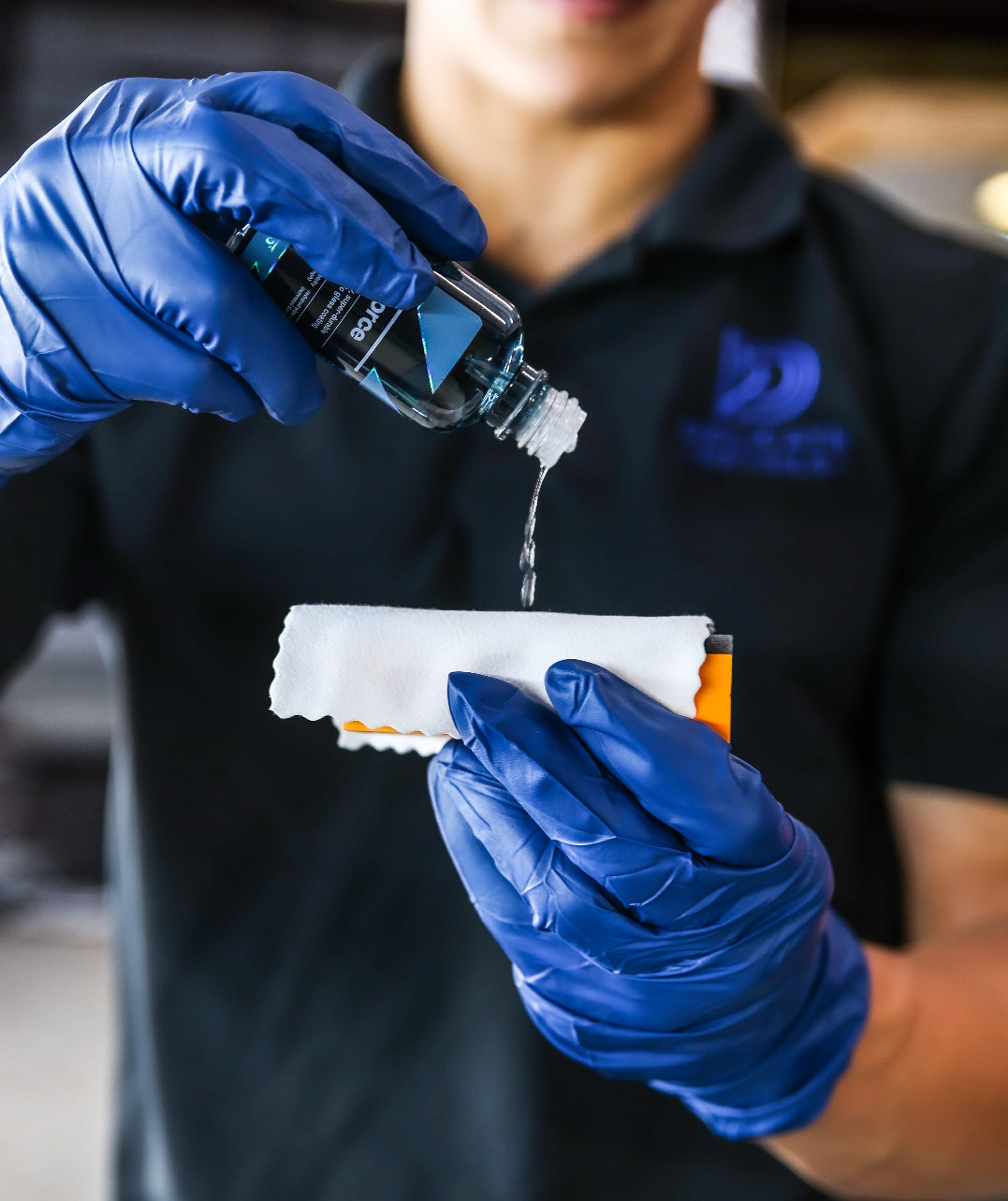
Over-conditioning a steering wheel is a safety problem, not a cosmetic one: silicone and wax-based consumer products leave a residue that makes leather slick under your hands. Leather, leather-wrapped, and Alcantara each need a different approach, and Alcantara should never see conditioner at all. Included in all three stages.
No surface in your car gets touched more than the steering wheel. Every drive, both hands grip it continuously — transferring body oils, sunscreen, hand lotion, sweat, and whatever else is on your hands directly onto the wheel surface. Over time, that accumulation discolors leather, mats down alcantara, and leaves a grimy film on every material type. Steering wheel cleaning in Lubbock TX is one of the most overlooked parts of interior detailing, and it matters more than most people realize — both for hygiene and for material preservation. This guide covers what builds up on steering wheels, how different wheel materials require different care, and the one mistake that makes a cleaned steering wheel genuinely dangerous to drive with.
Studies on vehicle interior hygiene have found that steering wheels carry approximately four times more bacteria per square inch than the average public toilet seat. That number is not an exaggeration — it reflects the reality that steering wheels are warm, frequently handled, and rarely cleaned. The bacteria accumulation is accelerated by:
In Lubbock TX specifically, summer driving adds a layer of contamination that Midwest or coastal drivers don't deal with as intensely. When ambient temps hit 100°F and higher, hands sweat significantly on any commute. Sunscreen is a daily necessity — and sunscreen is oil-based and transfers heavily to leather steering wheels, causing visible discoloration on light-colored leather within weeks. Hand lotion, a staple for people dealing with Lubbock's dry climate, leaves a similar residue. The result on a light tan or beige leather steering wheel is a dark, greasy shadow exactly where your hands sit most often.
The most common type in Lubbock vehicles — F-150s, Tahoes, Silverados, Rams, and most daily-driver sedans and SUVs — use genuine leather or leather-wrapped sections over a plastic core. These wheels respond well to pH-neutral leather cleaner applied with a soft detailing brush, followed by a light, penetrating conditioner. The key word is light: the steering wheel is a high-grip surface, and over-conditioning creates a slippery feel that is genuinely hazardous. Apply conditioner, let it absorb, and buff completely dry. Any remaining slickness indicates too much product — buff it off before you drive.
Alcantara is the suede-like synthetic fabric found on performance and luxury vehicles: Porsche, BMW M models, McLaren, Ferrari, Alfa Romeo, and some Audi S/RS models. It feels premium and provides excellent grip — but it is the most maintenance-intensive steering wheel material by a significant margin.
Liquid cleaners cannot be used on alcantara. Any liquid application causes the fibers to mat, harden, and discolor — permanently changing the texture and appearance. Alcantara cleaning requires a specialized alcantara brush (stiff nylon bristles in a specific pattern) used dry to lift surface contamination, followed by a low-pressure steam pass at significant distance if deeper cleaning is needed. The steam immediately followed by another dry brush pass while the fibers are slightly damp and can be lifted back to their original direction. This process is slow and requires experience. DIY attempts with any spray cleaner on alcantara typically end in a permanently matted, shiny-looking steering wheel that cannot be restored.
Work trucks, base-trim vehicles, and older models often have hard plastic or polyurethane steering wheels with no leather wrap. These are the easiest to clean — an all-purpose cleaner and a microfiber or soft brush handles everything. No conditioning needed. Apply a light interior protectant to restore the factory matte finish if the plastic has faded or developed a sticky texture from UV and heat exposure.
This point is worth its own section because we see it with DIY detailing attempts regularly. Leather conditioners — especially consumer products with silicone or wax bases — leave a surface residue that makes leather slippery. On a seat or door panel, that's a cosmetic issue. On a steering wheel, it's a safety issue. A slippery steering wheel reduces your grip in emergency maneuvers, particularly in wet conditions or when making quick corrections at highway speed.
At Delicate Details, we use penetrating conditioners that absorb fully into the leather fiber rather than sitting on top. After application, the wheel is buffed completely dry and grip-tested before the vehicle is returned. The goal is nourished leather that feels exactly like well-maintained leather should — smooth but not slick, slightly cool to the touch, with restored flexibility. Not greasy, not shiny, not sticky.
Steering wheel cleaning is included in all three detailing stages at Delicate Details. The level of treatment depends on the package: Stage 1 covers a thorough wipe-down and sanitization, while Stage 2 and Stage 3 include full leather clean, conditioning, and alcantara brushing where applicable.
| Package | Steering Wheel Treatment | Sedan | Mid-Size | SUV / Truck |
|---|---|---|---|---|
| Stage 1 — Essential Detail | Wipe-down and sanitization | $195 | $220 | $240 |
| Stage 2 — Full Reset & Protect | Full clean, condition, alcantara brush if applicable | $350 | $375 | $400 |
| Stage 3 — Premium Detail | Everything in Stage 2 plus machine paint correction | $695 | $795 | $895 |
If your steering wheel is darkened with grime buildup, feels grimy rather than smooth, or has that tacky residue from previous conditioning attempts, any of our stages will address it. For alcantara wheels or heavily discolored light leather, Stage 2 is the right starting point. Call (806) 855-8042 or book below.
Delicate Details cleans every steering wheel material correctly — leather, alcantara, polyurethane. No over-conditioning. No shortcuts. Serving Lubbock, Wolfforth, Slaton, Levelland, and the South Plains.
Book Your Detail →Brake dust is hot metallic particulate that embeds into the wheel finish and corrodes it. Left alone it etches, and past a point the damage is in the finish rather than on it.
Yes — the main benefit is that brake dust releases with a rinse instead of needing scrubbing. Less contact means less damage to the finish over the life of the wheel.
Light etching often improves. Deep corrosion through the clear or anodising needs refinishing, which is wheel repair rather than detailing. We will tell you which you have.
It is included with our 5-Year and 10-Year ceramic packages, or available separately. Call (806) 855-8042.