Why Your Tires Turn Brown
A Week After Every Wash
That brown film is the tire defending itself: antiozonants migrating to the surface and oxidizing, which means the protection is working. Heat and UV accelerate it, and Lubbock supplies both. Strip first, then dress: a dedicated tire cleaner with agitation removes the bloom and old dressing layers, which is the step nearly everyone skips. Then a thin, leveled water-based dressing.
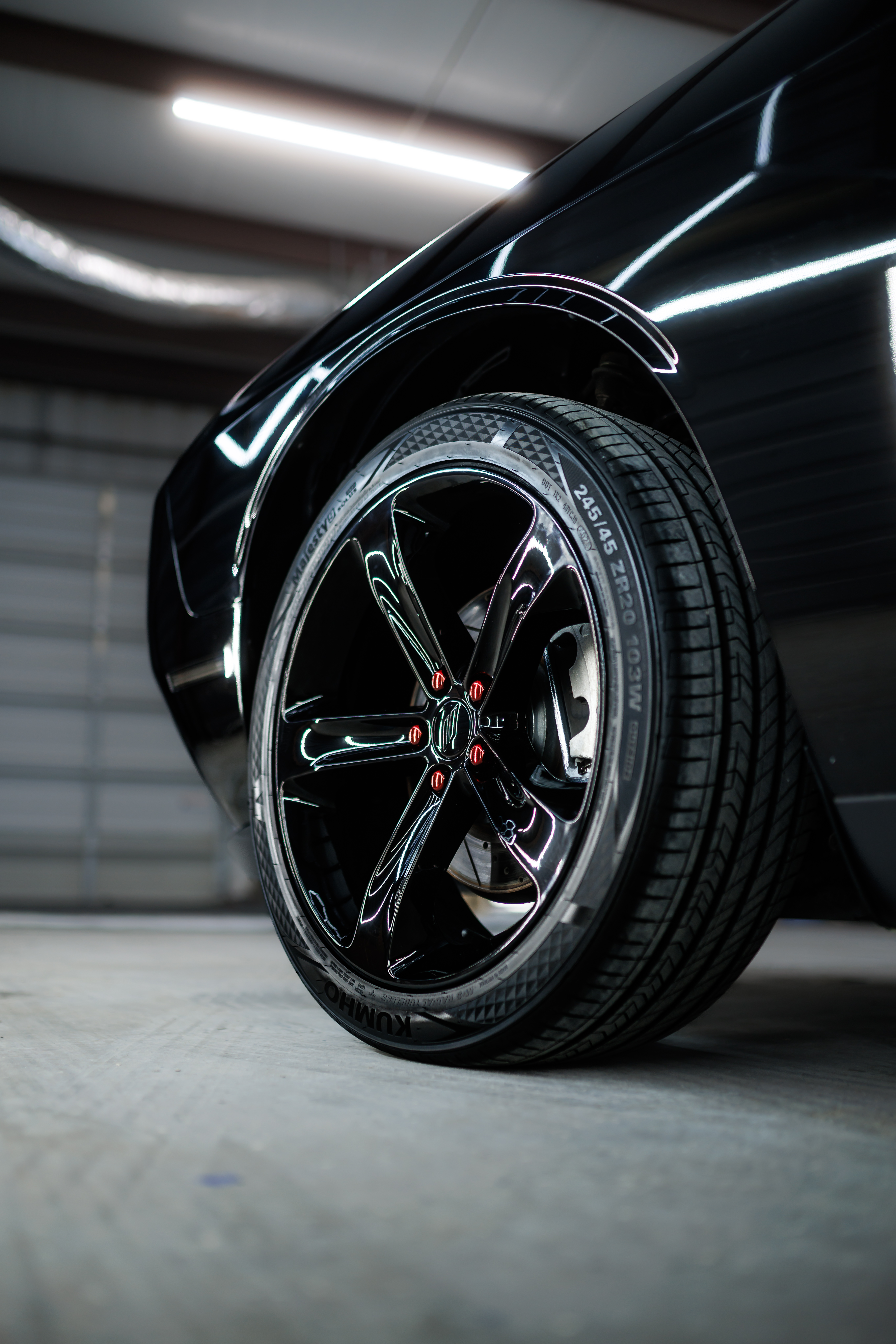
You clean the tires, they look black and new, and within a week or two there is a brown haze back over them. Almost everyone assumes it is road dirt. It is not — it is coming from inside the tire, which is why scrubbing harder never fixes it for long.
Blooming: The Tire Is Defending Itself
Tire rubber contains antiozonants — compounds added to protect against ozone and UV cracking. They work by slowly migrating to the surface, where they oxidize and turn brown. That brown film is a sign the tire's protection system is functioning. It is not neglect, and it will keep happening for the life of the tire.
Why It’s Faster in West Texas
Migration accelerates with heat and UV exposure, and Lubbock supplies both in quantity year-round. A vehicle parked outside here will bloom noticeably faster than the same vehicle in a milder, shadier climate. Combine that with caliche dust settling into the film and it looks worse sooner.
Why Most Dressings Make It Worse
Cheap silicone dressings sit on top of the bloom rather than removing it, so you are sealing brown residue under a shine. Worse, many solvent-based products actually draw more antiozonant to the surface, which is why some tires look great for three days and then brown faster than before they were dressed.
The Sling Problem
Over-applied dressing flings off the tire at speed and lands on your rocker panels and lower doors — then bakes on in the sun. That is a genuinely annoying thing to remove and a common reason lower panels look streaked. Dressing should be worked in and the excess wiped off, not painted on thick.
What Actually Works
Strip first, then dress. A dedicated tire cleaner with agitation removes the existing bloom and any old dressing layers, which is the step nearly everyone skips. Then a water-based dressing applied thinly and leveled will last longer, sling less, and not accelerate the next bloom. Expect to repeat it — you are managing an ongoing process, not fixing a one-time problem.
If your tires brown faster after dressing them, the product is the problem. Solvent-based dressings can pull more antiozonant to the surface, accelerating the exact thing you were trying to hide.
Tires get stripped and properly dressed as part of every detail we do. If yours have layers of old dressing built up, that comes off first — otherwise anything applied on top is just sealing in the brown.
Related Reading
Ready to Protect Your Vehicle?
We'll inspect your paint and tell you exactly what it needs — we will share current appointment availability.
Keep Your Coating Performing.
Founding memberships are $99 for Exterior Detail, $149 for Full Detail, or $249 for Premium Detail. Each option has one set rate for qualifying cars, trucks, and SUVs.