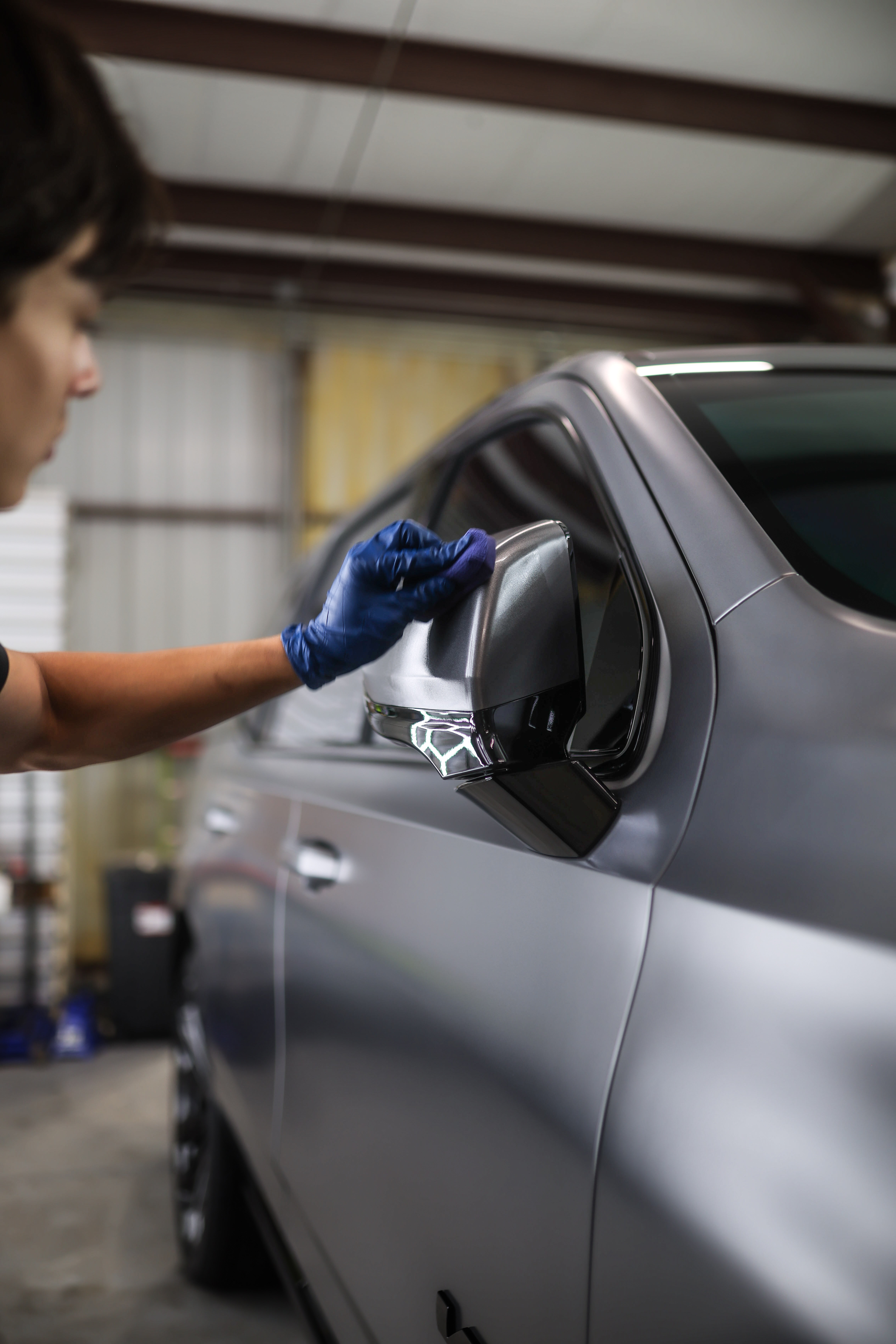
Paint correction is controlled abrasive polishing intended to improve suitable defects in a paint surface. It removes some material, so inspection, panel history, a test area, and a realistic stopping point matter. Deep damage, failing paint, rust, chips, dents, or defects beneath the workable surface may need touch-up, refinishing, or body repair instead.
Paint correction is different from filling or temporarily masking a defect. A pad, polishing liquid, technique, and working time are tested against the actual finish to improve defects that can be addressed safely. The useful goal is not automatically total removal. Preserving paint may mean leaving deeper defects visible.
Many modern factory finishes use a color layer beneath a clear layer, but vehicles may also have single-stage paint, matte paint, repaired panels, repainted panels, wraps, or other finishes. Total thickness varies and a gauge reading does not isolate every layer by itself.
Correction may use a dual-action, rotary, or other polishing process with an appropriate pad and liquid. Abrasion changes the surface to improve the way light reflects. Some defects may be reduced substantially, some may remain, and some should not be chased because the required material removal would be unsafe or unjustified.
Outdoor storage, dust, road use, washing technique, irrigation, weather events, and how quickly contamination is removed can all influence paint condition:
Correction improves existing suitable defects; it does not prevent new ones. Optional wax, sealant, or coating may make maintenance easier, but none eliminates careful washing, chips, scratches, spotting, or future wear.
We offer four levels of paint correction, matched to the actual condition of your paint:
| Service | Sedan / Car | Mid-Size Truck / SUV | Full-Size Truck / Large SUV |
|---|---|---|---|
| Paint Enhancement | $250 | $300 | $350 |
| 1-Step Paint Correction | $350 | $450 | $550 |
| 2-Step Paint Correction | $650 | $750 | $850 |
| 3-Step Paint Correction | $850 | $950 | $1,100 |
Correction and ceramic coating are separate decisions. A transparent coating does not hide defects, but correction is recommended only when the inspection, test area, paint condition, and owner's goal justify it. The exact installed protection and written terms should be compared independently.
We offer inspection-led paint enhancement and correction in Lubbock. Send photos for preliminary guidance; the safe scope and expected improvement are confirmed from the vehicle and a test area.
Book Your Detail →Paint correction may improve suitable swirl marks, shallow scratches, oxidation haze, some water-spot etching, and buffer trails within healthy clear coat. A fingernail check can provide context but does not prove depth or safe removability; inspection, paint history, and a test area determine whether polishing, touch-up, or body repair is appropriate.
It can be when the paint is inspected, the intended improvement is realistic, and enough healthy material remains. Total paint-thickness readings do not isolate the clear-coat layer by themselves, so we also consider panel history, visual inspection, and test areas before choosing the least aggressive useful process.
New swirl marks can develop from brush washes, dirty wash media, dry wiping, or other abrasive contact. Correction improves existing suitable defects but does not prevent new ones; careful washing and compatible protection can help preserve the finish.
Published sedan prices are $250 for enhancement, $350 for single-step, $650 for two-step, and $850 for three-step correction; the listed truck price reaches $1,100 for three-step. Vehicle condition, prior repairs, size, and the safe scope confirmed after inspection can change the quote.