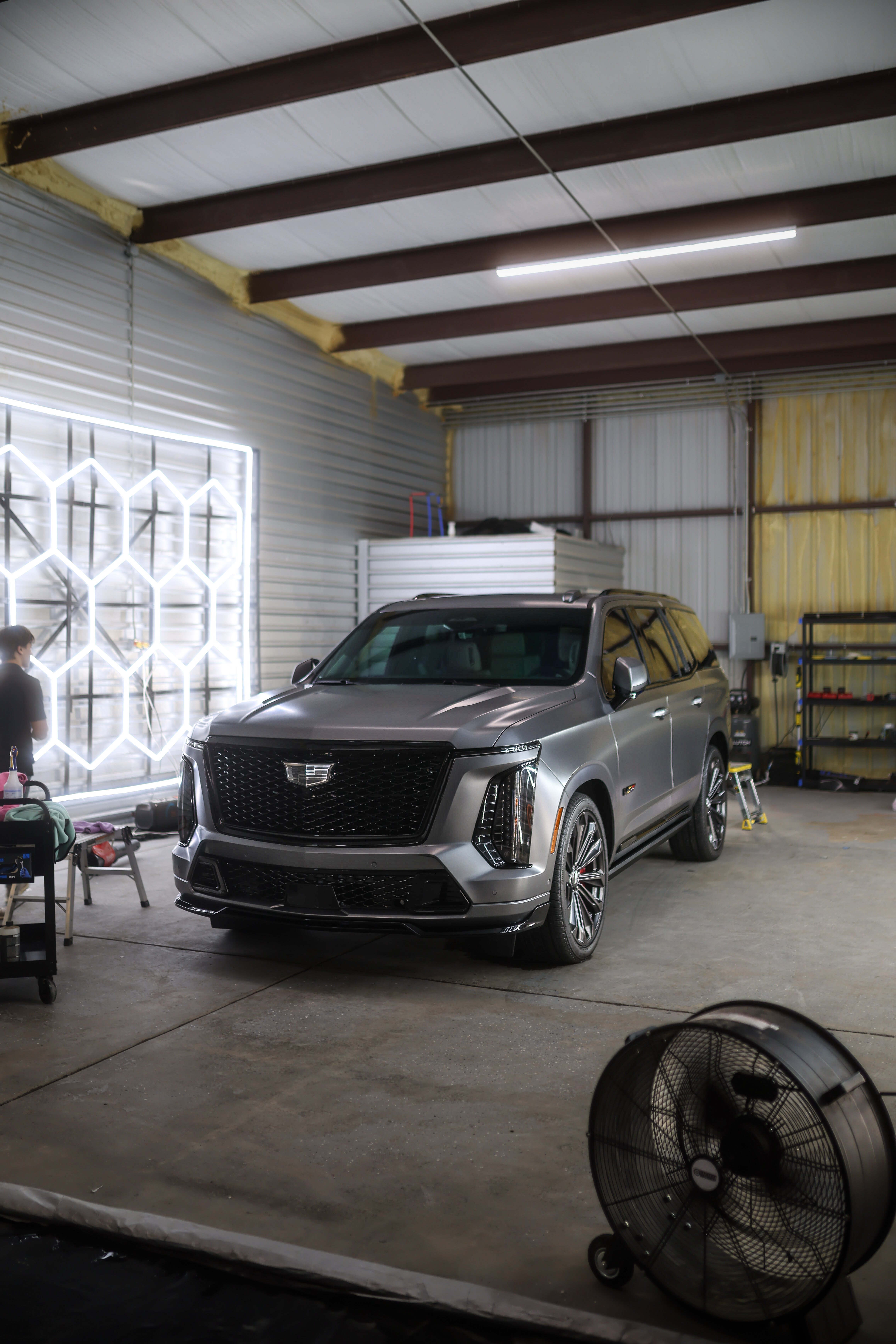
Does Window Tint Go on the Inside or Outside?
Quick answer: Automotive window tint is normally installed on the inside surface of the glass. If you see an installer laying film on the outside, that is usually the measuring and heat-shaping stage. The shaped film is transferred inside for the final bond.
This question comes up because part of a professional installation can happen on both sides of the glass. The location where film is trimmed or shaped is not necessarily the location where it stays. Understanding the difference also tells you which surface needs tint-safe cleaning afterward.
Where Automotive Tint Actually Stays
The finished film normally bonds to the interior-facing surface of the automotive glass. LLumar's automotive FAQ gives the same direct answer: auto window tint is typically applied to interior glass surfaces. Interior placement keeps the film away from road debris, exterior wipers, weather, and routine washing.
The adhesive side faces the glass. The opposite surface faces the cabin and carries the film's protective scratch-resistant layer. That cabin-facing surface is the one you touch when cleaning the inside of a tinted window.
Why an Installer May Work on the Outside First
The exterior glass is a full-size template with the exact curve and outline needed for that vehicle. During pattern preparation, an installer can place film against the outside while its release liner is still protecting the adhesive. The film can then be trimmed and, when necessary, heat-shaped to follow curved glass.
Official 3M automotive film installation instructions describe cleaning the exterior, using it while the pattern is prepared, then placing the film on the inside and squeegeeing out the installation solution. In other words: shaping outside does not mean the film is being left outside.
Can Standard Automotive Tint Stay Outside Permanently?
Not as the normal use of standard automotive tint. Exterior patterning and heat-shaping are temporary installation steps; the prepared film is transferred to the interior glass for its finished bond. Wind, weather, wipers, road debris, routine washing, and exposed edges make the outside a different environment.
Do not assume an interior automotive product can be reversed or left outside because it fit during shaping. Any permanent exterior application would need a product specifically approved by its manufacturer for that glass, exposure, and use. Delicate Details' published carbon and ceramic automotive packages describe interior-applied film.
A Simple Installation Sequence
- Inspect the glass. Existing film, adhesive, chips, defroster lines, seals, and contamination can change the plan.
- Clean both working surfaces. Exterior dust can contaminate a pattern; the interior glass must be prepared for the adhesive.
- Measure and shape the film. The outside may be used as the vehicle-specific template, especially on curved rear glass.
- Prepare the interior glass again. Small debris trapped at this stage can remain visible.
- Transfer and install the film inside. The liner is removed, the adhesive is positioned against the wet interior glass, and solution is squeegeed toward the edges.
- Inspect and begin curing. Some temporary haze or moisture can be normal; the film-specific pickup instructions control roll-down and cleaning time.
What About Roll-Down Door Windows?
Door-window film is still installed inside. The upper edge must be finished carefully because it travels past the window seal each time the glass moves. That is why lowering a newly tinted window too soon can catch an edge before the adhesive has settled.
Follow the pickup instruction for the actual film rather than a universal number from social media. Our window tint aftercare guide compares current manufacturer guidance and explains what to do if a window was moved early.
What About Rear Glass and Defroster Lines?
Rear-window film is installed on the cabin side, where the defroster grid may also be located. Cleaning and old-film removal around those lines require care. Do not use a razor blade or abrasive pad on tinted rear glass. If old film is bubbled or failing, professional removal may be safer than pulling it dry; see the tint removal guide.
On compatible rear glass, the film is fitted across the interior surface that carries the grid rather than cut into a separate strip between every line. Madico's manufacturer guidance says its compatible film can be applied over rear defrosters, while its automotive removal instructions warn that scraping a defroster can damage it.
Existing defroster damage should be documented first. A careful installation is not a defroster repair, and future cleaning or film removal must protect the grid. If a line already fails to heat, record that before the film is installed.
Some vehicles also place radio or other antenna elements in or near the rear glass. Identify those systems before selecting a film if reception is a concern; our tint and electronic-signal guide explains why the exact product construction and antenna location matter.
Can You Wash the Car After Tinting?
A normal exterior wash does not scrub the film because the film is inside. Still, avoid treating that as permission to ignore the complete pickup instructions: freshly tinted roll-down windows should remain closed for the stated period, and high-pressure water should not be aimed into damaged seals or open window gaps.
When cleaning the interior glass after the specified waiting period, use the cleaner approved for the installed product and a soft, clean microfiber towel. Do not scrape the film or use abrasive tools.
Factory Privacy Glass Is Different
Dark factory rear glass on many trucks and SUVs is not a sheet of aftermarket tint stuck to the outside. Its color is part of the glass. Applied film can still be added to the interior when a compatible product and additional solar performance are wanted. Our factory privacy glass versus tint guide explains why matching the front doors visually is different from adding heat-focused film to the rear.
How to Check a Used Vehicle
Look closely at the interior edge near the top of a roll-down window. Applied film may have a fine edge set slightly below the glass edge. Do not pick at it. Factory-darkened glass generally will not show a removable film edge. If the material is purple, peeling, hazy, or permanently bubbled, have it inspected before choosing a replacement.
Frequently Asked Questions
Does automotive window tint go on the inside or outside?
Automotive window tint is normally applied to the interior surface of the vehicle glass. An installer may use the exterior as a clean shaping surface before transferring the prepared film inside.
Why do installers put tint on the outside first?
The outside of the glass can be used to measure, cut, and heat-shape the film to the window's curvature. The release liner remains in place during shaping; the finished film is then installed on the interior glass.
Can standard automotive window tint stay on the outside permanently?
Standard automotive tint is normally designed for the interior glass surface. Exterior patterning or heat-shaping is temporary. Do not assume an interior product can be left outside; an exterior application would need a product specifically approved for that glass, exposure, and use.
Can rear window tint go over defroster lines?
It can on compatible rear glass. The defroster grid shares the interior surface with the film, so existing line damage, preparation, installation, cleaning, and future removal all require care. Tint does not repair a damaged defroster.
Will window tint damage rear defroster lines?
Compatible film can be installed over an intact rear defroster grid, but the grid should be inspected first. The greater risk often comes from damaged lines, scraping, aggressive cleaning, or later film removal. Do not use a razor blade over defroster lines.
Can I wash the outside of my car after window tint?
An exterior wash does not directly touch film installed inside the glass, but follow the installer's complete pickup instructions and avoid operating freshly tinted roll-down windows until the stated time.
Which side of tinted glass should I clean carefully?
Treat the interior surface as the film side. After the film-specific waiting period, use an approved cleaner and a soft, clean microfiber towel without abrasive tools.
Is factory privacy glass the same as inside-applied tint film?
No. Factory privacy glass is darkened as part of the glass, while aftermarket automotive tint is a film normally bonded to the interior surface.
Related Window Tint Guides
Get a Window Tint Quote in Lubbock
Choose carbon or ceramic, tell us the vehicle and windows you want, and get a clear installed quote.
Request a Tint Quote →