Quick answer: Identify which surface holds the mark before choosing a product. Exterior bare glass, coated glass, the interior film-facing surface of tinted glass, laminate, frit, sensors, and damaged glass can require different care. Use the installed film or coating instructions when they apply, and do not treat a scratch, chip, etched spot, failed film, or delamination as ordinary residue.
West Texas wind, fine dust, dried sprinkler water, road film, and interior residue can all make automotive glass look hazy. The right cleaning method depends on whether the contamination is on bare exterior glass, a coated windshield, or the film-facing interior surface of a tinted window.
Lubbock wind can deposit fine dust on exterior glass. Loose material should be rinsed away before contact cleaning so it is not dragged across the surface. Residue that remains after a normal wash may need a glass-safe cleaner and fresh microfiber rather than harder scrubbing.
Sprinkler or wash water can leave visible mineral residue after droplets dry. First determine whether the marks are surface deposits or actual glass damage. A compatible mineral-deposit remover may help on suitable exterior glass, but the product should be tested and kept away from interior tint film unless its manufacturer specifically approves that use. Etched or damaged glass may not be restored by cleaning alone.
Interior materials, protectant overspray, smoke, fingerprints, and normal cabin residue can contribute to a film on the inside of the windshield. It often becomes obvious in low-angle sunlight. Use a clean towel reserved for glass so dressing, wax, or exterior soil is not transferred back onto the surface.
Household glass cleaners are not all designed for automotive film. For existing or newly installed window tint, follow the care instructions for the exact film and use a soft, clean microfiber. For example, 3M's automotive film care card calls for a waiting period after installation, a soft cloth or sponge, and non-abrasive pH-neutral cleaner for its product. That guidance is product-specific, so it should not be treated as a universal rule for every film.
The finished automotive film normally sits on the interior surface, even when an installer uses the exterior glass to shape the pattern. Our inside-versus-outside tint guide explains which surface you are cleaning.
At Delicate Details, car window cleaning in Lubbock TX begins with the glass, film, coating, damage, contamination, and prior products. A compatible sequence may include:
The technique matters as much as the product. Use separate clean towels for the interior and exterior so residue is not moved from one side to the other. Wiping the outside in one direction and the inside in a different direction also makes it easier to identify which surface still has a streak.
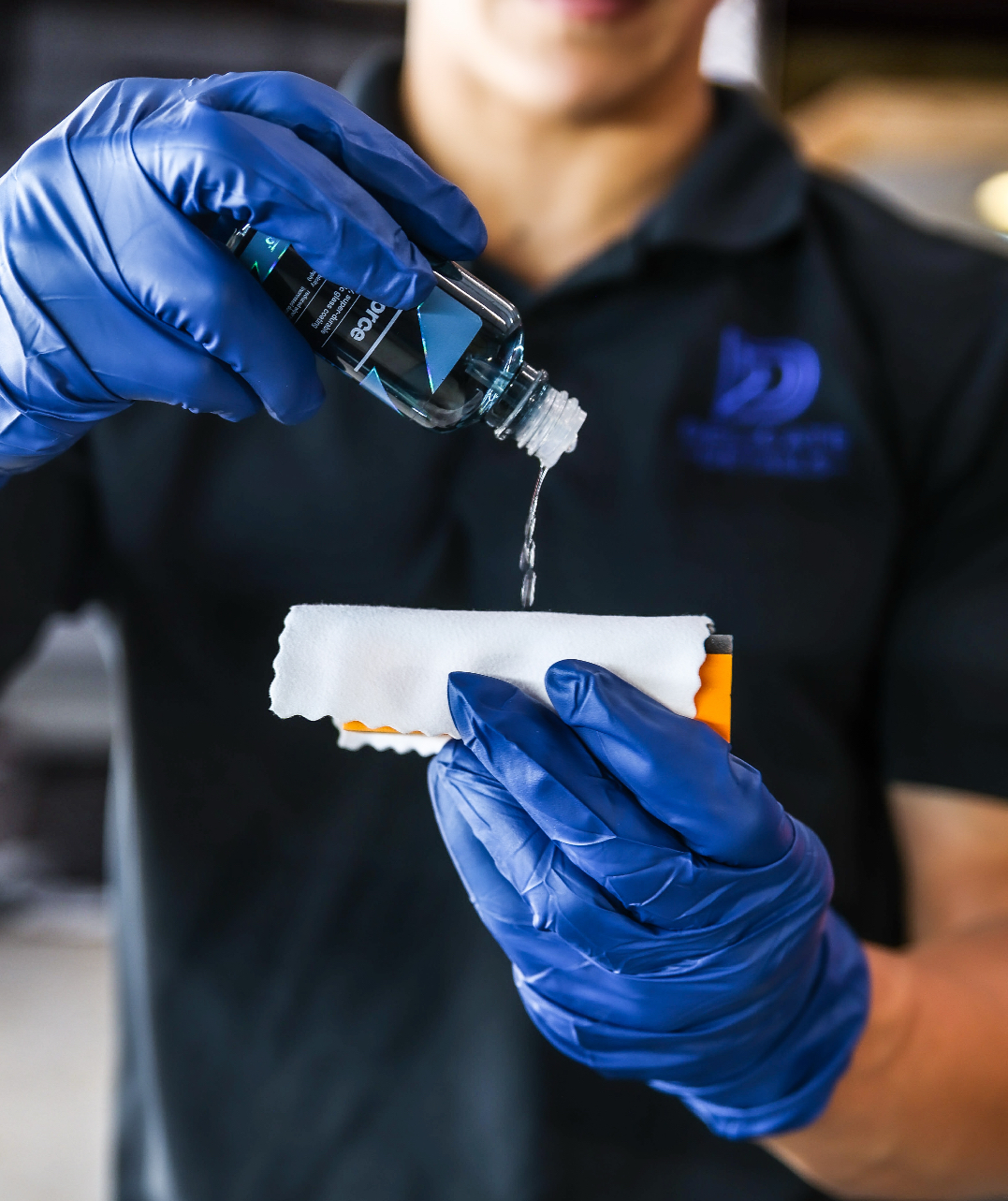
For drivers who want more than clean glass, windshield ceramic coating is an available option in selected ceramic-coating packages. A compatible coating can add water behavior and may make routine cleaning easier, but it does not replace working wipers, safe driving, or regular glass care. See our ceramic coating page for current package details.
| Package | Published Interior Scope | Sedan | SUV | Truck |
|---|---|---|---|---|
| Essential Detail | Interior vacuum and compatible surface wipe-down for well-kept vehicles | $195 | $220 | $240 |
| Full Reset & Protect | Deeper interior cleaning and compatible surface treatments within the written scope | $350 | $375 | $400 |
| Premium Detail | Full Reset scope plus suitable exterior machine correction | $695 | $795 | $895 |
Confirm the requested interior and exterior glass with the written package scope before service. Mineral-deposit treatment, coating work, tint correction or removal, adhesive cleanup, scratch or chip repair, and replacement are not implied by the package name. If a mark remains after compatible cleaning, it may need separate treatment or evaluation by an automotive-glass or film specialist. Call (806) 855-8042 with the vehicle and photos.
Send the vehicle, affected glass, inside-or-outside location, tint or coating details, prior products, and clear photos so we can explain compatible care and scope limits.
Book Your Detail →Use the cleaner and waiting period approved for the installed film. A soft, clean microfiber and a non-abrasive, film-compatible cleaner are safer defaults than harsh chemistry or abrasive tools.
A clean, soft microfiber towel is the safer choice. Dirty or abrasive towels and scrubbing tools can mark the film-facing interior surface.
First determine whether the deposit is on the exterior glass or the interior film surface. Do not use a razor, abrasive pad, or strong mineral remover on the film. Persistent spots should be inspected before treatment.
Follow the pickup instructions for the exact film because manufacturer guidance varies. Do not let a generic online waiting period override the installed product's care instructions.