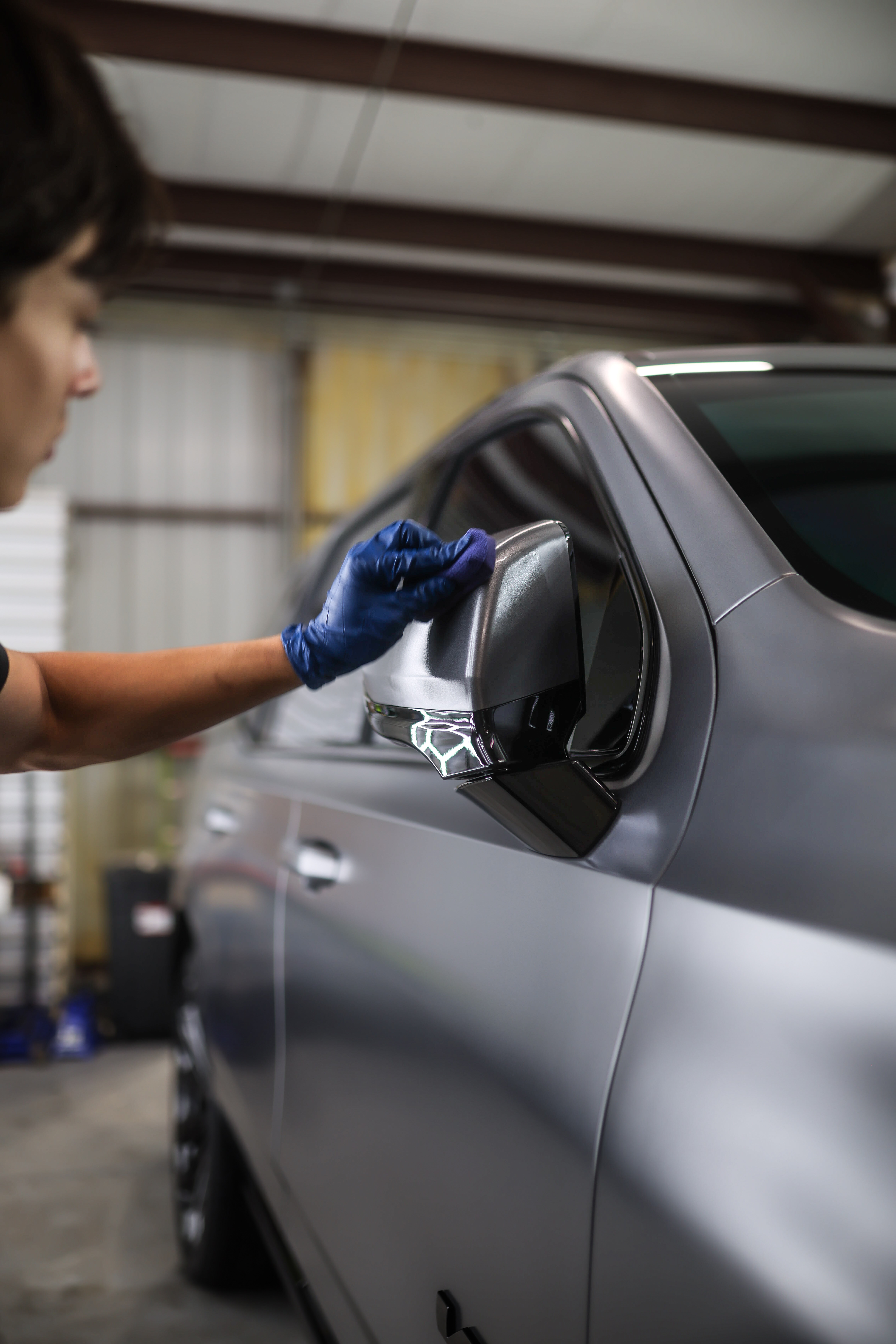
Oxidation is UV chemically breaking down the polymer chains in your clear coat, not dirt sitting on top of it. Correction almost always needs two-step or three-step, because the heavy compound stage is what removes degraded material to expose fresh clear coat underneath. White goes chalky and yellowed; red suffers worst, since its organic pigments break down fastest.
Drive through any neighborhood in Lubbock and you'll spot them — vehicles with paint that looks chalky, faded, and dull rather than deep and glossy. That's oxidation. Lubbock TX is one of the harshest environments for car paint in the entire country, and oxidation is the most visible result. With over 263 sunny days per year and a UV index that regularly hits 8–10 during summer months, West Texas UV radiation breaks down clear coat polymers faster than almost any other climate in the US. The good news: most oxidation is correctable through professional paint correction. The bad news: the longer you wait, the less correctable it becomes.
Oxidation is the degradation of the clear coat layer caused by prolonged UV radiation exposure. UV radiation doesn't just fade color — it chemically breaks down the polymer chains in the clear coat itself, causing the molecular structure to deteriorate. When this happens, the clear coat loses its ability to reflect light cleanly and instead scatters it, producing that characteristic chalky, hazy, matte appearance instead of a deep gloss.
In early-stage oxidation, the clear coat is still mostly intact but degraded. In late-stage oxidation, the clear coat has broken down significantly — it may feel rough, look chalky, and in severe cases the clear coat is peeling or flaking entirely. The stage of oxidation determines what's recoverable through machine correction versus what requires body shop work.
Lubbock's geography and climate stack several oxidation-accelerating factors on top of each other:
Oxidation progresses through stages, and the stage determines what treatment is appropriate:
Paint looks slightly hazy or less glossy than it should. The dulling is visible but not dramatic. Under direct light the surface looks "milky" rather than crisp. This stage is fully correctable through Single-Step or Two-Step paint correction. Most vehicles in this stage respond extremely well and come back to near-new gloss.
Paint looks noticeably chalky, particularly on horizontal surfaces (hood, roof, trunk). Color appears faded and washed out, especially on white and red vehicles. The surface feels slightly rough. This stage typically requires Two-Step or Three-Step correction. Results are good but may not reach 100% of original gloss — achievable improvement is significant and the paint will look dramatically better.
Clear coat is failing — visibly peeling, flaking, or separating from the base coat in areas. Correction can clean up the remaining intact clear coat areas but cannot restore areas where the clear coat has fully failed. Panels with failed clear coat require body shop respray. We will always be honest about which panels fall into this category before beginning work.
White vehicles show oxidation as a general chalky haziness and loss of brightness — the paint goes from crisp white to an off-white or yellowed appearance. Red vehicles are particularly susceptible because the organic pigments in red base coat fade rapidly under UV exposure, often showing color fading in the base coat that correction alone cannot fully address. Dark colors show oxidation as a hazy, milky surface gloss loss — less color fading but the loss of depth and reflectivity is obvious.
| Service | Sedan | SUV | Truck |
|---|---|---|---|
| Enhancement (1-Step Light Polish) | $250 | $300 | $350 |
| Single-Step Correction | $350 | $400 | $450 |
| Two-Step Correction | $650 | $750 | $850 |
| Three-Step Correction | $850 | $950 | $1,100 |
Oxidation correction almost always requires Two-Step or Three-Step — the heavy compound stage is what actually removes the degraded clear coat material to reveal fresh clear coat underneath. After correction, ceramic coating applied immediately blocks UV radiation and prevents oxidation from reforming, making it the most important follow-up investment for any Lubbock vehicle sitting in West Texas sun.
Delicate Details removes oxidation from cars, trucks, and SUVs across Lubbock TX. We'll inspect your paint, tell you honestly what's recoverable, and restore it with professional multi-stage correction.
Book a Paint Correction →Swirl marks, light scratches, oxidation, water spot etching, and buffer trails — anything sitting within the clear coat. Scratches deep enough to catch a fingernail have usually gone through the clear and need paint, not polishing.
When thickness is measured first, yes. Clear coat is finite and varies across panels, especially on a repainted car. We measure before correcting and use the least aggressive approach that removes the defect.
Only from how the car gets washed. Correction removes them; automatic brush washes and dirty wash media put them straight back. Protection plus proper wash technique is what makes correction last.
Enhancement polish $250, single-step $350, two-step $650, three-step $850 on a sedan; trucks run up to $1,100 for a three-step. We measure paint thickness before any correction.