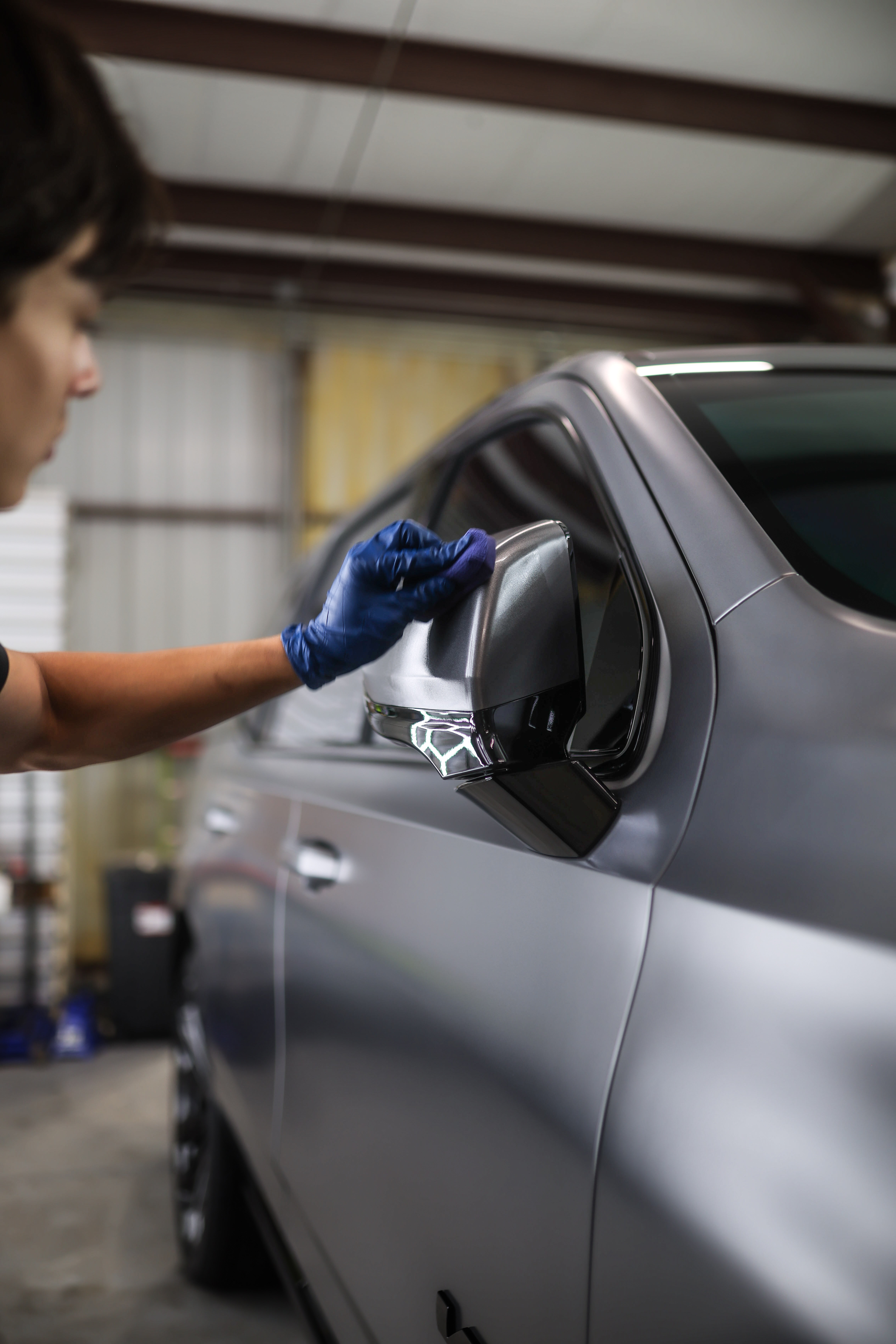
Start with a clean inspection, paint-history questions, available thickness readings, and a test spot. Polishing can improve suitable oxidation, haze, and clear-coat defects when enough sound material remains. Peeling, lifting, delamination, exposed base coat, or failed clear coat needs body-shop evaluation rather than increasingly aggressive polishing.
Vehicles parked outdoors in Lubbock receive repeated sun and heat exposure. Over time, paint condition can change based on the factory finish, age, storage, maintenance, prior repairs, and other environmental factors. Protection and careful washing may help preserve appearance, but chalking, peeling, or delamination should be inspected before polishing or coating.
Automotive paint systems and repair histories vary. Many modern finishes use primer, color coat, and clear coat, while older paint, repainted panels, matte finishes, and prior repairs may require a different diagnosis. The U.S. Environmental Protection Agency notes that UVB can adversely affect synthetic polymers and that protective additives are used to slow degradation. That general material science does not create a vehicle-specific timetable.
Factory paint, single-stage paint, repainted panels, touch-up, previous sanding, previous correction, matte finishes, and unknown body work do not respond identically. Vehicle age alone is not enough to select a polishing stage.
Outdoor storage, mileage, road and jobsite exposure, wash technique, mineral deposits, and how quickly contamination is removed all influence condition. The National Weather Service's Lubbock climate normals provide local temperature, precipitation, and elevation context, but they do not predict an individual vehicle's paint life.
Correction removes a small amount of paint to level suitable defects, so the decision must account for the panel, readings that are available, defect depth, edges, body lines, and prior work. Some defects should be improved rather than chased completely.
After cleaning and condition-matched decontamination, a test spot may show that a 1-step polish can improve gloss and suitable light defects. The result and safe scope depend on the actual paint, not the label “UV damage.”
A 2-step or 3-step process may improve suitable defects when inspection supports additional polishing. More stages do not guarantee a fixed percentage of correction, and deep scratches, etching, thin areas, edges, or prior repairs may remain.
Peeling, lifting, delamination, or missing clear coat cannot be restored by polishing or coating. Those panels need body-shop evaluation. We separate correctable surface defects from paint failure before recommending paid correction work.
A ceramic coating is a protective product applied after suitable preparation. Product-specific features and written terms matter. A coating can add gloss, slickness, chemical resistance, and hydrophobic behavior, but it does not make paint immune to weathering, mineral spots, abrasion, scratches, chips, or failed clear coat.
Correction is not automatically required on every panel before coating. Preparation is matched to condition, and separately priced polishing is discussed before approval. Coating does not repair existing failure or permanently seal a defect from changing.
| Published correction service | Starting price | Condition limit |
|---|---|---|
| 1-Step Paint Correction | $350 | Suitable light clear-coat defects |
| 2-Step Paint Correction | $650 | Suitable moderate defects after inspection |
| 3-Step Paint Correction | $850 | Severe but correctable defects after inspection |
Published prices start at the amounts shown. The safe scope depends on paint condition and available clear-coat depth; failing paint may be declined and referred for body repair rather than assigned a more aggressive polishing stage.
We separate removable contamination, correctable clear-coat defects, and paint failure before recommending correction, coating, or body-shop evaluation.
Book a Paint Correction →Machine polishing can improve suitable defects within remaining clear coat after inspection and a test spot. It cannot replace missing, peeling, delaminated, or failed clear coat.
Haze or reduced gloss can have several causes, while peeling, lifting, flaking, or exposed color coat points toward failure. A clean inspection and test spot help determine whether detailing is appropriate; body-shop diagnosis may be needed.
No. A coating does not restore missing clear coat or repair failed paint. The surface must first be inspected and prepared, and defects are discussed separately before any coating is approved.
Published starting prices are $350 for 1-Step Paint Correction, $650 for 2-Step Paint Correction, and $850 for 3-Step Paint Correction. The appropriate scope depends on paint condition and safe clear-coat depth.