Ceramic Coating vs Wax:
Why Serious Car Owners Don't Wax Anymore
Wax, sealants, and professional coatings can all add gloss and make maintenance easier, but they differ in preparation, durability, price, and care requirements. Product labels alone do not tell the whole story. Choose based on how long you want to keep the vehicle, where it is stored, and how you plan to maintain it.
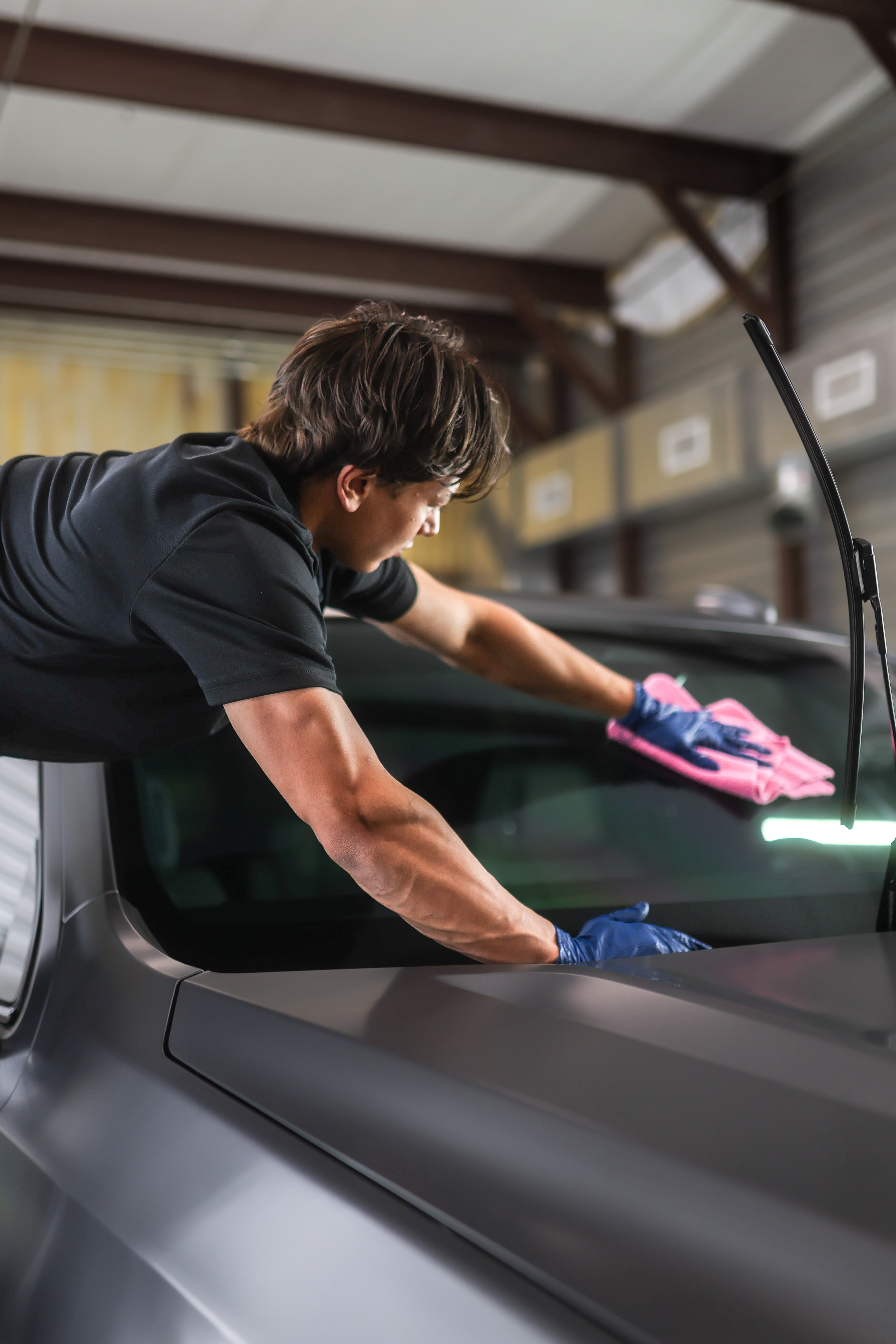
Wax adds gloss, provides short-term sacrificial protection, and makes paint feel smooth. Ceramic coating is a longer-term option with different preparation, cost, and maintenance needs. The right choice depends on how long you plan to keep the vehicle, how it is stored, and how much upkeep you want—not on a claim that either option is permanent.
Here's the honest comparison.
How They're Different at the Chemical Level
Wax sits on top of your paint. It's a sacrificial layer — it takes the damage so your clear coat doesn't have to, and then you wash it off and reapply. Carnauba wax, the good stuff, is made from palm leaves and provides a warm, deep gloss. Synthetic waxes and paint sealants last longer than carnauba but work on the same principle: a coating that sits on the surface and eventually wears away.
Ceramic coating is chemically different. It's a liquid polymer — primarily silicon dioxide (SiO2) — that bonds covalently to your clear coat. That's a permanent chemical bond, not a layer sitting on top. Once it cures, it becomes part of the surface. It doesn't wash off, doesn't degrade in UV the way wax does, and doesn't need to be reapplied every few months.
Wax = sits on top of paint, wears off in weeks.
Ceramic coating = bonds to paint at the molecular level, lasts years.
That's not a marketing claim — it's chemistry. The practical difference in performance and longevity follows directly from it.
Head to Head
Wax
- Lasts 4–8 weeks, maybe 3–4 months with a quality synthetic sealant
- Needs to be reapplied 4–6 times per year to maintain protection
- Degrades quickly in UV, heat, and rain
- Hydrophobic effect is mild — water beads but doesn't sheet off
- Provides minimal scratch resistance
- Does not protect against chemical etching
- Cost: $30–$100 for product, plus time every few months
Ceramic Coating
- Lasts 1–10 years depending on the tier applied
- No reapplication — maintenance washes only
- UV blockers built into the formula — doesn't degrade in sun
- Strong hydrophobic effect — water and dirt sheet off instead of sitting
- 9H hardness rating adds real scratch resistance
- Resistant to bird droppings, tree sap, and chemical etching
- Cost: $500–$2,000+ professionally applied, lasts years
The UV Argument — Especially in West Texas
Outdoor vehicles in Lubbock face repeated sun, heat, dust, insects, and mineral exposure. Paint age, factory finish, storage, and maintenance all affect how quickly appearance changes. That is one reason to compare ceramic coating options with simpler wax or sealant protection.
Wax has some UV protection, but it only lasts as long as the wax itself does — which in a West Texas summer is maybe 6 weeks before it's effectively gone. Ceramic coating has UV inhibitors that are part of the permanent bond. They don't wash away. A properly applied ceramic coating is actively protecting your clear coat from UV damage every day for years without you doing anything except washing the car.
If you've ever wondered why a 10-year-old truck that was coated looks dramatically better than an identical truck that was only waxed, this is why.
The Maintenance Difference
With wax, maintenance is the product. You're budgeting time and money every few months, every year, indefinitely. A professional wax application runs $150–$250 depending on the shop. Do that four times a year for five years and you've spent more than a quality ceramic coating costs — while getting a fraction of the protection.
With ceramic coating, maintenance is just washing. Regular hand washes or touchless automatic washes keep the coating clean and performing at full capacity. The product itself doesn't need refreshing. Some shops offer annual maintenance washes with a light sealant top-up to extend longevity further, but it's optional — not required.
When Wax Still Makes Sense
Wax isn't the wrong answer for every situation. If you have a car you're about to sell, wax it — you don't need years of protection. If you're on a tight budget and can't afford a professional coating right now, waxing is better than nothing. If you enjoy the ritual of waxing your car on a Saturday morning, that's a legitimate reason too.
But if you own a truck, SUV, or daily driver you plan to keep for several years, and you actually care about the condition of the paint — wax is the more expensive, more labor-intensive, worse-performing option over any meaningful time horizon.
What About "Ceramic Spray Waxes"?
You've probably seen them at auto parts stores — spray bottles that say "ceramic" on the label for $20–$40. These aren't ceramic coatings. They're traditional spray sealants with a small amount of SiO2 added for marketing. They provide maybe 30–90 days of protection and don't bond to the paint the same way. They're fine as a quick maintenance product between washes, but they're not a substitute for a professionally applied coating.
The difference between a spray ceramic product and a professional coating is like the difference between sunscreen and a UV-blocking film applied to your windows. One sits on top and needs constant reapplication. The other is part of the surface.
The Bottom Line
Wax is fine. Ceramic coating is better — by a meaningful margin — if you care about long-term paint protection and don't want to think about it every few months. In West Texas specifically, where UV load is high and alkaline dust is a constant, the case for ceramic gets even stronger.
The upfront cost is higher. The total cost over 5 years is usually lower. The protection level is dramatically better. For anyone who takes their vehicle seriously, it's not much of a competition.
Related Reading
Ready to Stop Waxing?
Get a quote on professional ceramic coating for your vehicle. We'll inspect the paint and tell you exactly what it needs.
Keep Your Coating Performing.
Founding memberships are $99 for Exterior Detail, $149 for Full Detail, or $249 for Premium Detail. Each option has one set rate for qualifying cars, trucks, and SUVs.