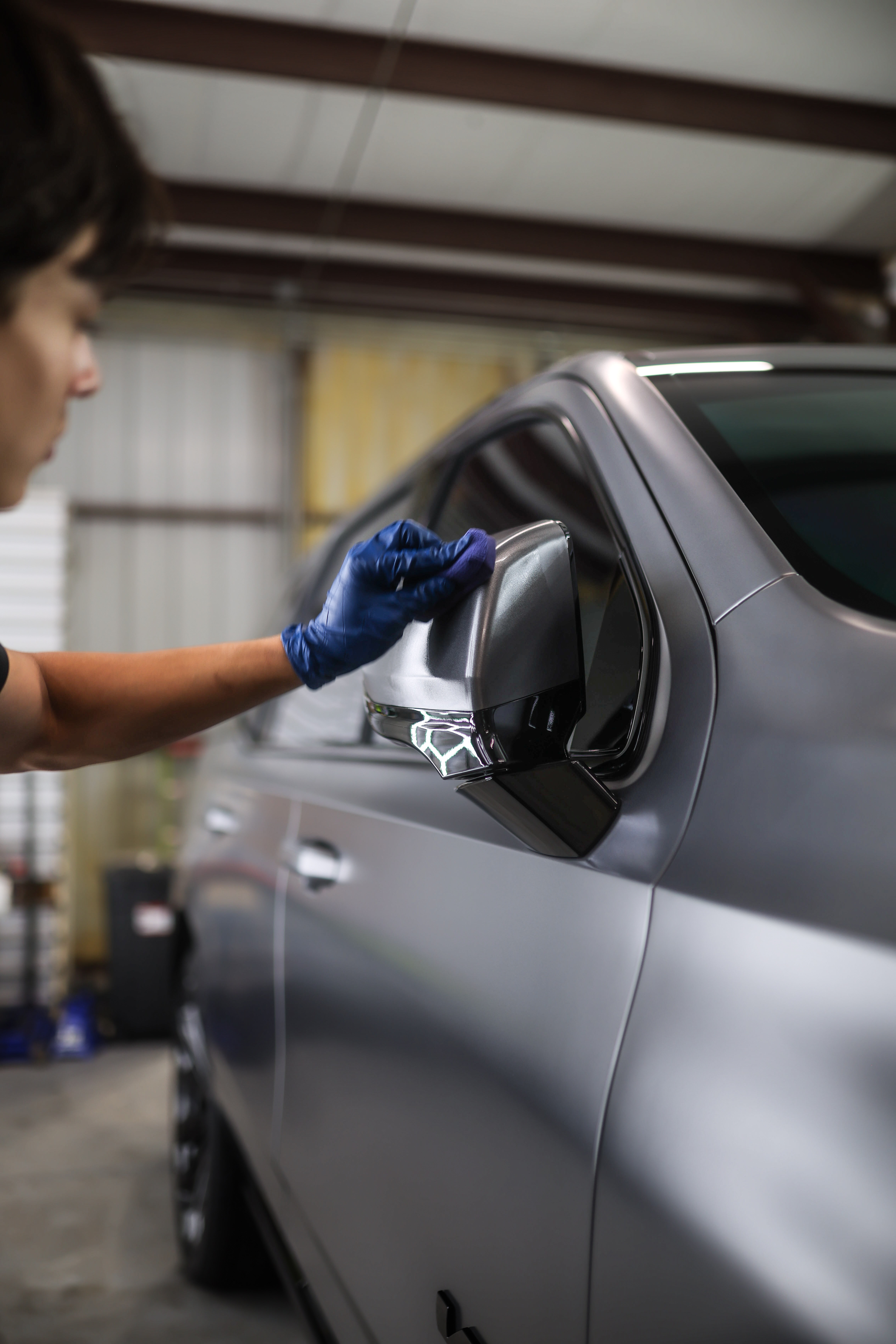
Black paint should be inspected under more than one useful lighting angle before correction is quoted. Defect depth, paint behavior, prior repairs, and a test area determine the safe improvement; no fixed removal percentage applies. A compatible coating can make maintenance easier afterward, but careful washing is still what limits new marring.
Black and other dark finishes can show swirl-like defects, haze, mineral residue, and towel marks clearly under direct or focused lighting. The safe correction process still depends on defect depth, paint behavior, previous repairs, and the result from a test area. This guide explains what black-car owners in Lubbock should check before approving the work.
Bright reflections from fine marring can contrast strongly with a dark finish, which makes some defects look obvious from certain angles. That does not mean every black vehicle needs multiple polishing stages or that the paint system behaves the same across makes, models, panels, and repairs.
Dust and mineral residue can add risk when they are moved across paint without enough lubrication or clean wash media. Inspection should separate removable residue, clear-coat marring, water-spot etching, deeper scratches, previous bodywork, and possible paint failure before any polishing stage is recommended.
No single light tells the whole story. Direct sun, diffuse light, focused inspection lighting, clean paint, close viewing, panel history, and test areas provide different information. We use more than one useful angle rather than treating a particular lamp as proof.
Focused light may reveal circular-looking marring, haze, buffer trails, sanding marks, or residue. The pattern alone does not establish the cause or whether it can be removed safely. Previous polishing and body repairs matter because total paint-thickness readings do not isolate the clear-coat layer by themselves.
When you bring a black vehicle to Delicate Details, we inspect the finish before recommending a stage and use a test area where appropriate. A transparent coating does not hide defects, but correction is separate and should match the finish goal rather than being automatically bundled.
Corrected black paint still needs a maintenance plan. Depending on budget and ownership goals, that may be wax, a synthetic sealant, or ceramic coating. Coating can provide a longer service tier and easier cleanup, but it does not prevent new wash marks, water spots, chips, or scratches. Safe washing matters whichever protection option you choose.
Wax, a synthetic sealant, or a compatible coating can be considered after correction. Compare the exact product, covered surfaces, service tier, written maintenance, storage, budget, and ownership plans. A coating may make some residue easier to remove, but it does not make black paint scratch-proof or maintenance-free.
Pricing follows vehicle size and the approved correction stage. Black paint does not automatically cost more or require more stages; the condition, paint behavior, previous work, and test area determine the labor.
| Service | Sedan | SUV | Truck |
|---|---|---|---|
| Enhancement (1-Step Light Polish) | $250 | $300 | $350 |
| Single-Step Correction | $350 | $400 | $450 |
| Two-Step Correction | $650 | $750 | $850 |
| Three-Step Correction | $850 | $950 | $1,100 |
Black paint makes defects easier to see, but color alone does not determine the correction stage. Vehicle size, defect depth, paint behavior, prior repairs, and the test area determine whether one, two, or additional stages are appropriate and how long the work should take.
Paint correction can improve suitable defects within the clear coat, but it does not repair base-coat damage, deep scratches through the clear coat, or rust. The safe level of improvement varies by panel, and some defects should remain rather than sacrificing excessive material.
When the paint supports it, correction can produce a visible improvement in gloss and reflection under the same lighting. A compatible sealant or coating can make maintenance easier afterward, but new defects can still develop and no fixed appearance duration applies to every vehicle.
Inspection-led correction for black cars, trucks, and SUVs in Lubbock, with realistic limits and the approved stage explained before work begins.
Book a Paint Correction →Paint correction may improve suitable swirl marks, shallow scratches, oxidation haze, some water-spot etching, and buffer trails within healthy clear coat. A fingernail check can provide context but does not prove depth or safe removability; inspection, paint history, and a test area determine whether polishing, touch-up, or body repair is appropriate.
It can be when the paint is inspected, the intended improvement is realistic, and enough healthy material remains. Total paint-thickness readings do not isolate the clear-coat layer by themselves, so we also consider panel history, visual inspection, and test areas before choosing the least aggressive useful process.
New swirl marks can develop from brush washes, dirty wash media, dry wiping, or other abrasive contact. Correction improves existing suitable defects but does not prevent new ones; careful washing and compatible protection can help preserve the finish.
Published sedan prices are $250 for enhancement, $350 for single-step, $650 for two-step, and $850 for three-step correction; the listed truck price reaches $1,100 for three-step. Vehicle condition, prior repairs, size, and the safe scope confirmed after inspection can change the quote.